Guide 01 · 4 min read
What Causes Water Damage in Paradise Valley Homes
In a town where 42% of homes predate 1980, decades-old plumbing is a leading source of water damage, and the desert adds risks of its own. If water is running in your house right now, call (602) 671-3561 first.
01Local risk
Why do older Paradise Valley homes have so many plumbing leaks?
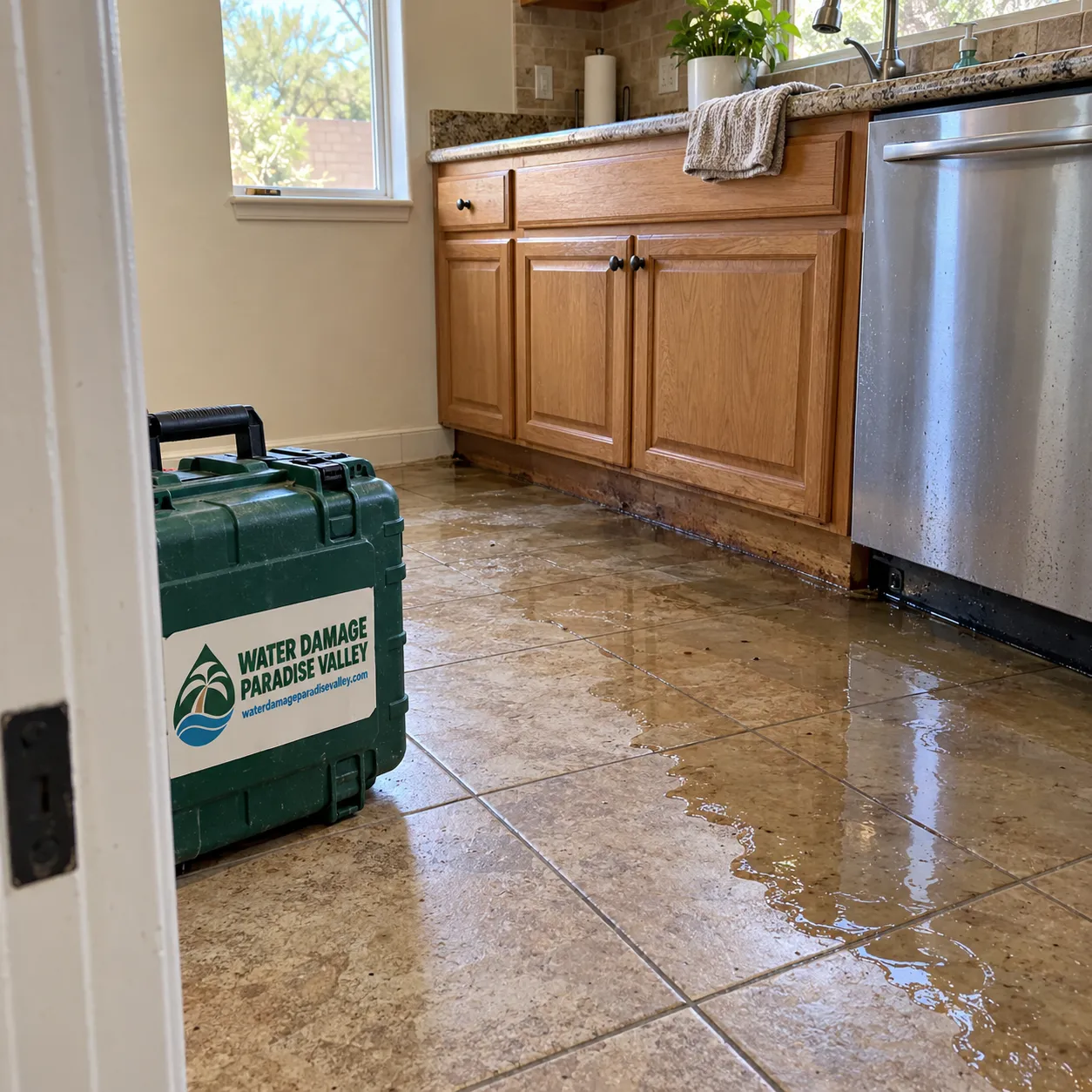
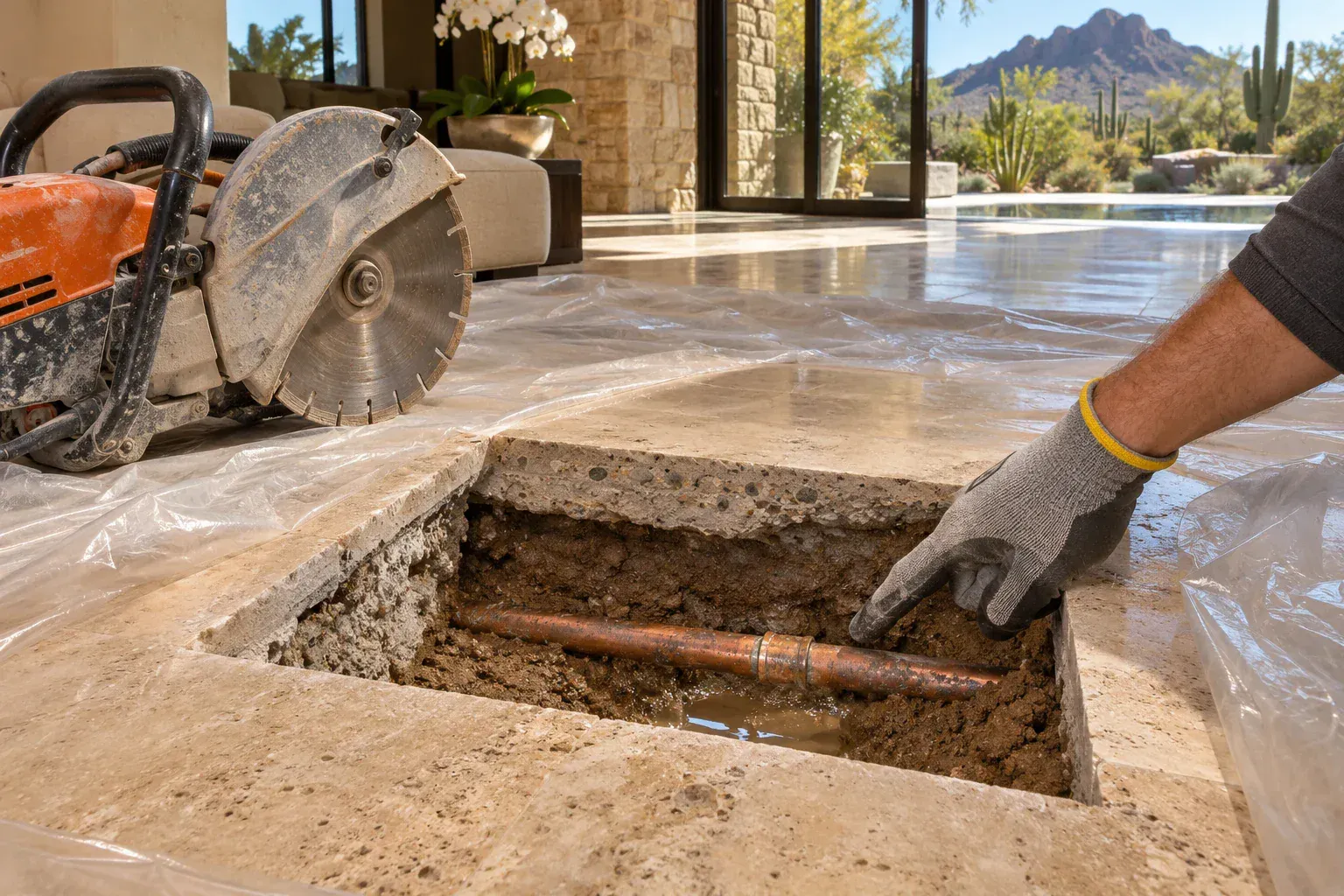
The median home in Paradise Valley was built in 1985, and 42% of its houses went up before 1980. The insurance research group IBHS (opens in a new tab) found that homes around 30 years old were about 3 times as likely to have a plumbing supply or drainage problem. Supply lines sit under pressure constantly, and decades of that show: pinhole leaks open in copper, plastic fittings crack, drain lines under slabs corrode from the outside in. Water heaters add to the count, with failure risk rising after year 5 and about 3 in 4 failing before year 12. Large lots make it worse: long pipe runs between the meter and the house mean more joints, and every joint is a place a leak can start.
A meter that turns with everything off is the first sign; see how to catch a slab leak early, method by method.
A detached guest wing or pool house stays wet longer than the main house; hidden leaks in casitas and pool houses start at the heater, the supply line and the pool pad.
02Good to know
What does a summer closure hide?
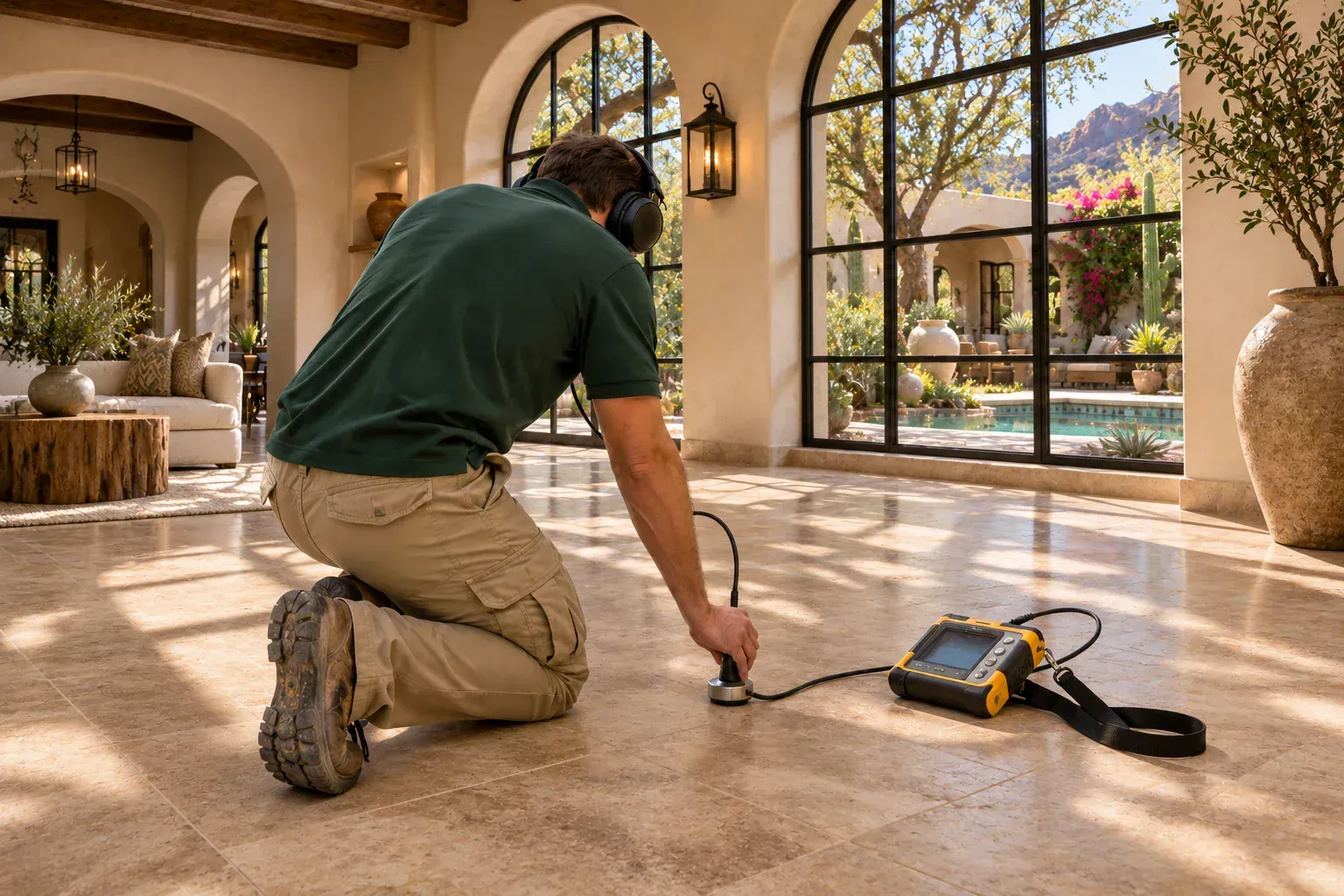
When a house sits closed all summer, a small leak keeps working unwatched. A supply line that starts to drip in June has the whole season to soak insulation, drywall and framing, and by the time anyone comes back it is not a drip any more, it is a mold problem. Closed homes also stay shut up, so nothing dries a damp corner before it spreads. The defenses are simple: shut the main valve off when the house will be empty for weeks, read the water meter when you return and nothing is running, and have someone walk the house monthly to look under sinks and around the water heater. Usage alerts from your provider can catch a stuck fill line between visits.
03Local risk
How does monsoon season cause water damage in Paradise Valley?
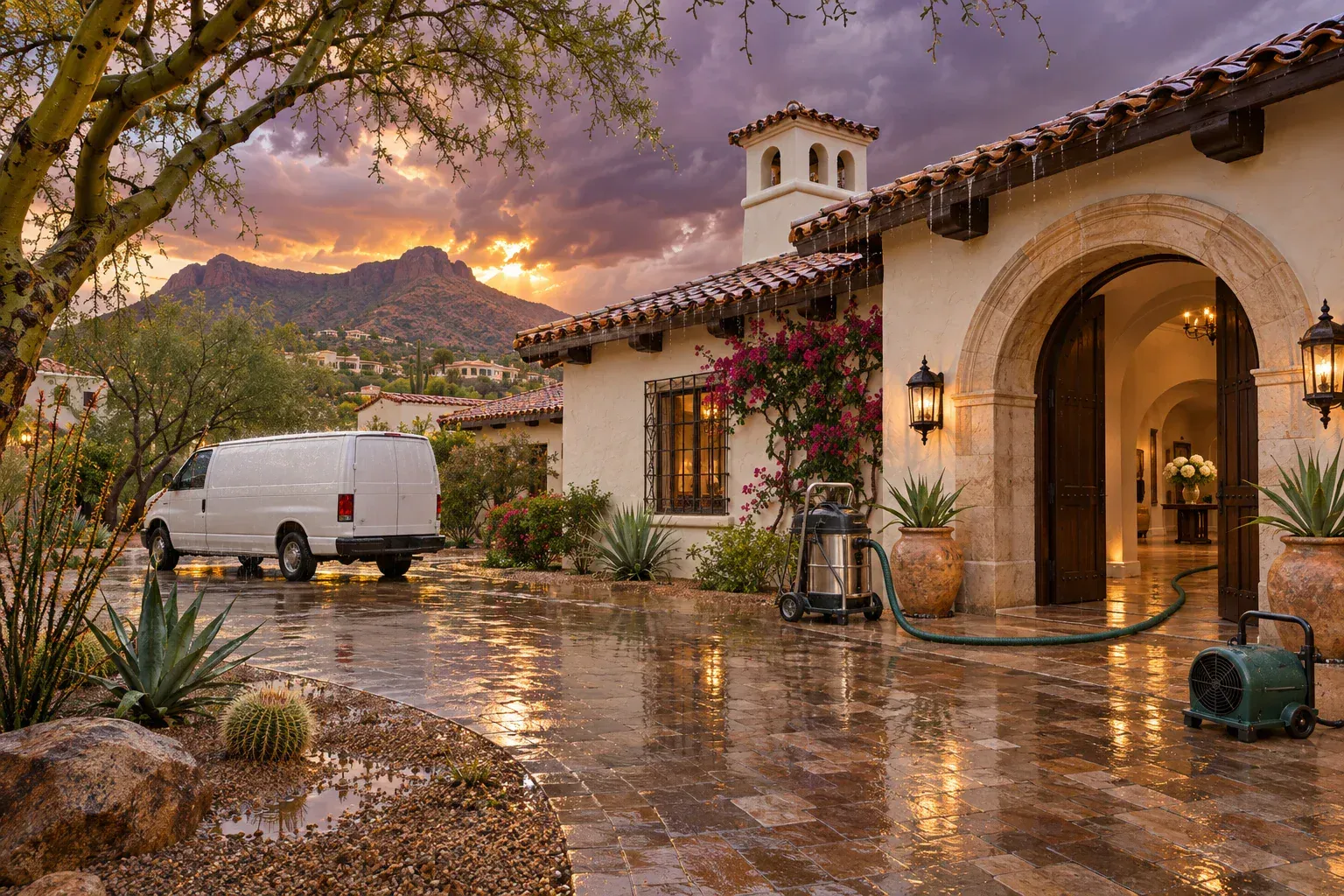
Monsoon season runs from June 15 to September 30, according to the National Weather Service office in Phoenix (opens in a new tab), and the storms are uneven. One part of the Valley can get an inch of rain in an hour while a gauge miles away stays dry. Runoff here follows drainage ways the town has watched for years: the Cheney and Cherokee watersheds around Mummy Mountain, and Echo Canyon Wash along Camelback. The town studied its flood flows after the 2013 and 2014 storms. Water also gets in from above: rain driven sideways finds cracked stucco, worn window seals and roof flashing that has baked in the sun for years, and the first sign is often a ceiling stain in a room with no plumbing near it.
04Local risk
Can pool and fountain lines cause water damage?
Large lots are part of the town's design, one house per acre, and they carry long runs of irrigation and water features. Pool and fountain auto-fill lines are quiet failures: the fill valve does not shut off when the pool is full, or it sticks open while everyone is away, and water runs at supply pressure into the ground beside the shell for days. Irrigation lines and fountain float valves fail the same way. When one of those lines opens next to the house, water finds the foundation, and the desert soil spreads it sideways along the walls. Watch for a green stripe in the gravel, a patch that never dries, or a meter still spinning when everything is off. These fixes are small and cheaper before the next storm.
05Local risk
Do septic systems add to the risk?
Many properties in Paradise Valley are on septic systems rather than a sewer line, and the town's Utility Services page (opens in a new tab) lists the septic contacts along with the four water providers for the town. A septic problem can become a water damage problem the hard way. When a system is full or clogged, waste takes the lowest path into the house, often a shower or floor drain in the lowest bathroom. The warning signs come early if you know them: drains that slow across the whole house, gurgling after the laundry runs, toilets that back up once and then seem fine. When sewage enters the house, treat it as a health problem first: keep people away, stop using water, and let a professional handle it.
064 questions
Questions people ask
Still have a question?
Call and describe what you see. Calls are answered day and night.
Call (602) 671-356101Does homeowners insurance cover a burst supply line?
Often yes, with conditions. A standard HO-3 policy typically covers accidental discharge from a plumbing system, while flood and ground seepage are excluded; your policy decides. Our guide to water damage insurance in Arizona covers what is usually covered and how to document a claim.
02How can I catch a leak while the house is empty for the summer?
Three habits catch most of them. Shut the main valve off whenever the house will sit empty for weeks. Read the water meter when nothing inside is running, and again an hour later; movement means water is going somewhere it should not. And have someone walk through monthly to look under sinks and around the water heater.
03Which failures usually start with no warning?
The hidden ones: supply lines inside walls, drain lines under slabs, and water heaters. None announce a problem before the first wet spot. That is why meter checks, a leak alarm and a walk around after storms do more good than watching and waiting.
04What should I do the moment water is running?
Shut the supply off at the main valve, keep everyone out of the wet area, and move what you can. Then call (602) 671-3561 and describe what you see.
07Keep reading
- Emergency Water Extraction: when standing water has to come out now.
- Slab Leak and Burst Pipe Repair: finding leaks under slabs and in walls.
- Septic Backups in Paradise Valley: warning signs and first steps.
- Water Damage vs Flood Damage in Paradise Valley:
- Drywall Repair vs Replace After Water in Paradise Valley: