Guide 07 · 5 min read
Water Damage vs Flood Damage in Paradise Valley, AZ
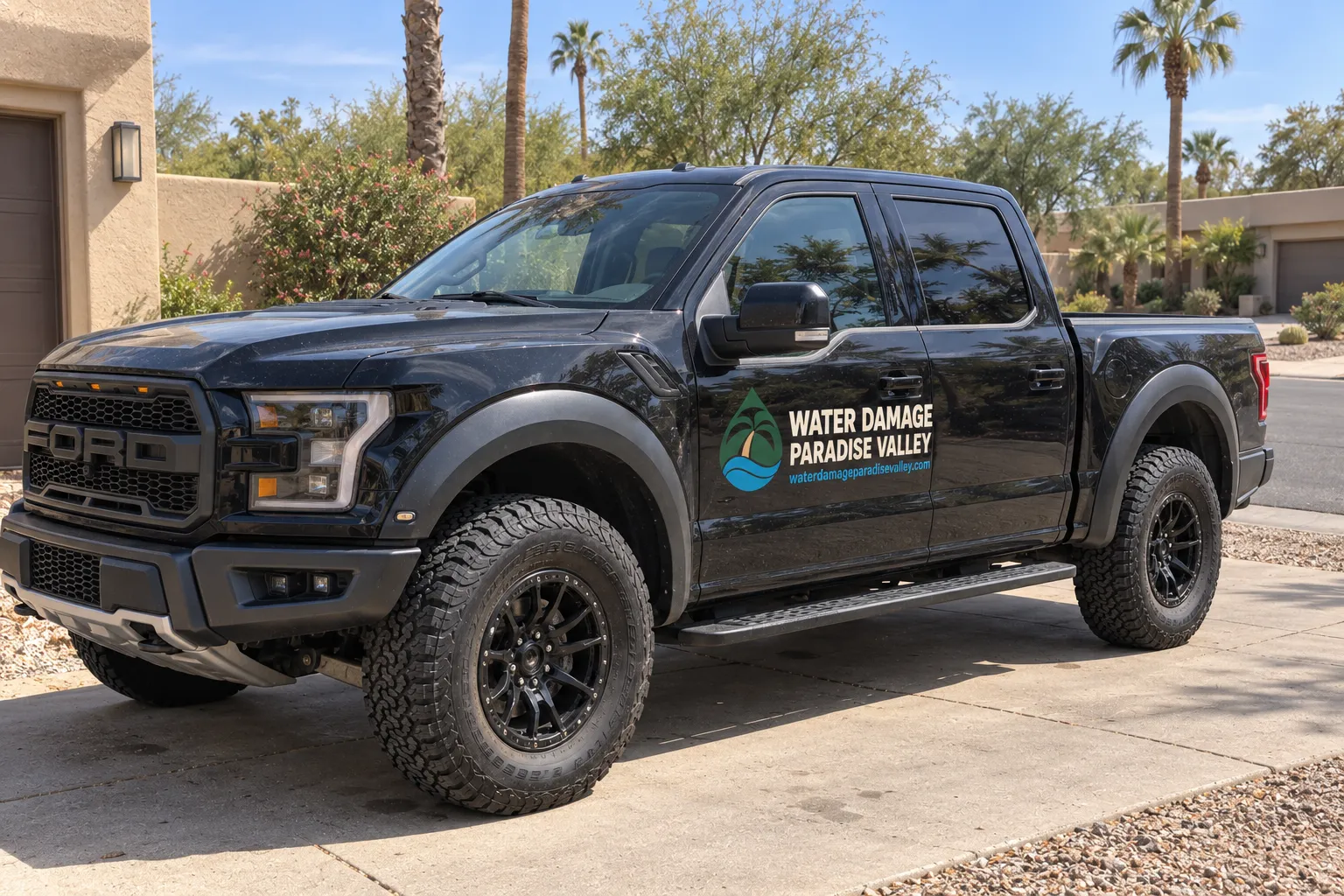
In plain English the two sound alike. In insurance language they are different events with different coverage, and the distinction decides who pays. Water damage is a burst pipe, a roof leak, an appliance overflow. Flood damage is rising water that covers normally dry land, and it needs its own policy.
01Good to know
The short answer
Water damage comes from inside the house: a broken supply line, a leaking roof, an overflowed fixture. Flood damage comes from outside: rising water covering normally dry ground, usually affecting two or more properties. A standard homeowner policy covers the first and excludes the second, so monsoon water that crosses your yard can land in either column depending on where it entered and how it got there. The right choice depends on the slab, the soil, the wall, or the building, and on the wording of the policy in the drawer.
02Good to know
Water damage: what it actually is
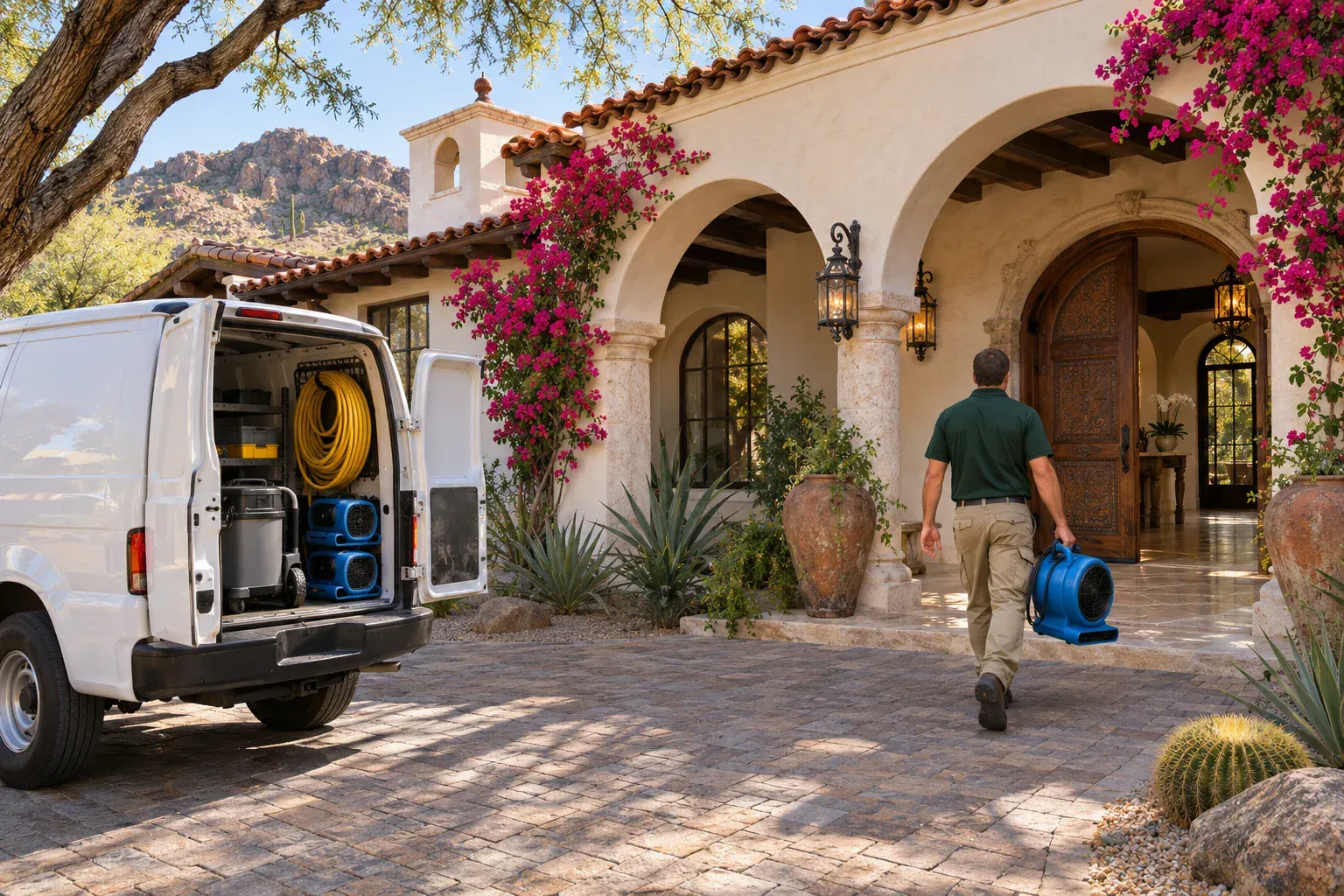
Water damage is water from a plumbing, appliance, or roof failure inside the home. A supply line lets go in the attic. A water heater tank splits. An air conditioner pan overflows. A flat roof seam opens in a storm. The water is clean or dirty depending on where it traveled, which is the category 1 vs category 2 water question, but the event itself starts inside. Standard homeowner policies write coverage around sudden and accidental internal events, which is why the adjuster asks how the water got in before they ask how much it costs. The response is the mitigation and restoration sequence: stop the source, extract, dry, rebuild, covered in the water mitigation vs restoration page.
03Monsoon
Flood damage: what it actually is
Flood damage is water from outside rising and covering normally dry ground. The definition that matters in a policy is not the dictionary one: it is rising water, surface runoff, mudflow, or groundwater that covers land that is normally dry, and it typically has to affect more than one property to count. That is why a monsoon storm can produce both events in one night. Rain that enters through a wind-torn roof opening is water damage. Rain that sheets down the street, comes up the driveway, and comes in under a door is flood damage. Flood coverage is a separate policy, not an add-on to the standard one, and most Paradise Valley homeowners do not carry it because the flood maps say they do not have to. The maps describe the floodplain. They do not describe your driveway. The practical test is simple: if the water rose up from the ground to get in, it is flood. If it fell from the sky through an opening, it is not. Everything else is argument, and argument is expensive.
04Good to know
Where water damage fails here
The quiet version is the expensive one in Paradise Valley. Homes are large, supply runs are long, and a pinhole leak in an attic line can run for months above high-value finishes before it shows on the ceiling. Heat and UV age the plumbing parts faster than the manufacturer's national average assumes, and hard water scale eats at fittings and fixture connections. Flat roofs hold monsoon water in a shallow pond until a seam lets go, and the leak travels a cavity and surfaces far from the entry. When it finally shows, the damage is wide, and the question of when it started becomes part of the claim. That is when documentation matters, photos of the source and the wet materials before anything is moved.
05Monsoon
Where flood damage fails here
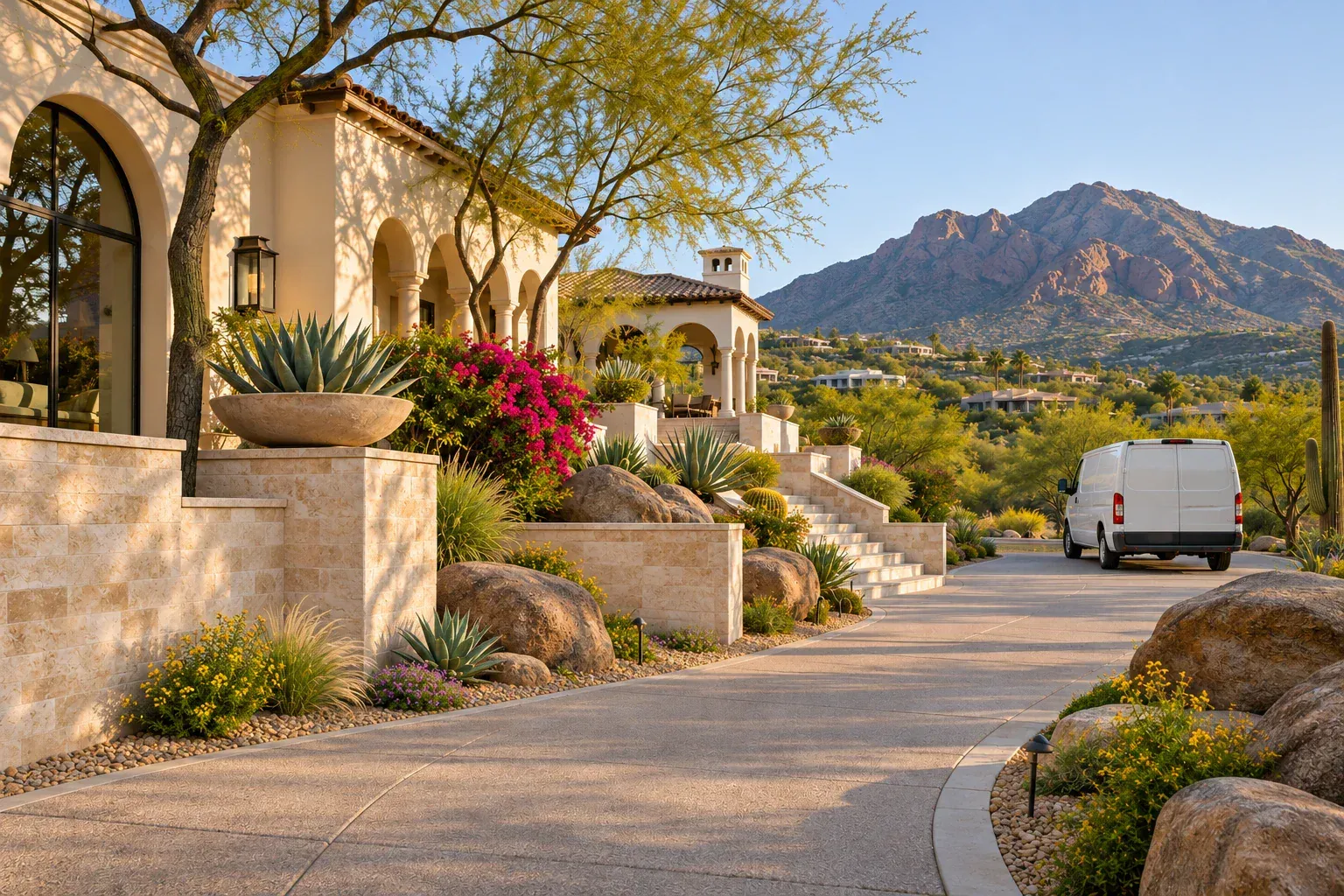
Monsoon water is the Paradise Valley flood, and it does not come from a river. July through September, short intense bursts arrive faster than desert soil can absorb, and caliche under much of the Valley stops infiltration cold. Water runs along the surface, follows the grade, and the grade on many large lots runs toward the house. Long driveways shed water directly at the garage and the front door. It pools against foundation walls and finds every low point. When that water gets inside, the fight over words begins: the carrier says flood and excludes it, the homeowner says storm and wind driven rain. The photos decide that argument, which is why what you photograph before anything is moved matters more than anything you say later. See flood and storm damage for how the entry path works, and the Phoenix page covers the same storms on the other side of the hill. A house that sits low relative to the street takes every neighbor's runoff as well as its own, and a long driveway acts like a chute aimed at the garage, so the volume that arrives at the door can be far larger than the rain that fell on the roof.
06Costs
What it costs and what drives the number
The drying and rebuild cost is similar per square foot either way. What changes is who pays. Water damage goes to the homeowner policy, minus the deductible. Flood damage goes to flood coverage if you carry it, or to you in full if you do not. Both numbers vary. The size of the wet area, the category of water, and the finish level drive the mitigation and rebuild cost, and the deductible on a high-value Paradise Valley home drives the out of pocket. See what a fair price looks like for the ranges.

07Good to know
What good work looks like in Paradise Valley
- The entry path gets explained in plain language, because the difference between a roof opening and water under a door decides the claim.
- Documentation comes first: photos of where the water entered, where it pooled, and what it touched, before anything is moved or cut.
- The billing goes to the right pocket, yours or the carrier's.
- The policy wording gets reviewed early, so you know which column the loss is in before the adjuster shows up.
086 questions
Water Damage vs Flood Damage: your questions
Still have a question?
Call and describe what you see. Calls are answered day and night.
Call (602) 671-356101Why does my policy say flood is excluded?
Standard homeowner policies exclude rising outside water by design, because flood risk is priced separately. Rain through a roof opening is covered. Water rising up the driveway is not, unless you carry flood coverage.
02Is monsoon water flooding?
It depends on the path. Water that enters through a roof opening or a window blown in is usually water damage. Water that runs across the ground and comes in under a door or through a threshold is usually flood.
03Do I need flood coverage in Paradise Valley?
If your lot drains toward the house, if the driveway sheds water at the garage, or if you sit below the street, flood coverage deserves a serious look even where the maps say you are not in a floodplain.
04What photos prove water damage versus flood damage?
The entry point. Photograph the roof opening, the broken pipe, the threshold, the waterline mark on the exterior wall, and the direction the water ran, before anything is moved.
05Does a roof leak count as flood damage?
No. A roof leak is water damage from a failure of the envelope, and it falls under the standard policy, though the adjuster will look hard at the age of the roof and how the opening happened.
06What if the water came in under the front door?
That is rising surface water, the flood column. Document the waterline on the exterior, the door, and the threshold, and check whether you carry flood coverage before you assume anything is paid.