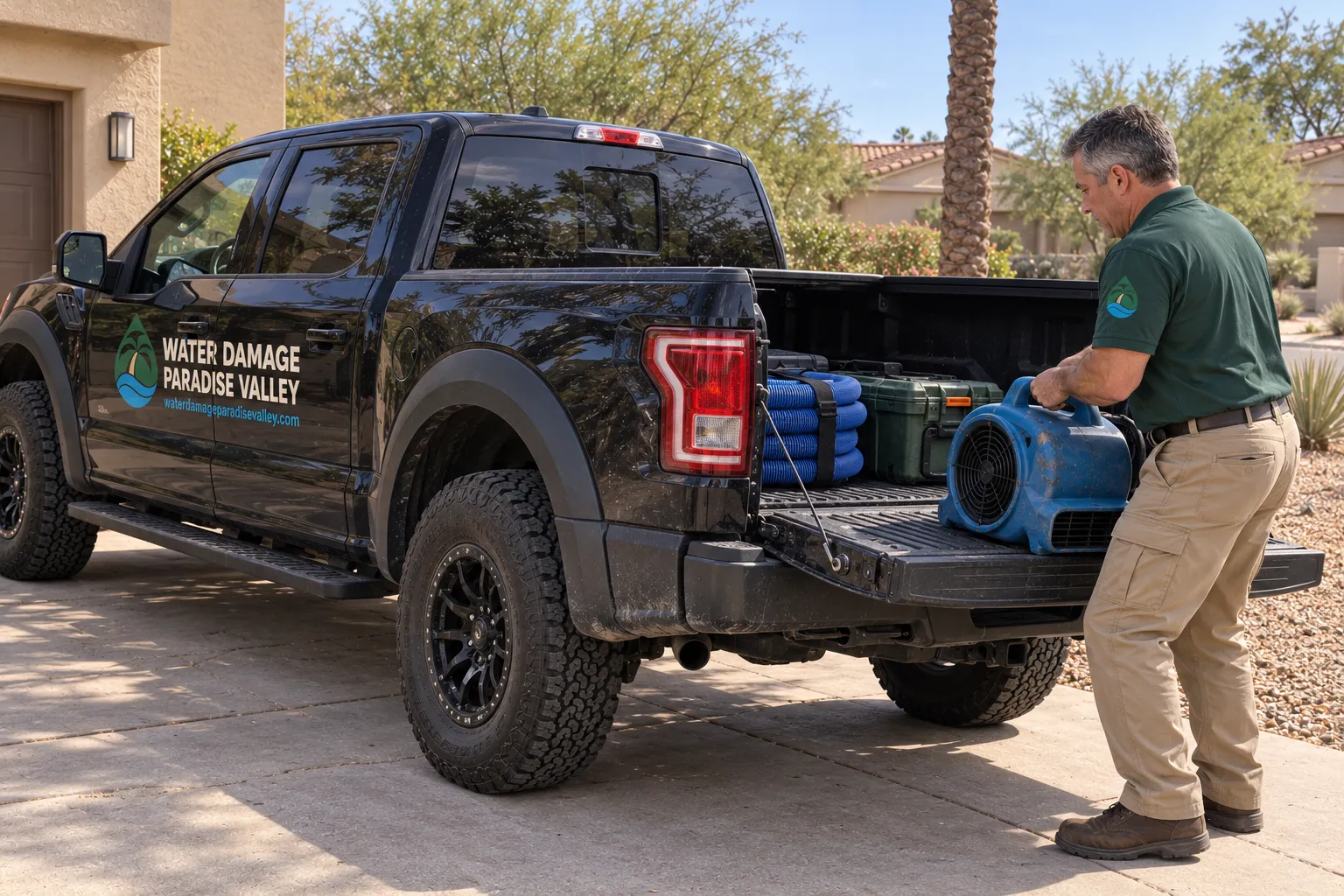
Slab leak & burst pipe · Fountain Hills, AZ
Slab Leak and Burst Pipe Water Damage in Fountain Hills, AZ
High ground sheds water fast in Fountain Hills, and much of the housing is old enough for supply lines to complain. Know the warning signs, the published ranges, and the first steps. Call (602) 671-3561.
Paradise Valley · Scottsdale · Phoenix · Tempe · Fountain Hills · Cave Creek
01Good to know
How do you know you have a slab leak in Fountain Hills?
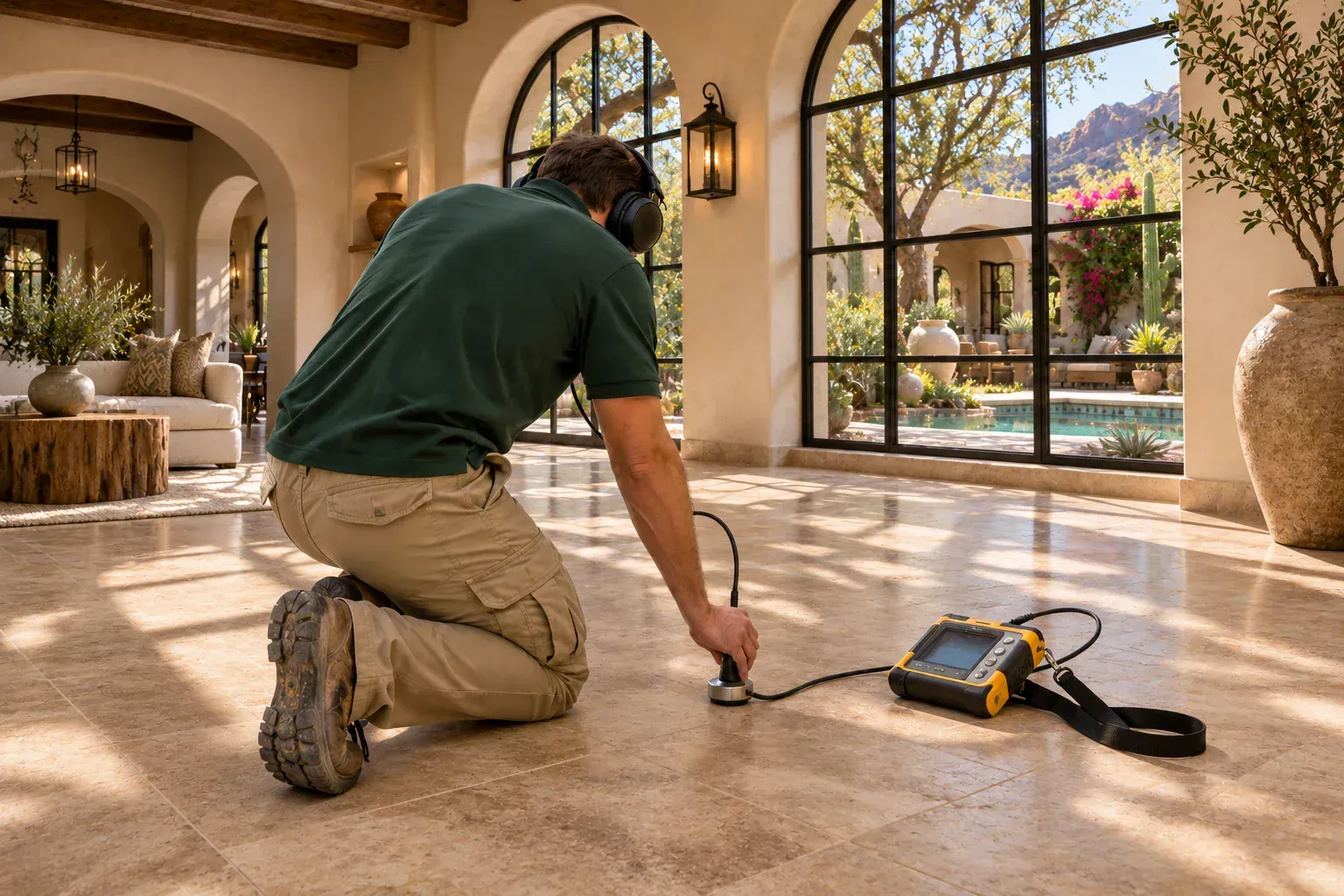
The housing stock is the first clue. The median home here was built in 1994, and 58% of homes went up between 1980 and 1999, so a lot of supply lines have decades of service behind them. IBHS (opens in a new tab) reports homes around 30 years old were about 3 times as likely to have a plumbing supply or drainage problem. A slab leak shows as a warm spot on the floor, a damp patch against a baseboard, running water with everything off, or a water bill that climbs. EPCOR is the local water provider, and the 24-hour line is 800-383-0834. Read your meter with the house quiet; if it still moves, water is escaping. Then shut the main and call (602) 671-3561.
02Costs
What do slab leak repair and burst pipe cleanup cost in Fountain Hills?
Fountain Hills jobs follow East Valley pricing: on the hidden leak and the water it released. This Old House (opens in a new tab) lists detection at $150 to $600, average repair at $2,300, and a range of $630 to $4,400. Home Restoration Costs (opens in a new tab) puts slab leak plus water damage restoration in the $2,500 to $15,000 range, and burst pipe water damage repair at $1,000 to $8,000. Ranges are published by cost guides and Phoenix-area companies on their websites (checked October 2026). They are market figures, not a quote. The actual price is set after an on-site assessment, and it depends on the affected area, the water category, and how many days the equipment runs. A burst pipe skips the warning stage: spray, a pressure drop, a stain that grows while you watch.
03Good to know
Emergency water damage restoration in Fountain Hills
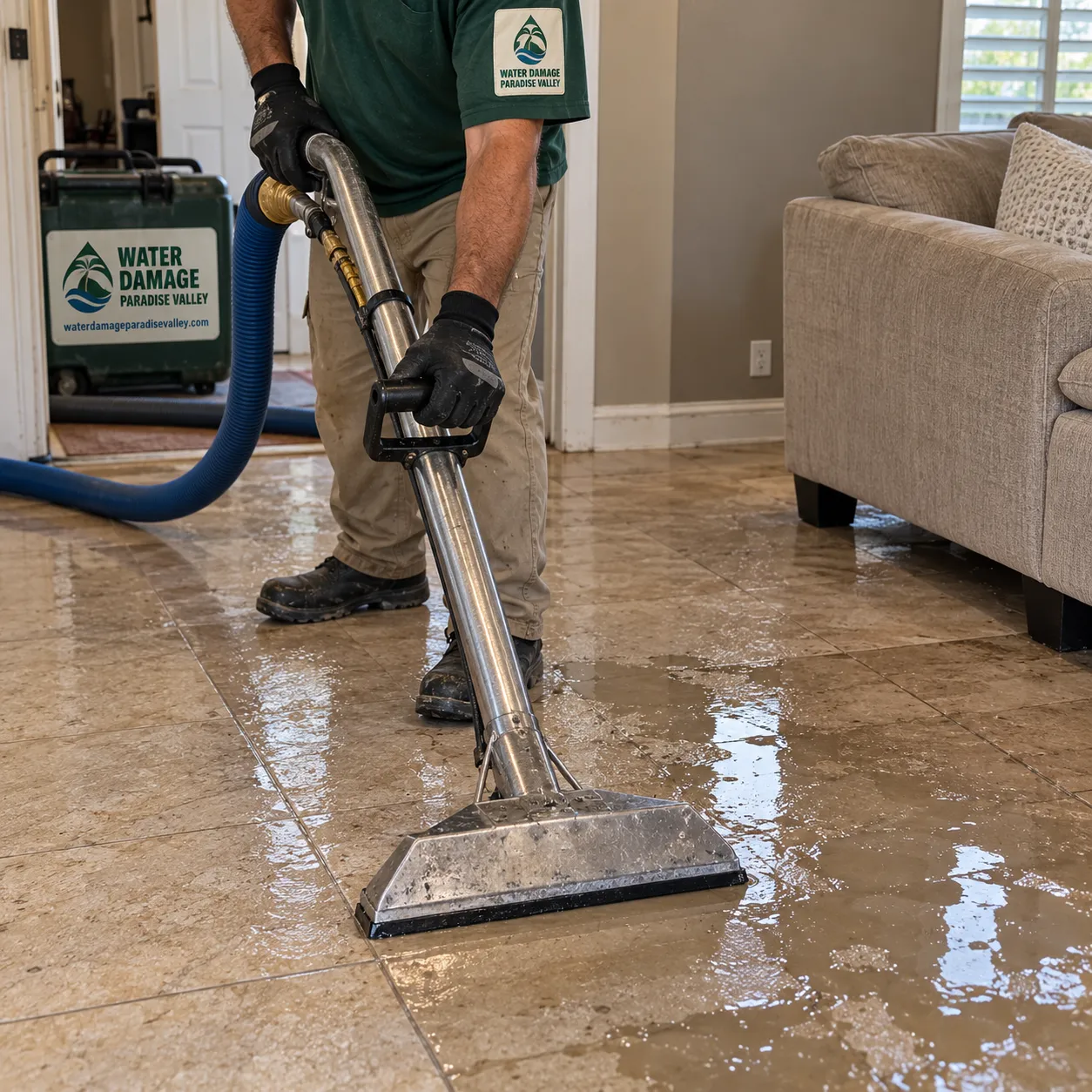
When a pipe breaks under a Fountain Hills slab, emergency water damage restoration starts with the shutoff and the extraction, because a slab leak can soak the flooring and the slab edge before anyone sees it. EPCOR water at about 18 grains per gallon hard ages buried supply lines, and the town's hillside lots add runoff pressure against foundations during monsoon storms. Shut the main valve, then call so the leak gets located and the water comes out before it spreads under more of the house. Call us at (602) 671-3561 or read how slab leak and burst pipe work is handled and what it runs on the pricing page.
04Good to know
Water damage cleanup in Fountain Hills
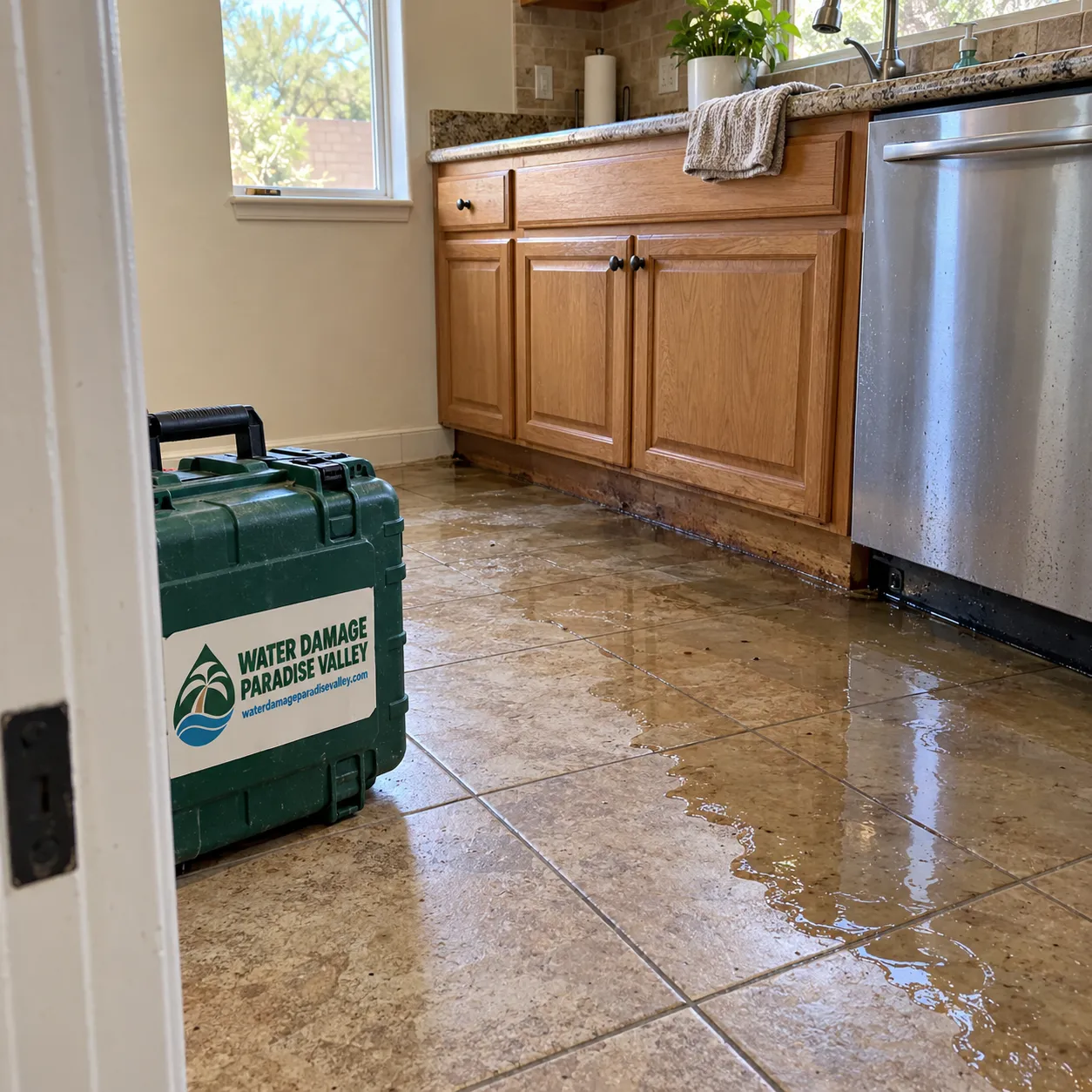
Water damage cleanup in Fountain Hills after a slab leak means drying the structure the leak soaked from below, since water under a slab moves along the slab edge and can surface rooms away from the actual break. With hard water at about 18 grains per gallon, a pinhole can run unnoticed for weeks, so cleanup opens to the full wet area rather than the visible stain before anything is rebuilt. Document the meter reading and the wet area for your claim. See how structural drying is verified and what it costs on the pricing page.
05Good to know
How does runoff from the McDowells reach Fountain Hills homes?
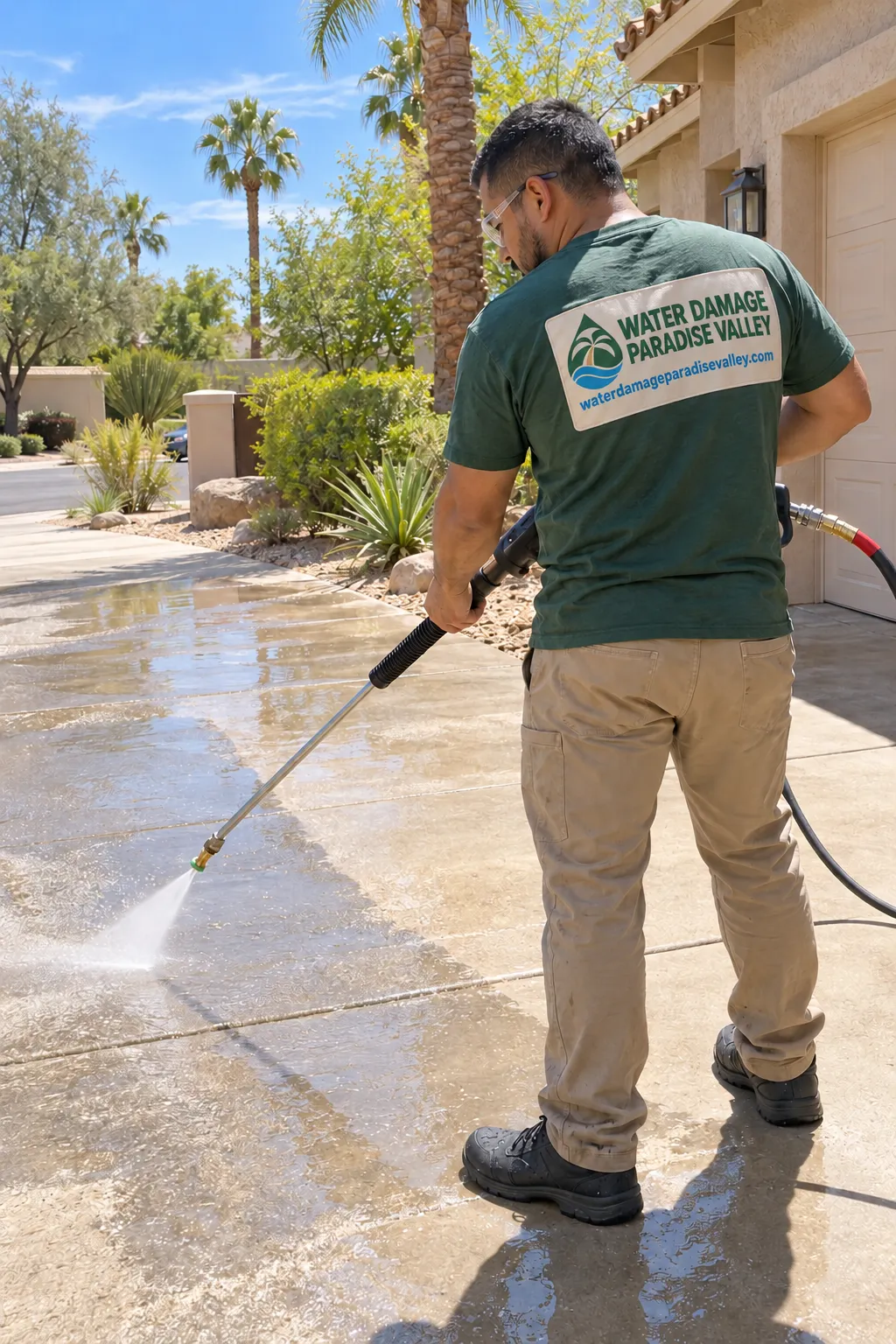
Fast, and in channels. The McDowell Mountains rise about 3,500 feet west of town, and the land drops to about 1,520 feet at the fountain, so rain on high ground runs downhill through washes, streets and yards. That slope sends storm water toward town in minutes, not days. The Ashbrook Wash culverts rebuilt in 2016 carry over 6 times as much water as the old ones, and about 11 homes sat at risk before that work. Golden Eagle Park was severely damaged by floods in 2018 and 2019, and in 2025 crews widened and deepened the Cloudburst, Bristol and Ashbrook washes. Flash floods near washes can carry mud and debris, and saturated ground pushes back against foundations and buried utility lines.
063 steps
What should you do first after a break in Fountain Hills?
Shut off the water at the main valve first, then cut power to any room where water is near outlets, working from a dry spot.
Move what you can off the floor, and keep children and pets away from any storm water.
Do not cut into walls or the slab to look for the source; detection comes first.
Call EPCOR's 24-hour line at 800-383-0834 if the problem is on the meter or service side, and Fountain Hills Sanitary District at 480-837-9444 if sewage is backing up from the public sewer. For water inside the home, call (602) 671-3561.
The town runs its own water and sewer systems, so the right call depends on where the water is coming from.
074 questions
Questions people ask
Still have a question?
Call and describe what you see. Calls are answered day and night.
Call (602) 671-356101Are slab leaks common in homes built in the 1990s?
They show up more often as homes pass the 30-year mark, and the median Fountain Hills home was built in 1994. Water heaters and hot-water lines fail first, and an annual check catches most of it early.
02What should I do while I wait for help?
Shut the main, move valuables clear of the wet area, and keep traffic off wet flooring. Photograph everything before it is moved or discarded. If water is near outlets, cut power to those rooms and stay out.
03Can storm runoff cause a slab leak?
Indirectly, yes. Saturated ground moves soil around buried lines, and the added pressure is hard on older plumbing. If the meter moves after a storm, treat it as an active leak.
04How long does cleanup take after a burst pipe?
Plan on several days of drying after extraction. Equipment stays until moisture readings fall back to normal, which usually outlasts the visible water. Keep records as you go; your insurer decides what the policy covers.
08Keep reading