Guide · Paradise Valley, AZ
Paradise Valley Water Damage Guide: Causes, First Steps and Hidden Leaks
Water in a Paradise Valley home often starts the same way: a supply line, a water heater, a pool line, or a storm that finds a way in. The EPA says to dry water-damaged areas and items within 24 to 48 hours to prevent mold growth, so the first minutes count. When you need help, call (602) 671-3561.
01Local risk
Why do Paradise Valley homes get water damage so often?
Aging plumbing, homes closed for the summer, and monsoon storms all play a part. The median home was built in 1985 (opens in a new tab), and 42% were built before 1980 (opens in a new tab) (American Community Survey, 2024). IBHS (opens in a new tab) reports that homes around 30 years old were about 3 times as likely to have a plumbing supply or drainage problem, and water heater failure risk rises after year 5, with about 3 in 4 failing before year 12. Add the local rhythm: some houses sit closed for the hot summer months, so a drip that starts in June has the whole season to work into a wall before anyone notices. Mummy Mountain and other hillside lots can have long private lines, pool and fountain auto-fill lines, and septic systems. Monsoon season, June 15 to September 30, sends storm water against hillside roofs and low doorways.
For a house with stone floors, custom millwork and a collection on the walls, read the room-by-room protect plan for a large home.
A casita or pool house that sits empty for weeks is where water hides longest; see hidden leaks in a casita or pool house and the monthly walkthrough that finds them.
026 steps
What should you do in the first 10 minutes?
Stop the water
Close the fixture shutoff, or the main valve, or the pool equipment breaker if that is where it is coming from.
Kill power to wet rooms only, at the breaker, if you can do it without touching water.
Keep people and pets out of the area, especially after a sewage backup
Never dry a Category 3 (contaminated) spill in place.
Photograph and video everything before anything moves
the source, the water line on walls, and every damaged item. Insurers often ask for photos and video.
Move what you can to dry space, lift wood furniture onto foil or blocks, and get fabrics out of the wet rooms.
Then call (602) 671-3561 and describe what you see.
03Drying window
What happens in the first 24 to 48 hours?
This window can decide the size of the bill. The EPA (opens in a new tab) says to dry water-damaged areas and items within 24 to 48 hours to prevent mold growth, and whatever stays wet past that window often has to be removed instead of saved. Standing water also keeps spreading: it climbs drywall, wicks into baseboards, and soaks carpet pad by the hour. That is why extraction comes before drying, and why reading instruments come out every day until the numbers say dry. Water damage and freezing was the second-largest cause of homeowners insurance losses: 25.8% in 2022, according to Triple-I's analysis of ISO data (opens in a new tab).
04Good to know
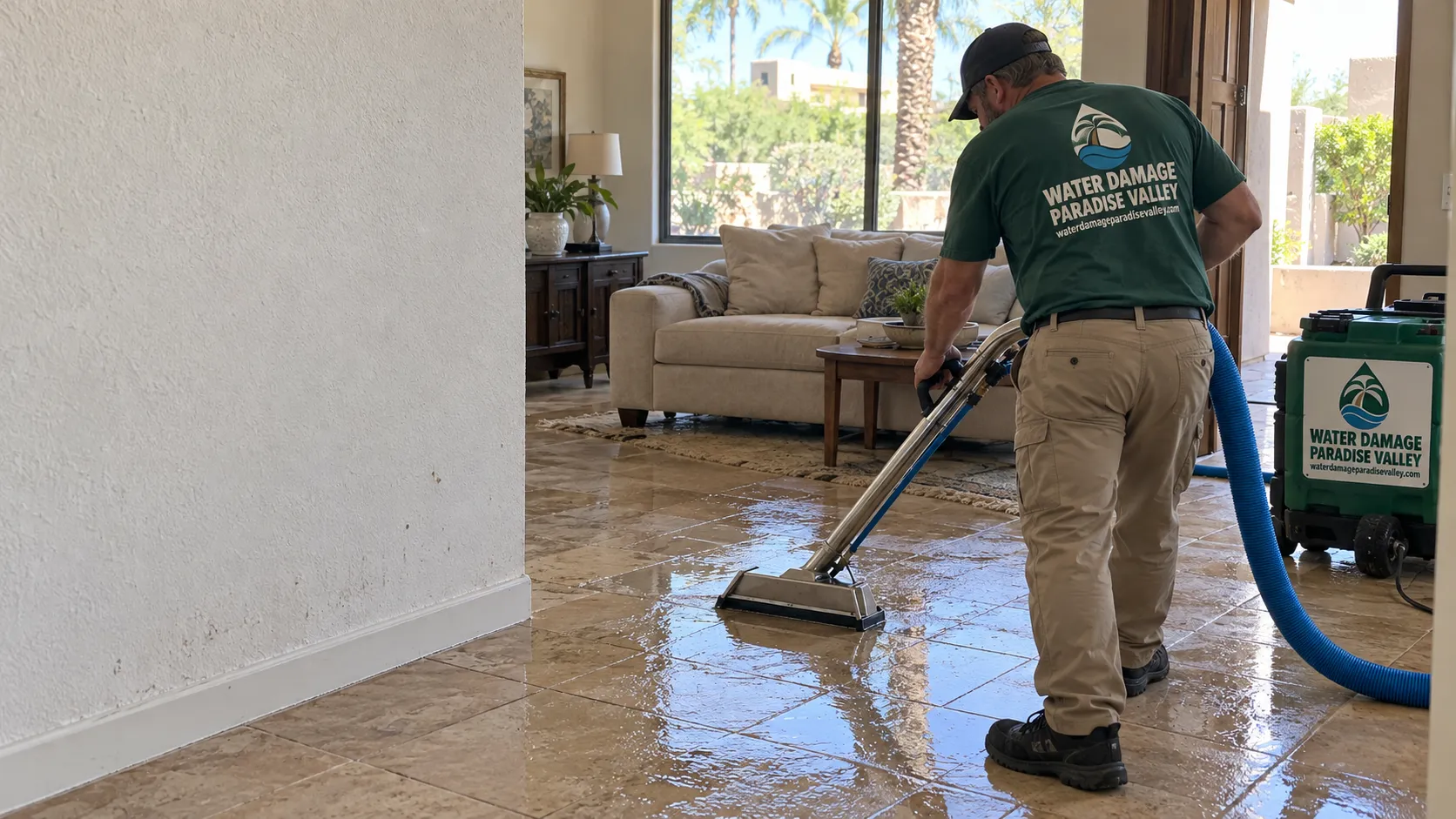
What should you check first in a home that sat closed all summer?
If nobody has been inside for weeks, start with your nose and the ceilings. A musty smell near the entry or hallway usually means water has been sitting somewhere. Then look up: ceiling stains under bathrooms, the AC closet, and the water heater pan. Check the AC condensate line and its drain pan, because a clog in June can overflow every day until someone walks in. Read the water meter with every fixture off; the leak dial tells you whether something is still running. Open the cabinet under each sink and look at the base. Closed homes hide slow leaks better than lived-in ones, so give the walk-through a full hour and photograph anything that looks off before you touch it.
05Monsoon
Can a pool or fountain line flood a house?
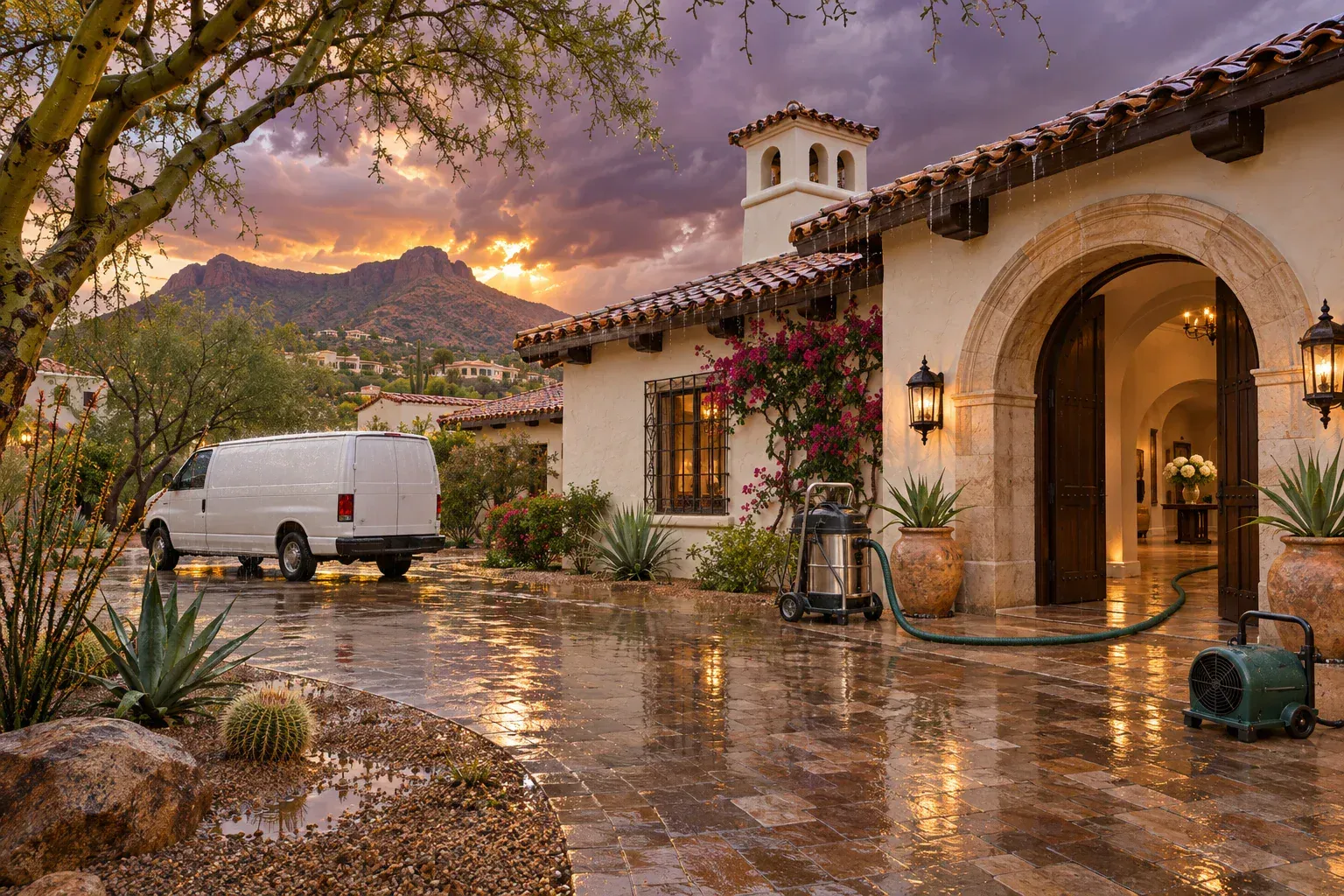
Yes, quietly. Pool auto-fill valves and fountain supply lines run on the home's water supply, and a valve that stops closing can push water into the yard for weeks before anyone sees it reach a wall. Paradise Valley lots can also have long private service lines and irrigation runs that cross the property. The tells: an unusually high water bill, a permanently wet patch of yard, or erosion around the equipment pad. If the pad is flooding, shut the pool equipment breaker first, call the pool service to fix the valve, and have the inside faces of any wall near the wet area checked with a moisture meter, because water moves where it wants.
06Warning signs
What are the signs of a slab leak in Paradise Valley?
Three signs point to a slab leak: a water bill that climbs with no change in habits, warm or damp spots on the floor, and the sound of running water with every fixture off. The meter test confirms it: turn off the fixtures and the irrigation, then watch the leak indicator, and if it turns, water is escaping somewhere in the system. A leak detection specialist pinpoints the location, and a plumber repairs the line. Sometimes the fix reroutes the pipe through the attic or a wall instead of opening the slab; either way, the wet concrete and the flooring above it still have to be dried and checked. Who does what on a slab leak, trade by trade, is on the slab leak page.
07Local risk
Why do hillside homes flood differently?
On a hillside lot, the question is not whether water runs downhill. It is where the water goes when a monsoon drops an inch in an hour. Homes on the slopes around Mummy Mountain can deal with runoff that gains speed on hard desert soil, pushes against low doors and view-facing walls, and pools where the grade flattens. The county's flood control district (opens in a new tab) publishes rainfall data and lets you check whether a home sits in a FEMA-designated 100-year floodplain. Practical steps: keep the drainage swales on the uphill side clear, avoid stacking anything against downhill walls, and take flash flood warnings seriously (opens in a new tab). During a storm, water inside the house means calling for extraction as soon as it is safe to be in the room.
08Good to know
What is the difference between a septic backup and a sewer backup?
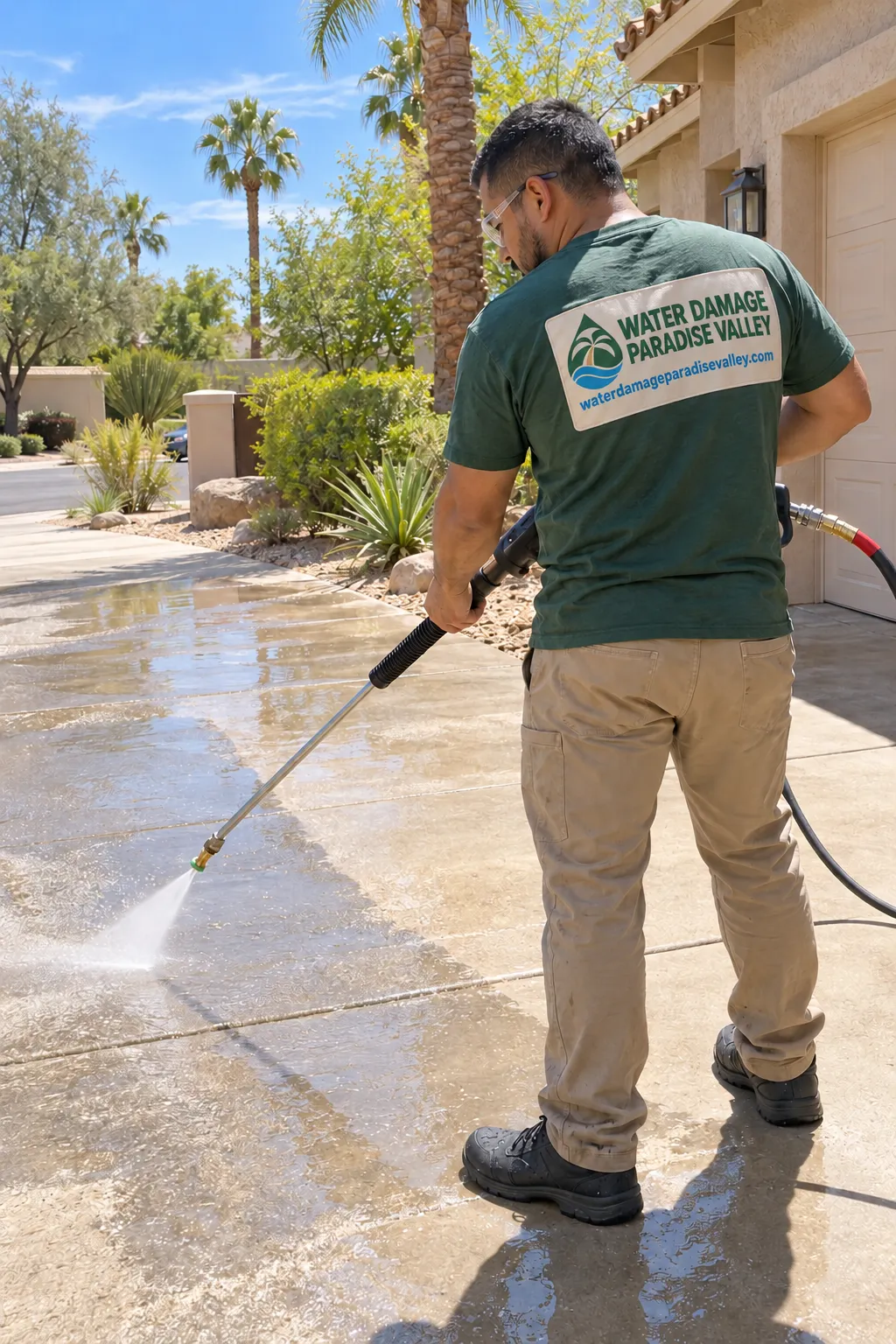
A septic backup starts at your own tank; a sewer backup starts in the city main and can affect the whole street. The cleanup is similar because both push Category 3 water, the most contaminated kind, into the house: extraction, disposal of what cannot be cleaned, disinfection, and controlled drying. The first call is what differs. On septic, stop using water immediately so you do not push more into a failing system, and call the septic service. On a city line, call the city or the sewer authority first to check the main, then the cleanup crew. In both cases, keep people and pets out of the affected area, and do not run your own fans, because that spreads contamination. The sewage cleanup page covers the full process.
09Local contacts
Who do you call first: a plumber, a roofer, or a restoration crew?
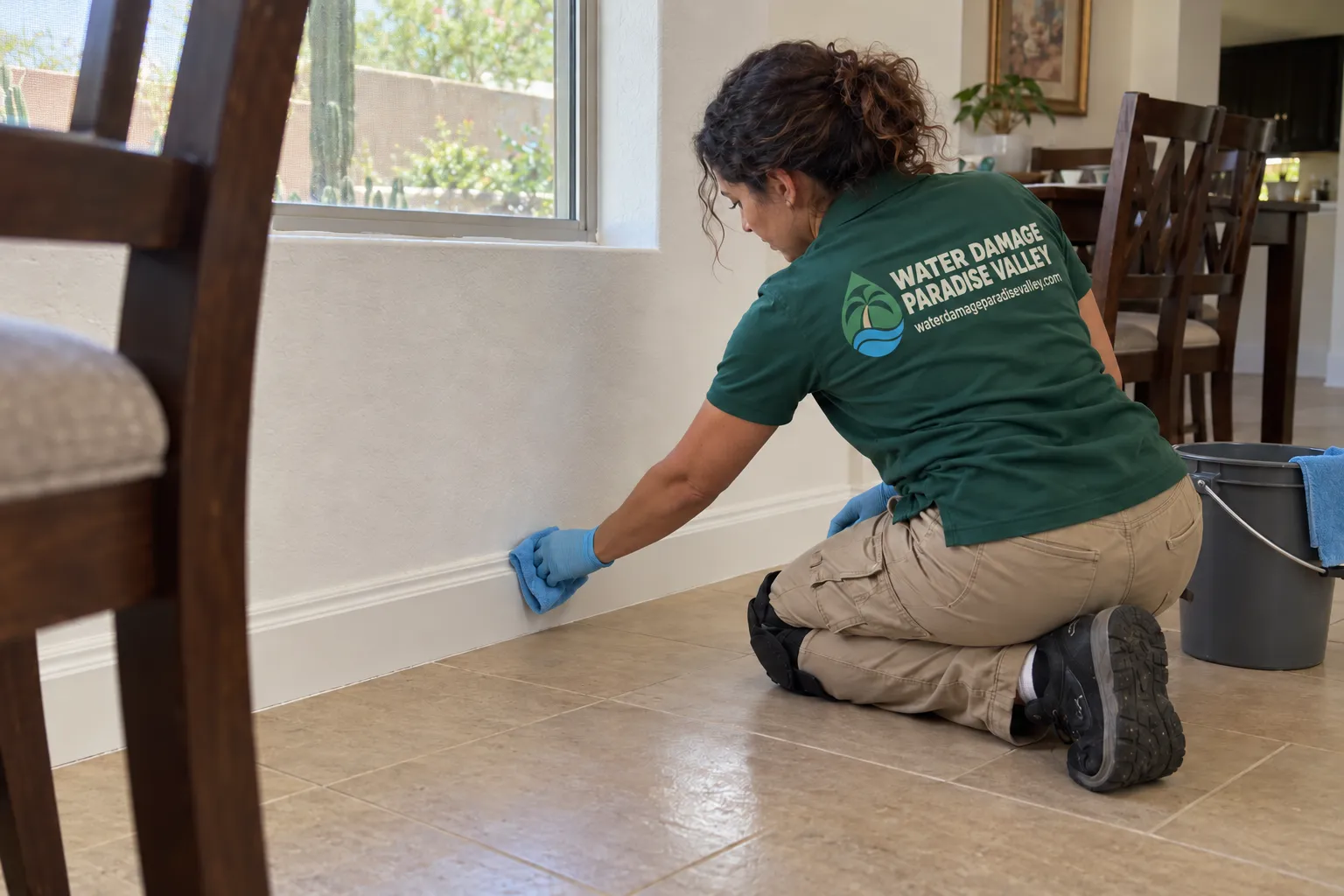
Match the call to what is still happening. Water flowing from a pipe or appliance: shut the fixture or the main valve, and a plumber owns the repair; drying follows. A roof leak during monsoon: a roofer stops the entry, then extraction and drying, because ceilings and insulation soak fast. Water already on the floor with the source stopped: the restoration crew starts now, and waiting is how a small job becomes a mold job. Sewage or flood water: cleanup first, repairs later, because contaminated water has its own rules. When two problems are true at once, stop the water first, and let the second call be the one that dries. The services page shows what each job covers.
10Good to know
How do you find a hidden leak before it does damage?
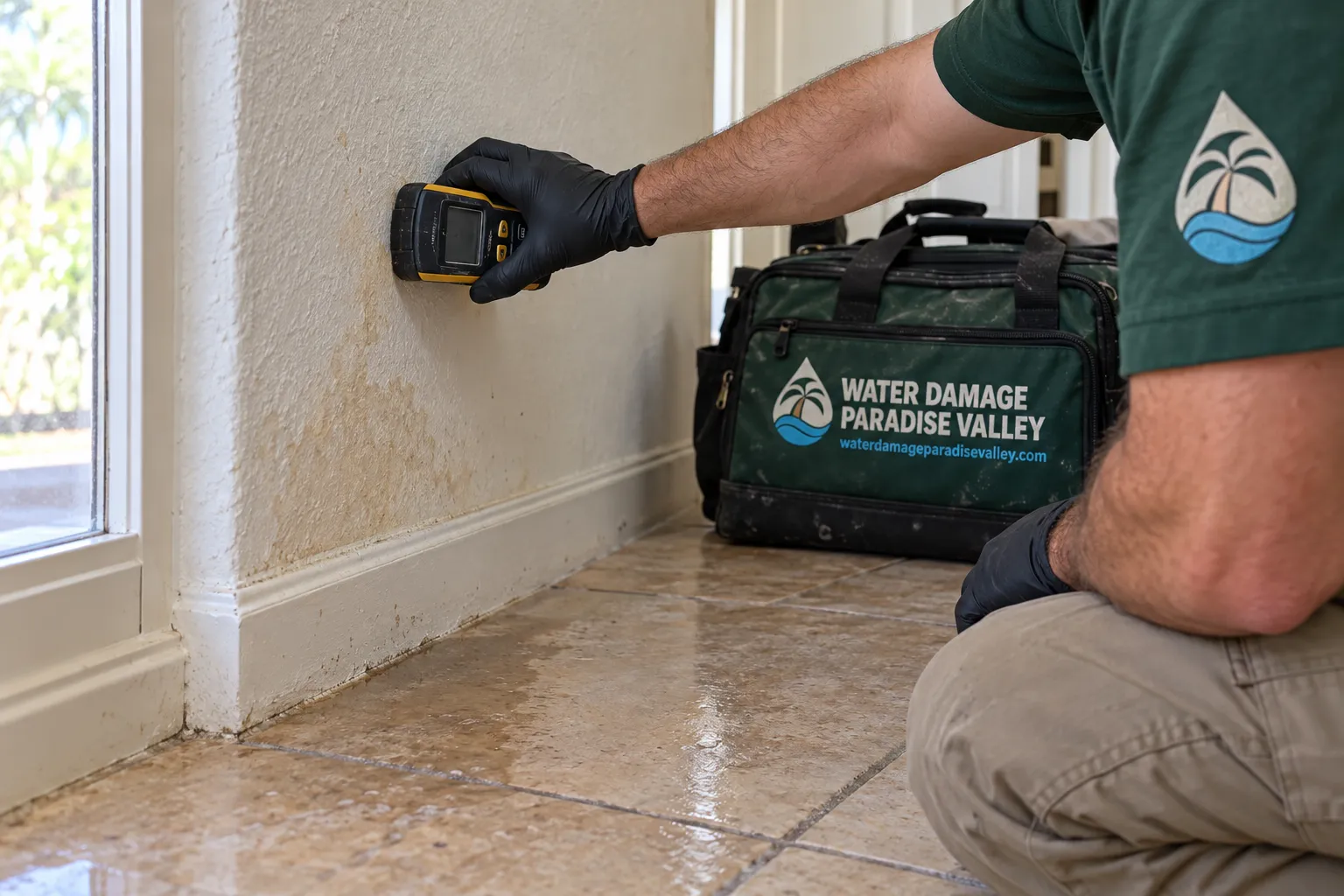
Run the meter test first: shut off every fixture, every appliance, and the irrigation, then watch the leak dial for 15 minutes. Movement means a leak. Then narrow it down. The sound of running water under a floor points to a supply line; damp baseboards along one wall point to something leaking behind it; a warm spot on the slab points to a hot water line. A leak detection specialist uses acoustic equipment, pressure tests, or thermal imaging to pinpoint the spot, and a plumber repairs it. Then the structure the leak soaked gets dried, because a slow leak that ran for months leaves moisture in places you cannot see. Keep a log of your meter readings; it shows when the leak started and how fast it runs.
11Good to know
What does mitigation mean, and when do repairs start?
Mitigation is everything that stops the damage: shutting off the water, extracting it, drying the structure, and documenting the loss. Repairs are what restores the house: drywall, paint, flooring, trim, cabinets. They are usually two different scopes, sometimes two different companies, and the sequence matters. Drying rarely waits for a claim to finish, because the 24 to 48 hour clock does not care about paperwork. Repairs come after the structure is proven dry, since rebuilding over a wet wall hides the problem.
12Good to know
How do you protect art, rugs, and furniture during a water emergency?
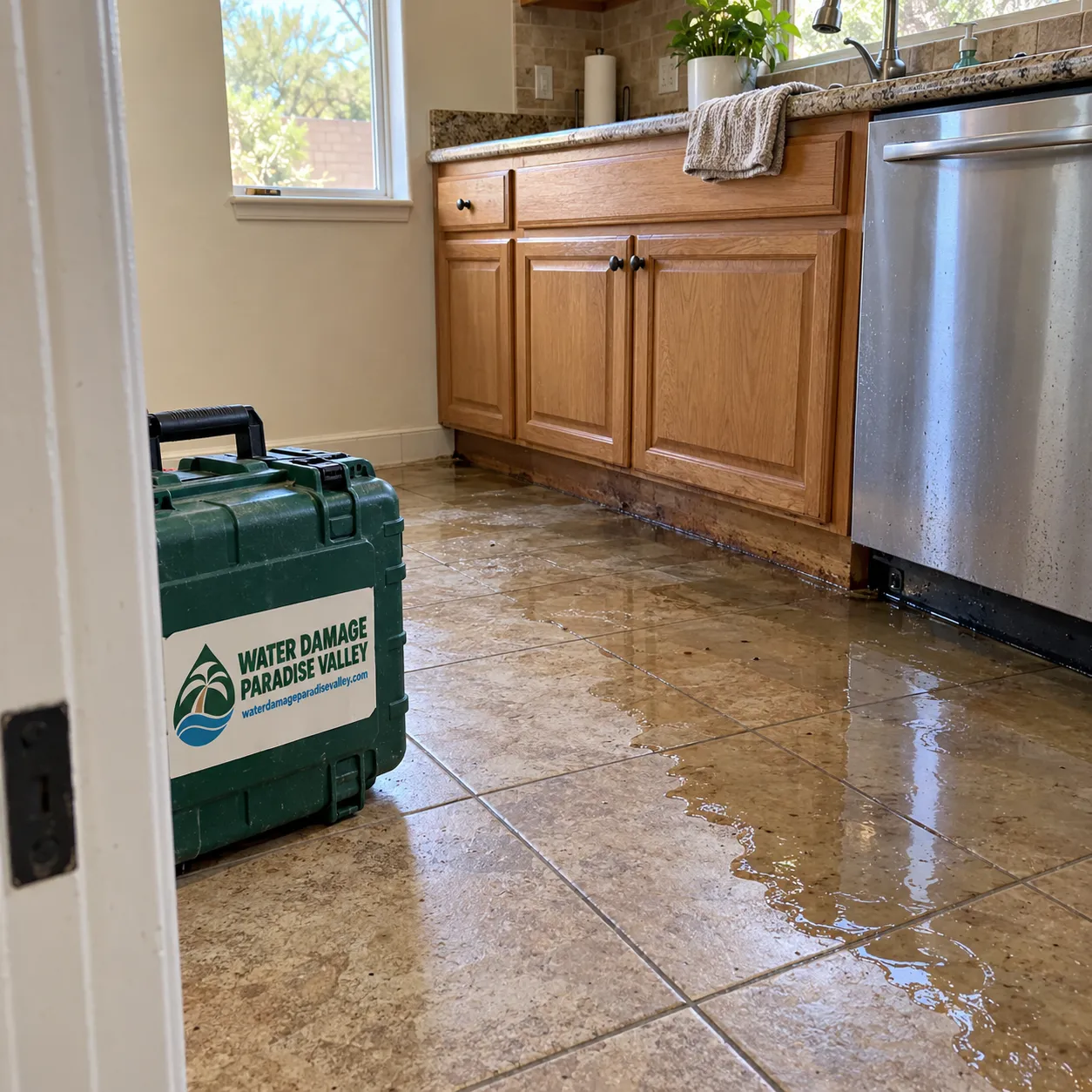
Big homes hold big inventories, and water does not care what it touches. Move art off wet walls first; canvas and framing take on moisture and mold quickly. Leave large wet rugs where they are unless you can lift them without dragging them through the water. Lift wood furniture legs onto foil or blocks, and get fabric and paper off the floor. Electronics out, then photograph what you moved and where. If the home has a fine art, wine, or instrument collection, say so when you call, because valuables change how a room gets handled and which items get treated first. Anything too large to move gets documented and dried in place.
13First steps
What should you do while you wait for the crew to arrive?
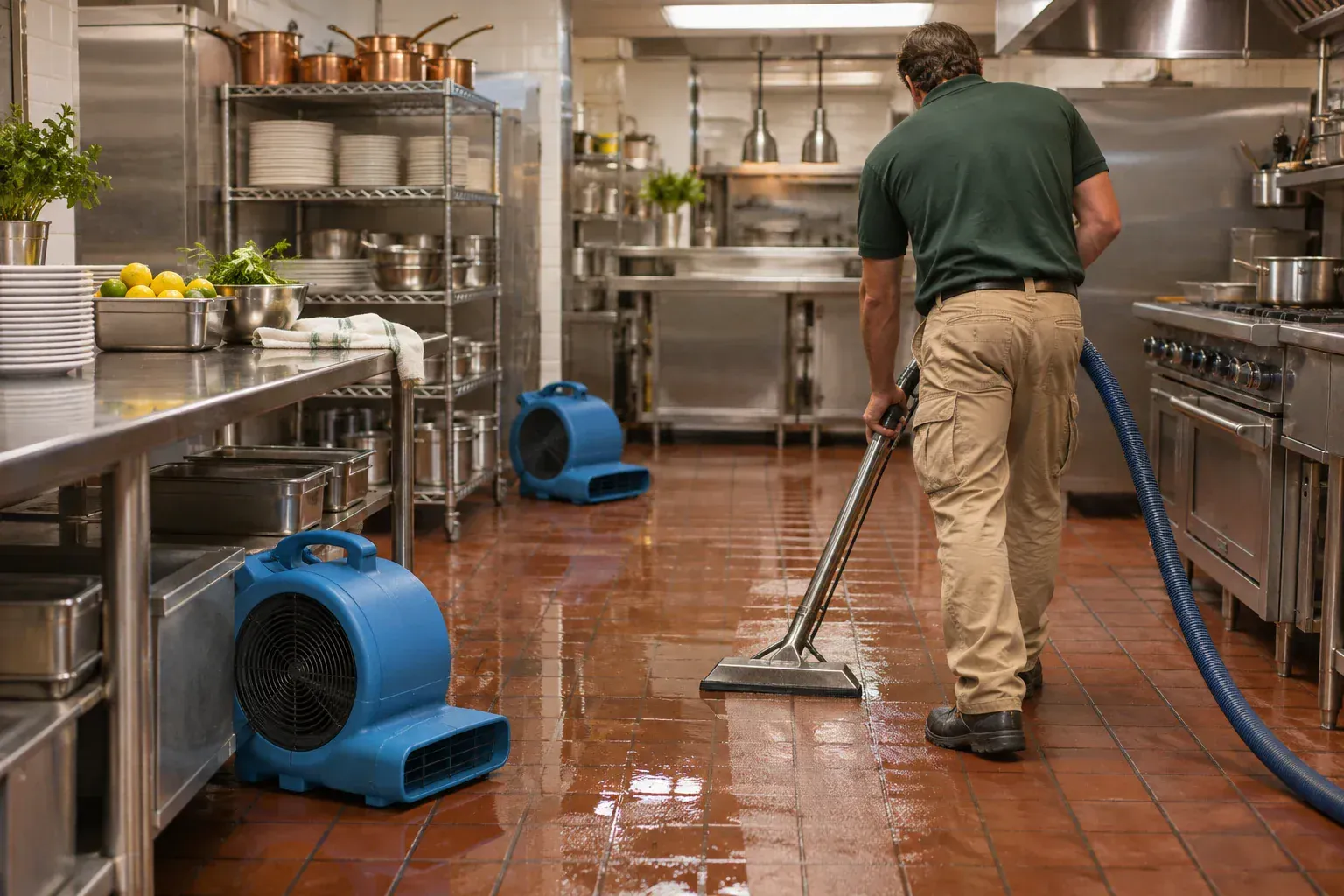
Keep the wet area boring: nobody walks through it, and nothing new gets stored in it. Put towels or pans under active drips if the source is still weeping, and turn off the breaker to wet rooms only if you can reach it without touching water. Do not run your own fans or a wet vacuum on anything that touched sewage or flood water, because that spreads contamination through the house. Take photos and a short video of everything you can see. Move pets and children to dry rooms. Then leave the wet rooms alone until the crew walks in. The less the water gets walked through, the smaller the job stays. Write down the time you called and who you spoke with; your insurer may ask for it.
145 questions
Water damage FAQ for Paradise Valley homes
Still have a question?
Call and describe what you see. Calls are answered day and night.
Call (602) 671-356101How fast does water damage get worse?
Fast. Carpet pad and drywall wick water within hours, and mold risk starts after 24 to 48 hours of wet materials (EPA). A small leak that ran all summer behind a closed-up house is a different job from a pinhole caught right away.
02Can I just use towels, a wet-vac, and my own fans?
For a small, clean-water spill caught immediately, shop vacuums and fans are a reasonable start. The limits: carpet pad holds water a fan cannot reach, wall cavities stay wet behind drywall, and the EPA's 24 to 48 hour clock covers what is inside walls, not just what you can see. When the area is bigger than a small rug, or anything feels squishy underfoot, measured extraction and drying are the safer path.
03Do I have to leave my home during drying?
Usually not. Drying can run with the home occupied: the equipment is loud and the rooms with equipment are off limits, but people can stay. After a sewage backup or flood water, the affected areas are a different story, and the call is a safety call, not a comfort one.
04Will homeowners insurance cover water damage?
It depends on your policy and the cause, and your insurer decides. Triple-I (opens in a new tab) explains that a standard homeowners policy covers accidental discharge from a plumbing system, while ground seepage is excluded, and flood damage needs a separate flood policy, from the NFIP (FEMA's FloodSmart program) or a private insurer. Photos taken before anything moves can make a claim easier.
05What hours can I call?
Calls are answered day and night. If all lines are busy, leave a message or send the form on the contact page and someone will call you back.
15Keep reading
- All water damage services: the seven services in one place, with what each covers.
- Paradise Valley price guide: published ranges by job type, with sources.
- Emergency water extraction: water in the house right now.
- Structural drying: how a home gets dried, measured, and proven dry.
- Slab leak and burst pipe: the leaks you cannot see.
- Water damage blog: plain-English answers to the common questions.