Slab leak & burst pipe · Phoenix, AZ
Slab Leak and Burst Pipe Water Damage in Phoenix, AZ
Slab leaks and burst pipes rank among the most disruptive water problems in Phoenix homes. Know the warning signs, the published ranges, and what to do first. Call (602) 671-3561.
Paradise Valley · Scottsdale · Phoenix · Tempe · Fountain Hills · Cave Creek
01Good to know
Where do slab leaks and burst pipes show up in Phoenix homes?
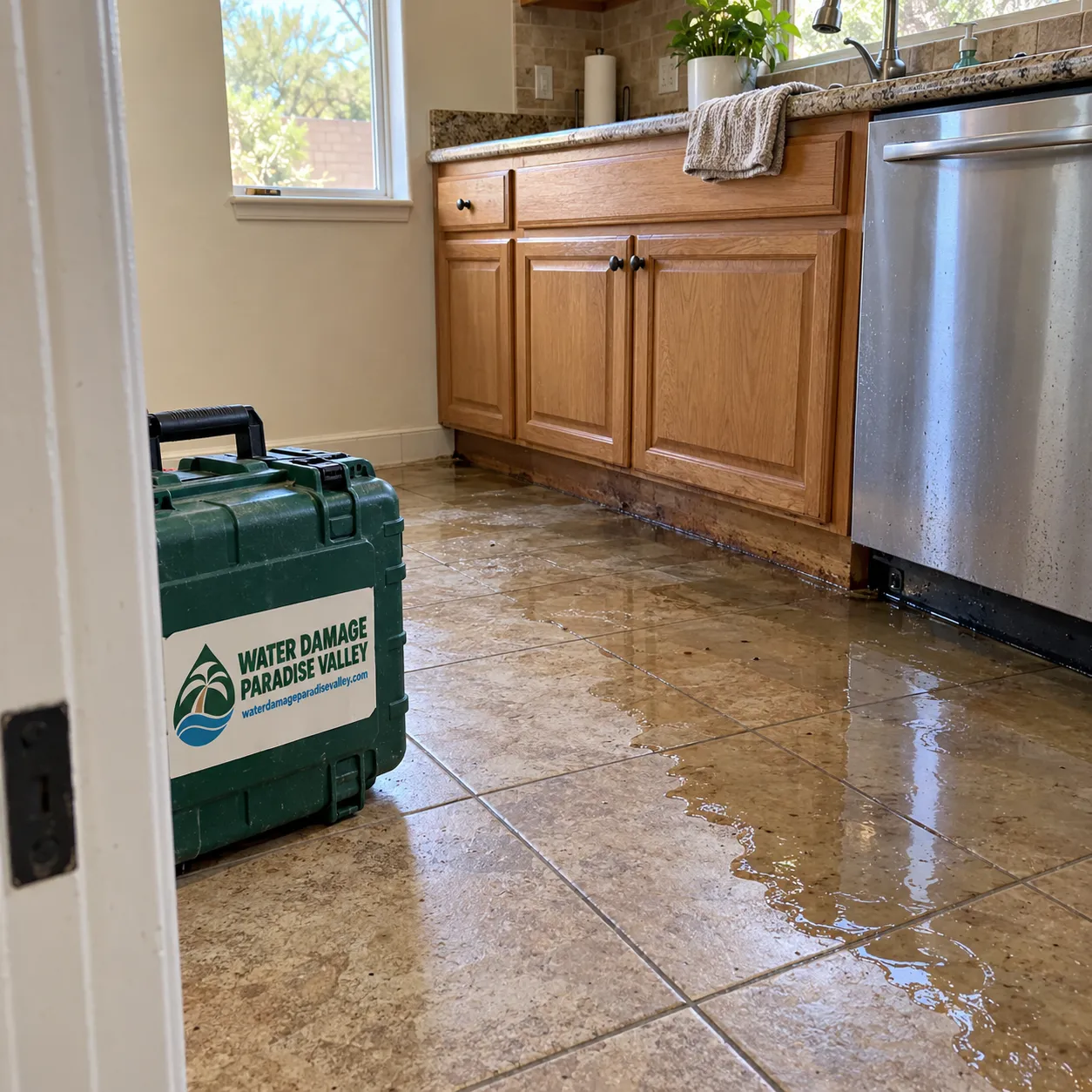
Both problems trace back to the building stock. Central Phoenix and the Arcadia area sit immediately south and west of Paradise Valley, with older ranch homes and mature irrigation; supply lines under those slabs and yards have been under pressure for decades. Signs of a slab leak: a warm or damp floor spot, running water with everything off, a bill that jumps, a meter that never stops. Signs of a burst pipe: spray, a pressure drop at the taps, wet drywall or a ceiling stain that grows fast. Monsoon season runs June 15 to September 30, and storms push water through older roofs, window seals and stucco cracks. Both get worse by the hour, so shut the main off and call (602) 671-3561.
02Costs
What do slab leak repair and burst pipe cleanup cost in Phoenix?
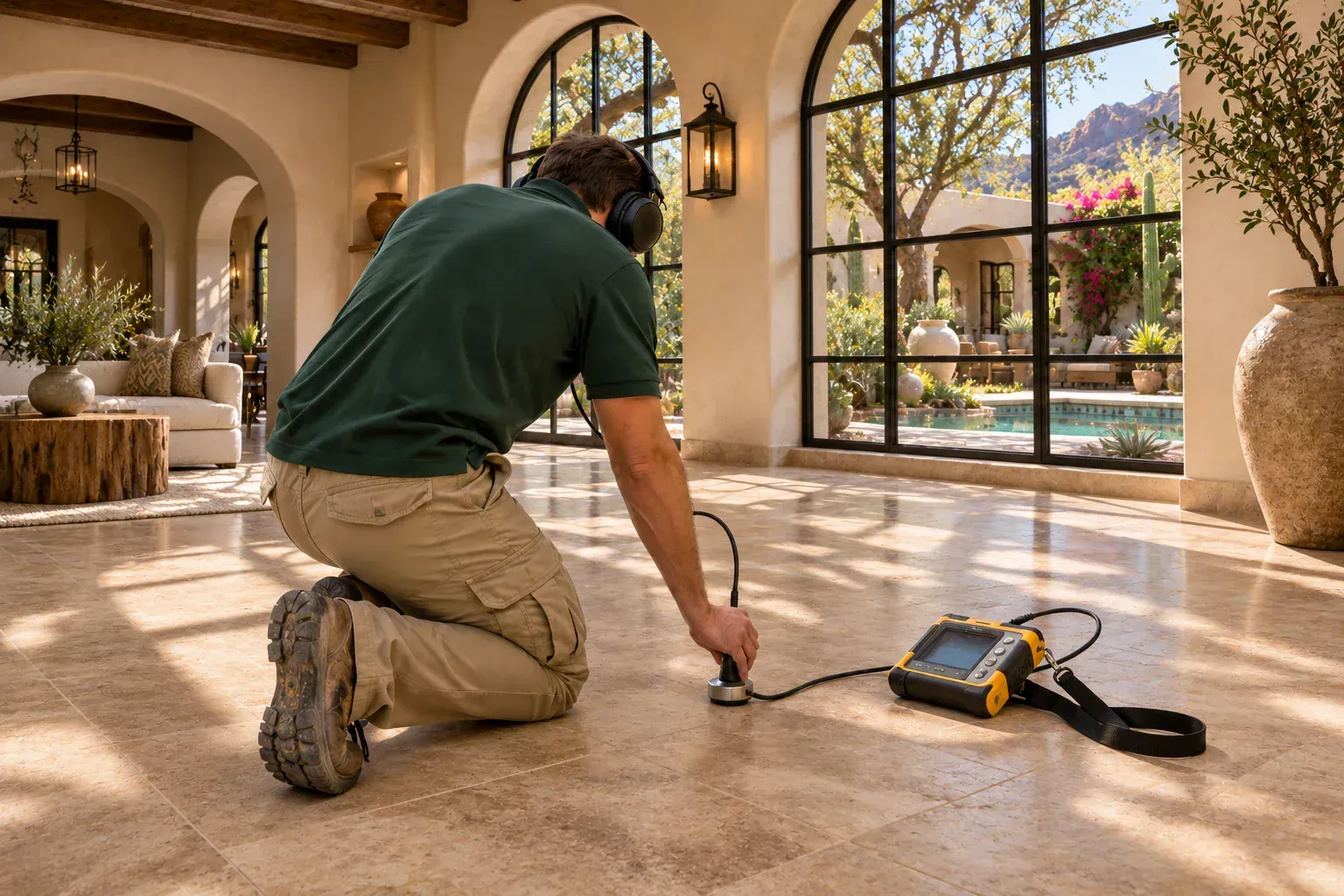
The ticket follows the hidden leak and the water it released, not the ZIP code. This Old House (opens in a new tab) puts slab leak detection at $150 to $600, with average repair at $2,300 and a range of $630 to $4,400. Home Restoration Costs (opens in a new tab) adds two more figures: slab leak plus water damage restoration at $2,500 to $15,000, and burst pipe water damage repair at $1,000 to $8,000. Ranges are published by cost guides and Phoenix-area companies on their websites (checked October 2026). They are market figures, not a quote. The actual price is set after an on-site assessment, and it depends on the affected area, the water category, and how many days the equipment runs. Ask for the findings in writing before work begins.
03Good to know
Emergency water damage restoration in Phoenix
When a pipe bursts under a Phoenix slab, emergency water damage restoration starts with the shutoff and the extraction, because water moving under a slab surfaces rooms away from the actual break and soaks flooring and framing as it goes. The city's 1950s and 1960s ranch tracts are where original supply lines often fail, and Phoenix water at up to 20 grains per gallon hard has been building scale on them for decades. Shut the main valve, then call so the leak gets located and the water can be extracted. Call us at (602) 671-3561 or read how slab leak and burst pipe work is handled and what it runs on the pricing page.
04Good to know
Water damage cleanup in Phoenix
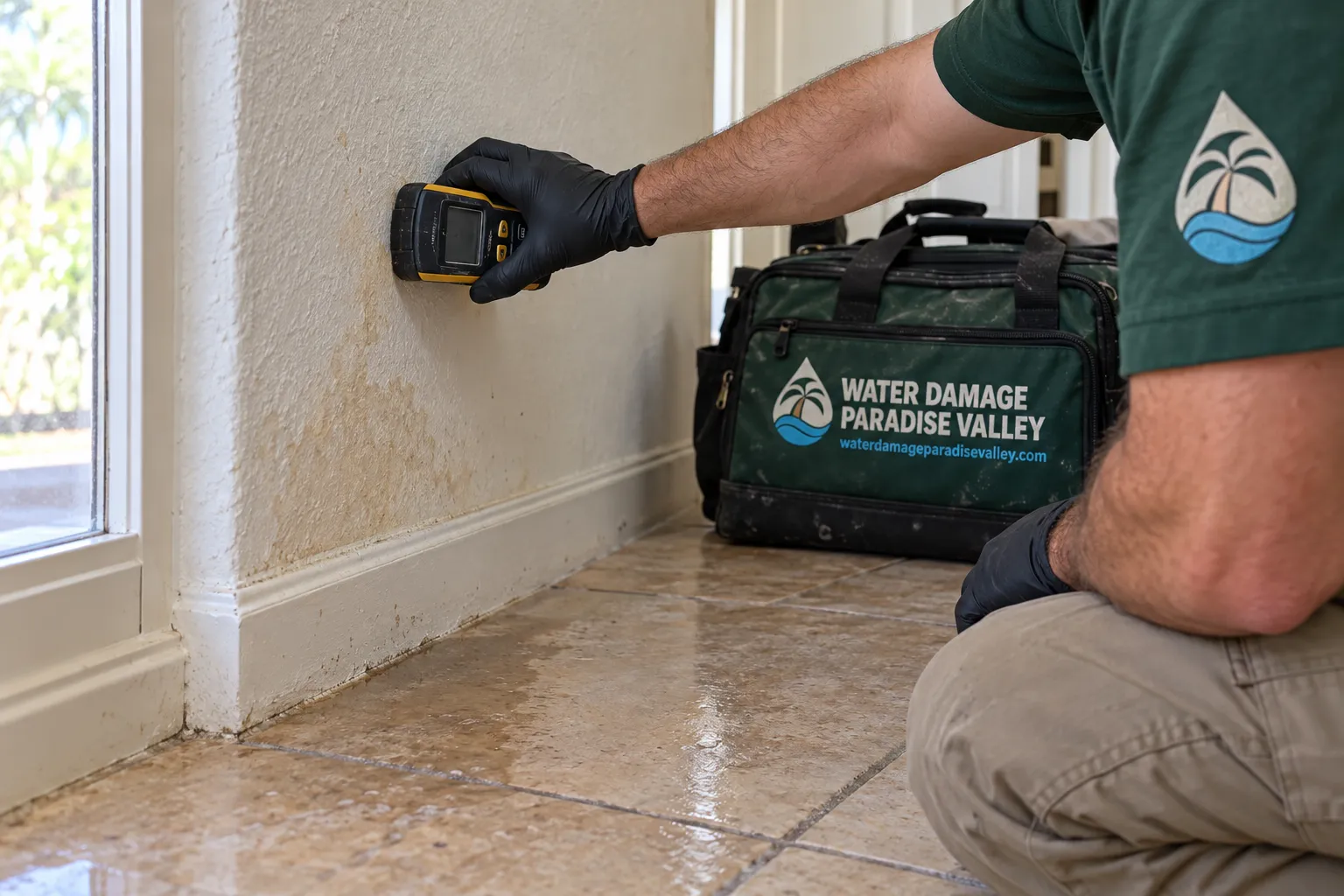
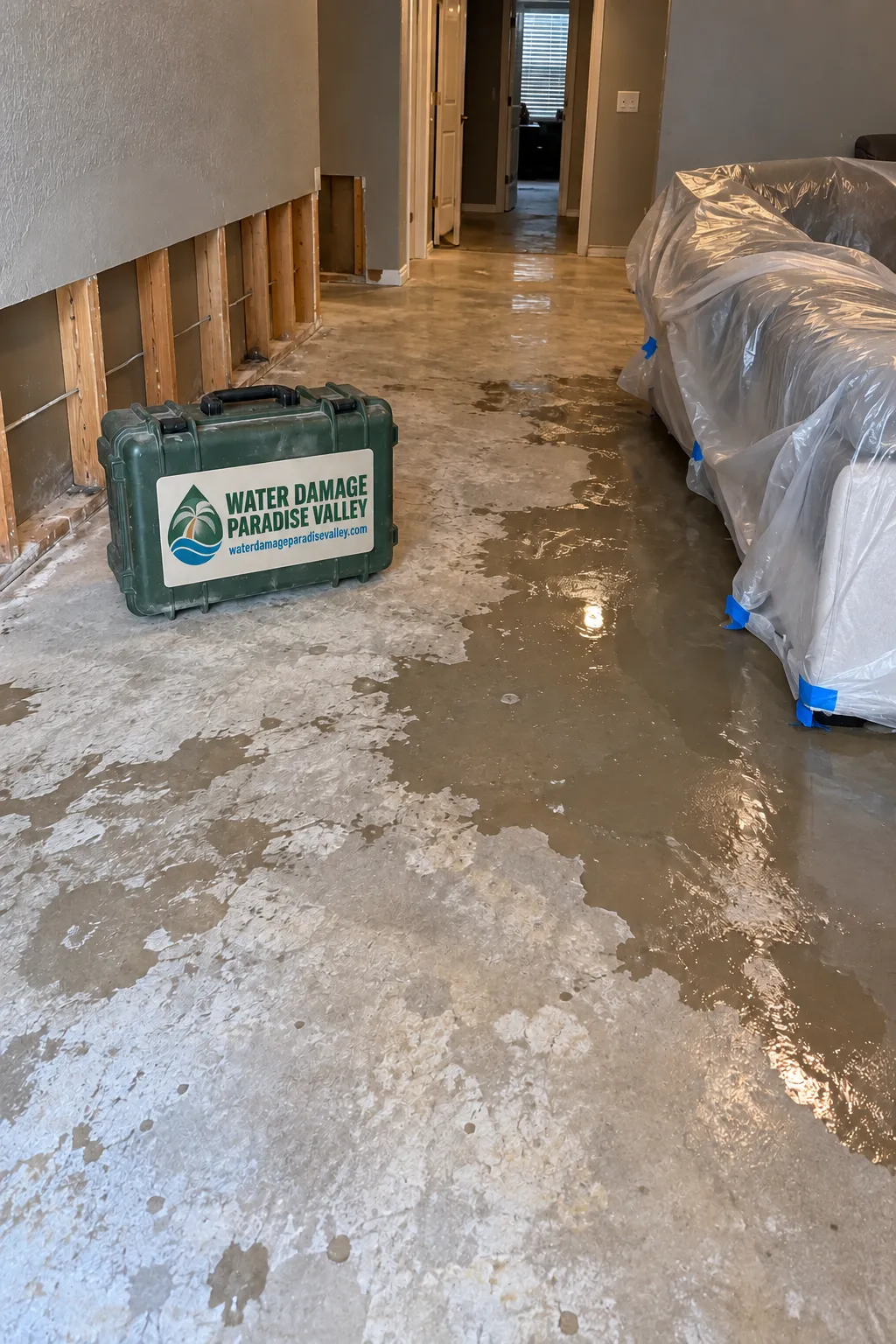
Water damage cleanup in Phoenix after a slab leak means drying the structure from below, because a leak that ran under the slab for weeks has soaked flooring, baseboards, and the wall bottoms before it ever shows on the surface. On water up to 20 grains per gallon hard, a pinhole can run quietly while the meter spins, so cleanup starts with locating the break and mapping the wet area before anything gets rebuilt. Photograph the meter and the damage for your claim. See how structural drying is verified and what it costs on the pricing page.
05Local risk
Why are older Phoenix neighborhoods harder on supply lines?
Age is the main factor in older Phoenix neighborhoods. Homes near the canals and in older neighborhoods around Arcadia and central Phoenix have aging supply lines, and the risk profile matches the rest of the Valley: IBHS (opens in a new tab) reports homes around 30 years old were about 3 times as likely to have a plumbing supply or drainage problem. Water heater failures follow a similar curve, with risk rising after year 5 and about 3 in 4 tanks failing before year 12. Heavy irrigation and monsoon storms push water into stucco cracks, so small leaks get a head start. If the break is on the city side, the City of Phoenix 24-hour water emergency line is 602-261-8000; for water inside the house, call us.
063 steps
What should you do in the first hour after a pipe bursts in Phoenix?
Shut the water off at the main first, then kill power to rooms where water is near outlets or the panel, working only from a dry spot.
Open a low faucet to drain pressure from the lines, and open cabinet doors under any wet sink so air can move.
Lift rugs and furniture off the wet floor, and photograph everything before it moves or gets tossed.
Call the City of Phoenix 24-hour water emergency line at 602-261-8000 if the break is on the service line at the street, and call (602) 671-3561 for water inside the house.
Do not cut into drywall or flooring looking for the break; detection is faster and does less damage. If the water smells or looks dirty, keep out until the source is found.
074 questions
Questions people ask
Still have a question?
Call and describe what you see. Calls are answered day and night.
Call (602) 671-356101Does a slab leak always mean jackhammer work?
No. Detection pinpoints the break first, and the repair method follows from what it finds: a spot repair, a reroute, or opening a small section of slab. Those conversations happen after the assessment, before work begins.
02How fast does water damage spread?
Fast on the wrong surfaces. Water wicks through drywall, baseboards and carpet padding within hours, and mold risk climbs when materials stay wet. Extraction and drying start as soon as the source is controlled.
03Does insurance cover slab leaks in Phoenix?
It depends on the cause. Sudden accidental discharge from plumbing is commonly covered; ground seepage and long-term leakage are commonly excluded. Your policy and your adjuster decide. Keep the detection report; it documents what happened.
04Why is my water bill high with no leak in sight?
Underground and in-wall losses often show on the bill before they show on the floor. Check the meter with every fixture and appliance off. If it still moves, water is escaping, and detection is the next step.
08Keep reading