Guide 03 · 5 min read
Does Homeowners Insurance Cover Water Damage in Arizona?
Homeowners insurance and water damage overlap in a specific way in Arizona: a burst pipe or a failed water heater is usually the covered story, while rising monsoon water is a different policy entirely. What matters is less the wording on your declarations page than where the water came from and how promptly you documented it. A standard Arizona policy typically pays for sudden plumbing failures and leaves out flood and seepage, and mold or a claim already on your record can change the answer.
01Insurance
Does homeowners insurance cover water damage in Arizona?
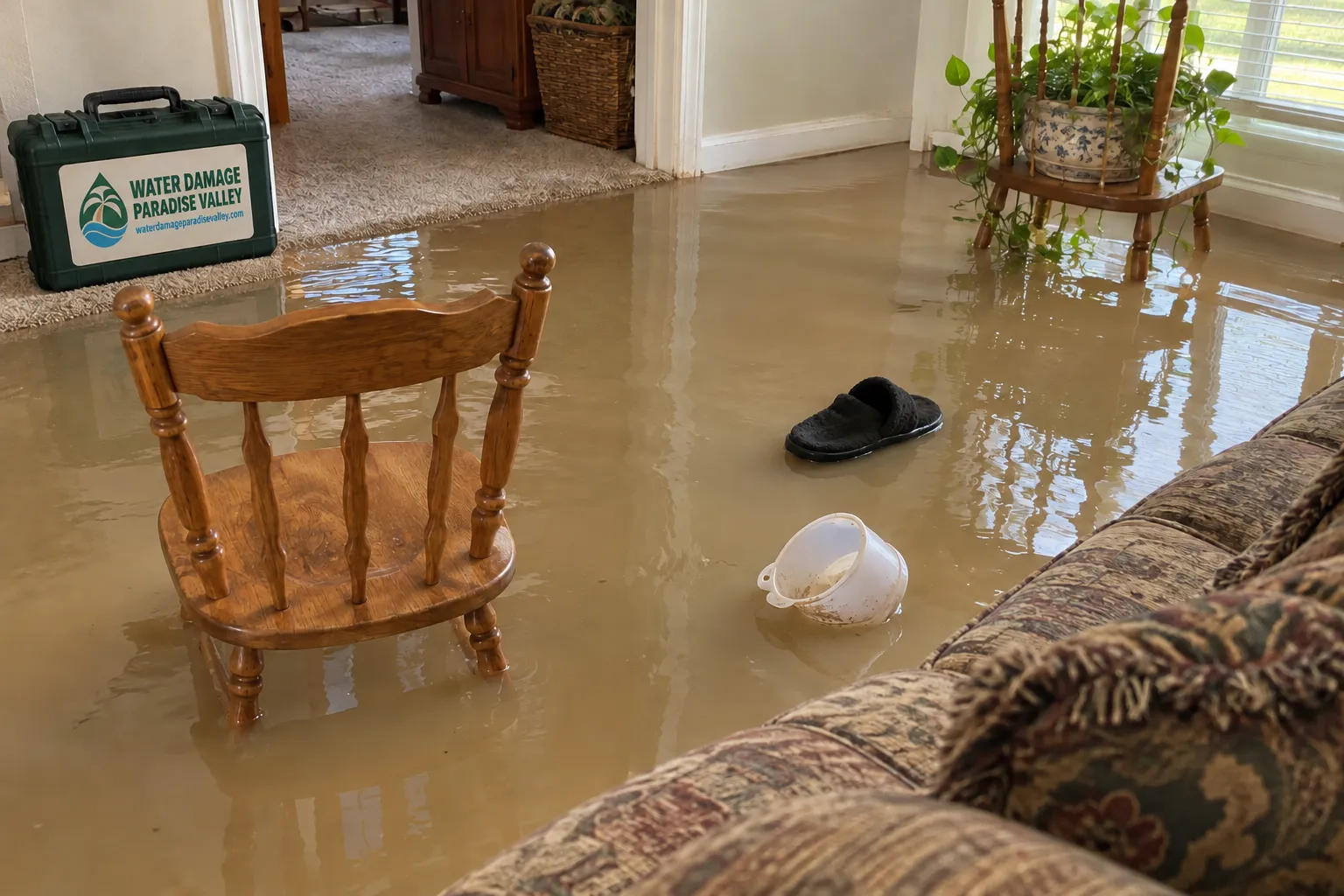
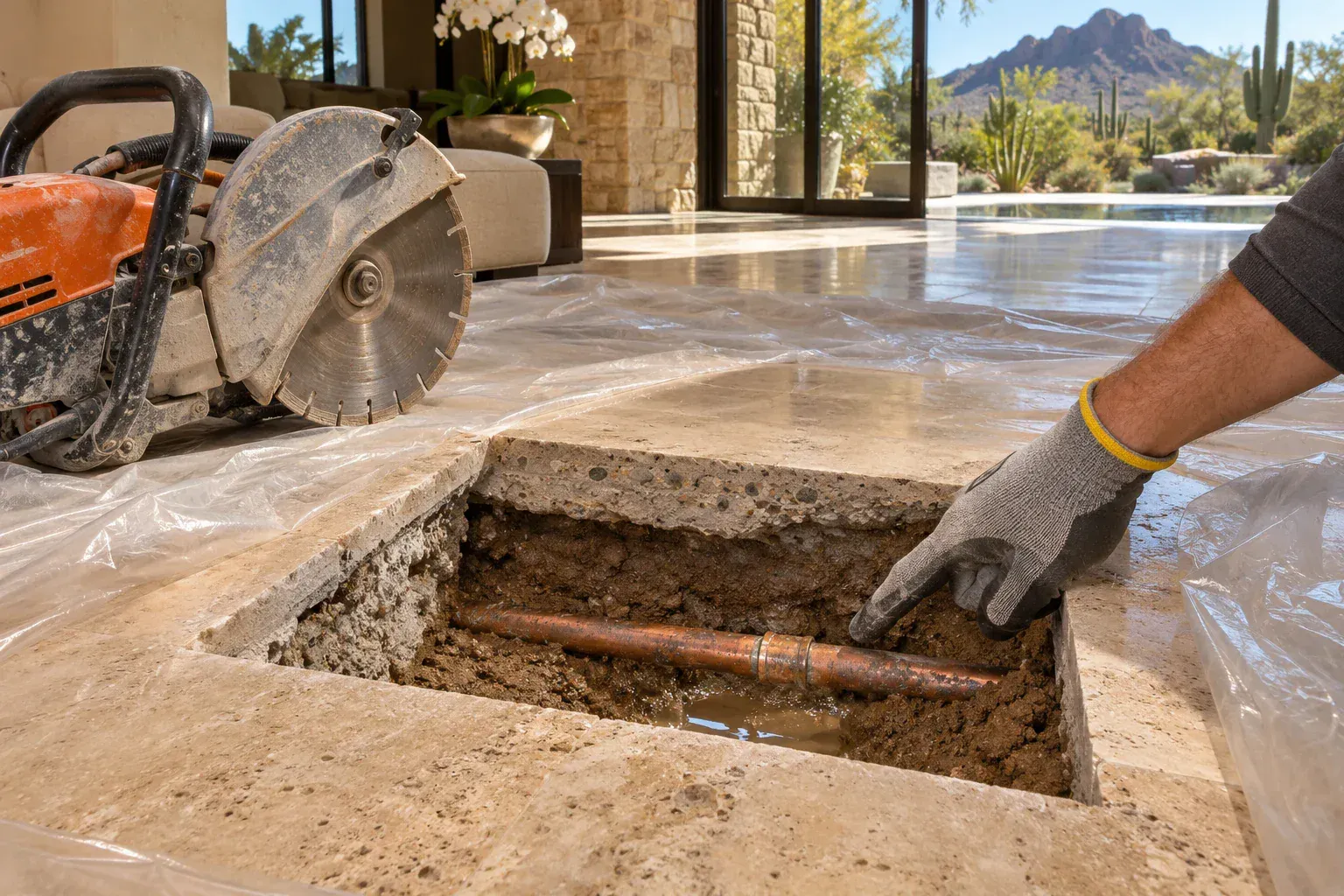
Usually yes, when the water came from your own plumbing. The Insurance Information Institute (opens in a new tab) explains that a standard HO-3 homeowners policy covers accidental discharge of water from a plumbing system, the category that burst supply lines, failed water heater tanks and overflowing appliances fall into. The same guide notes that ground seepage is excluded, so water rising from the soil against a foundation is treated differently from water escaping a pipe. For a town where 42% of homes predate 1980, that covered category matters, and it usually arrives as a damp ceiling, a swollen floor or a water-stained wall. What your specific policy does is a question for your insurer: read the declarations page and ask your agent about endorsements before you need them.
02Good to know
What kinds of water damage are excluded?
Flood is the big one. Triple-I's guide to which disasters are covered (opens in a new tab) lists flood as excluded from standard homeowners policies, and that one word covers a lot: rising water from a storm, runoff that crosses your property, and the muddy water that comes with it. Seepage and groundwater against a foundation are excluded too, which is a different claim from a failed supply line. A slow leak that has been running for months can also be reviewed differently from a pipe that bursts this morning, depending on the policy and the adjuster. The practical rule for Arizona homeowners: water that escapes from inside a pipe is the covered conversation, and water that arrives from the sky or from the ground outside is a different one.
03Insurance
How common are water damage claims, and how big are they?
More common and bigger than most owners expect. Triple-I, using ISO claims data (opens in a new tab) reports that water damage and freezing was the second-largest cause of homeowners insurance losses at 27.6% in 2022, more than a quarter of the money insurers paid out on homes. Across claims from 2018 to 2022, the average severity was $15,749, which puts a typical water claim far above a minor repair. Those numbers are part of why insurers care about the cause, the timeline and the maintenance record, and why the photos you take on the first day can carry weight months later. Not every leak belongs on a claim, but a leak that reached flooring, drywall or cabinetry is usually worth a conversation with your claims line.
04Insurance
Does homeowners insurance cover mold that follows a water claim?
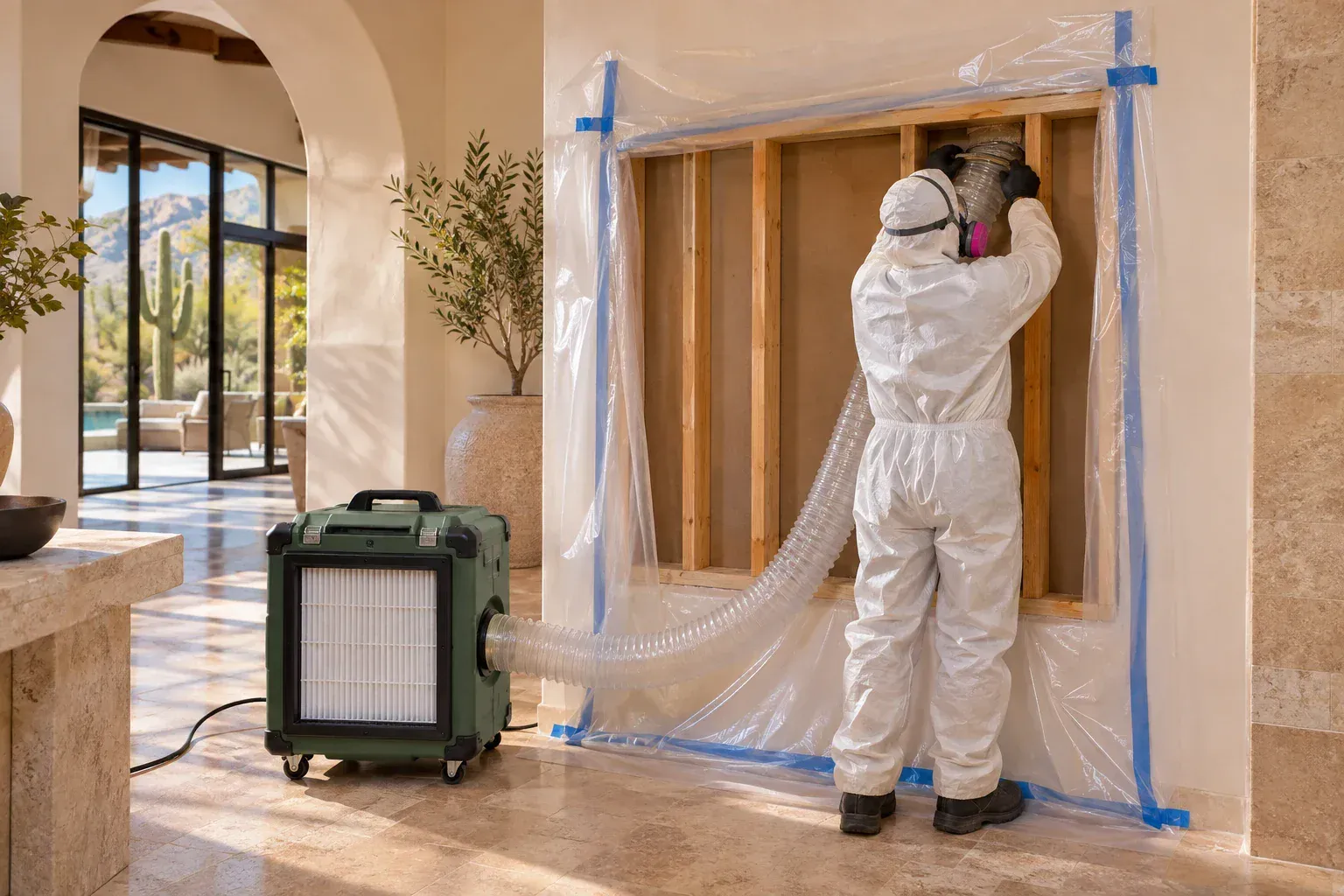
Sometimes. Triple-I (opens in a new tab) says mold is generally not covered by standard homeowners policies, with one exception: when the mold is the direct result of a covered peril, such as a burst pipe, the cost of removing it may be covered, usually up to the mold limit the policy states. That puts the weight on the timeline. If a covered leak is reported and dried promptly, the mold has a clear link to the covered event; if the water sat, the insurer can question whether the mold came from the loss at all. Read your policy's mold limit, and keep the photos and dates from day one, because that record is what connects any mold back to the covered event.
05Insurance
Do I need flood insurance in Arizona?
FloodSmart (opens in a new tab) is blunt about the basics: most homeowners and renters policies do not cover flood damage, and flood insurance is a separate policy, usually through the National Flood Insurance Program. Arizona floods are not hypothetical: monsoon storms push water through washes and across streets every summer, and a few inches across a floor is enough to destroy flooring, baseboards and cabinet toes. The cleanup bill arrives either way; whether the policy responds is the variable. Whether to carry flood coverage is a decision for you and sometimes your mortgage lender, and your agent can quote your exact address. If your property sits near a wash, below street grade, or downstream of a big desert slope, it is worth the call.
06Insurance
How does filing a water claim affect your premium?
A water claim can raise your premium or make renewal harder, which is why some owners weigh a claim against the deductible and the repair. Insurers can weigh claims history when they price coverage, and water losses are among the most common: Triple-I (opens in a new tab) reports water damage and freezing as the second-largest cause of homeowner losses. That does not mean skip a real loss: a leak that reached flooring or drywall is usually worth a call to your claims line. For a small, contained repair near your deductible, the math can point the other way. Ask your agent how a claim would affect your rates before you decide.
07Insurance
How should I document a water damage claim?
Document everything, starting before anyone picks up a towel. Photograph the source, the water line on walls and furniture, and every damaged item where it sits, then record a slow video walkthrough, room by room. Write down the date and time you found the damage and what caused it. List damaged items with ages and receipts, and throw nothing away until your adjuster says you can; soaked carpet and ruined furniture are evidence until your insurer decides what it needs. Keep receipts for emergency work, lodging and rentals, and send photos as you go instead of one batch weeks later. If you need the water out while the claim moves, call (602) 671-3561. Keep every photo in one folder, so the record is easy to find later. If water is still standing in the home, see our emergency water extraction service.

084 questions
Questions people ask
Still have a question?
Call and describe what you see. Calls are answered day and night.
Call (602) 671-356101Does it matter whether the damage was sudden or slow?
It can. Policies are built around sudden and accidental events, and a leak that dripped behind a wall for months may be reviewed differently than a pipe that burst this morning. Report the timeline honestly; your insurer decides how the loss is handled.
02Should I file a claim for a small leak?
Sometimes it is cheaper to handle a small repair yourself and keep your claims record quiet, and sometimes it is not. Get the numbers in writing, compare them with your deductible, and decide with your agent; that is a judgment call about your policy, not one a blog can make.
03What if the water came from my neighbor's side of the line?
Start with your own insurer, because your policy responds to damage inside your house. Where the water entered and who owns the line matters between insurers, and your adjuster will ask. Document what you can see on your side of the line.
04How quickly do I need to report the loss?
Promptly. Policies ask for prompt notice, and delay makes documentation harder and drying costlier. Call the claims line as soon as you find the water, even if you are still deciding whether to file; opening a file early gives you options.
09Keep reading
- What Water Damage Restoration Costs: published ranges for the Phoenix area and what drives them.
- The First 24 Hours After a Water Leak: the steps that protect your home and your claim.
- Pricing: market ranges for common jobs and what gets measured on site.
- Insurance Claim vs Paying Out of Pocket in Paradise Valley:
- Water Mitigation vs Restoration in Paradise Valley: