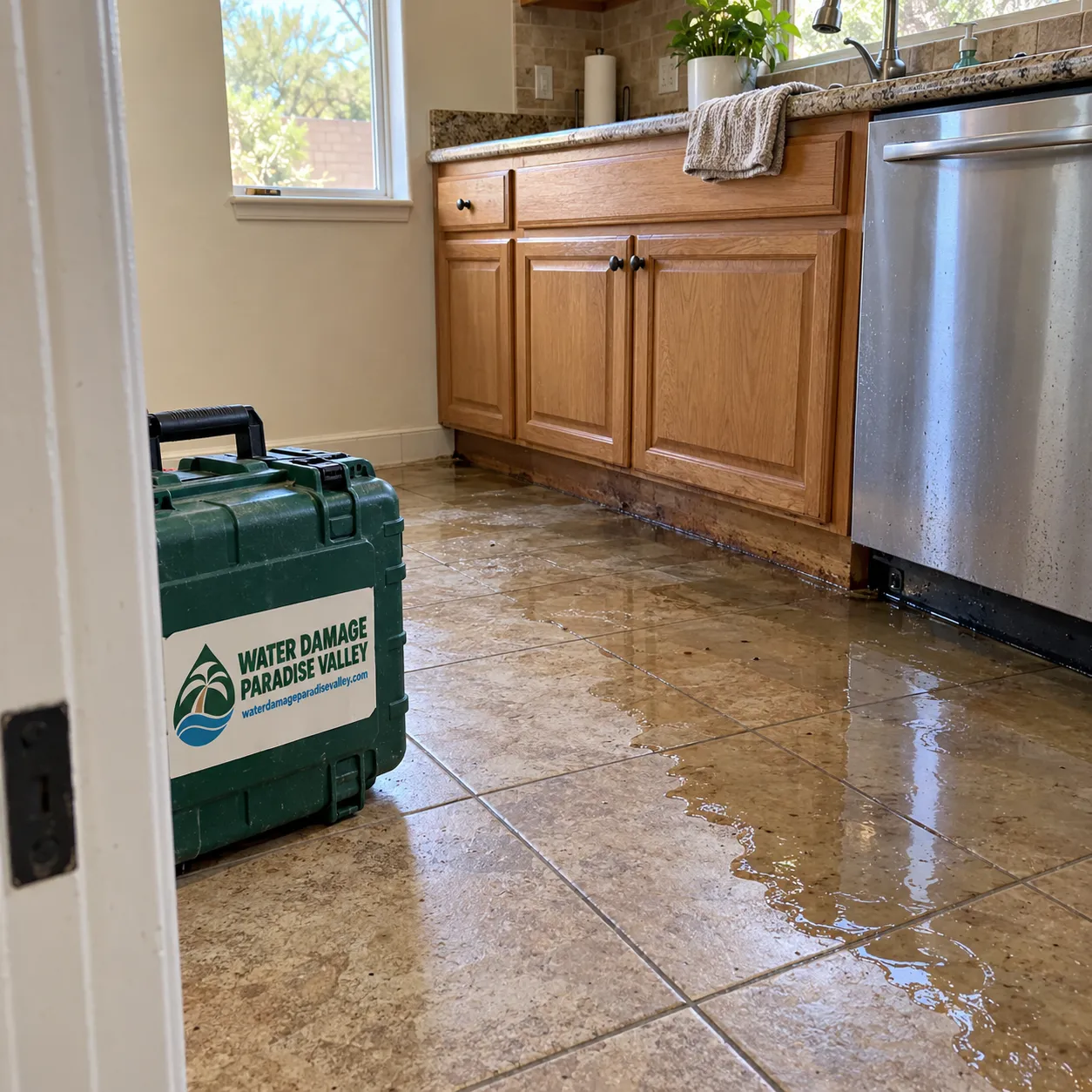
Local guide · 6 min read
Best Ways to Catch a Slab Leak Early in a Large Home
The best way to catch a slab leak early in a large Paradise Valley home is to run the meter test first and match the locating tool to the line that is leaking, because the five methods do not see the same thing. A slab leak is water escaping from a plumbing line under the concrete the house sits on, and it can show up as a meter that turns with every fixture off, a warm spot on the floor, or a bill that climbs with no change in habits. Already see water, stains or a musty smell? Call (602) 671-3561. Or tell us what happened and someone from our team will call you back.
01Good to know
The part most answers skip
The cold-water slab leak is the blind spot. Thermal imaging works best on a hot-water line warming the slab; a cold line gives little thermal signal, so the meter test, flow monitoring and acoustic listening are the better tools for it, and a homeowner can run the meter test for nothing. In a large home the sequence matters more than the gadget.
02Services
How do the five detection methods compare?
Five ways to catch a slab leak, from the free check to the pinpoint.
| Option | What it catches | Best for | Skip it if |
|---|---|---|---|
| Water meter test | A leak anywhere in the system | The first move on every home | You need the location, not just proof |
| Flow monitor at the meter | Slow, continuous flow, indoors and out | Cold-water slab leaks, empty homes | You want a pinpoint, not an alert |
| Thermal imaging | A hot-water line warming the slab | Hot-water slab leaks | The leak is on the cold line |
| Acoustic listening | The sound of water escaping under pressure | An active leak in a quiet house | The slab is thick or the house is noisy |
| Pressure and isolation test | Which line, hot or cold, is losing pressure | Confirming the scope before cutting | You need the exact spot today |
03Good to know
The water meter test
It confirms that water is leaving the system, which is the question every other method assumes is already answered. You turn off every fixture, appliance and irrigation valve, watch the meter's leak dial for a few minutes, and if it turns, a leak exists somewhere. It tells you nothing about where.
Best for: the first move on any home; it is free and quick.
Fits: a large home where a leak could be anywhere on a long run of pipe.
Skip it if: you already know a leak exists and need its location.
Arizona note: Paradise Valley is zoned mostly R-43, lots of at least one acre with one home per lot, according to the town's Residents Guide, so the meter watches a long run of pipe and any movement with everything off is worth chasing.
04Good to know
A flow monitor at the meter
It straps to the meter and watches water use around the clock, so it is a method that can catch a cold-water slab leak before it shows on the floor. Flume says its sensor reads usage down to one-hundredth of a gallon, enough to detect a dripping faucet or an outdoor sprinkler, and shows whether water is running when it should not be.
Best for: a home that sits empty part of the year, or any cold-line leak a thermal camera would miss.
Fits: an estate with a meter out front and no basement, where water under the slab is the main failure mode.
Skip it if: you want a pinpoint rather than an alert, since the monitor tells you a leak is running, not where.
Arizona note: in a home closed through the monsoon season, June 15 through September 30 according to the National Weather Service office in Phoenix, a phone alert is one way a leak gets noticed while nobody is there.
05Good to know
Thermal imaging
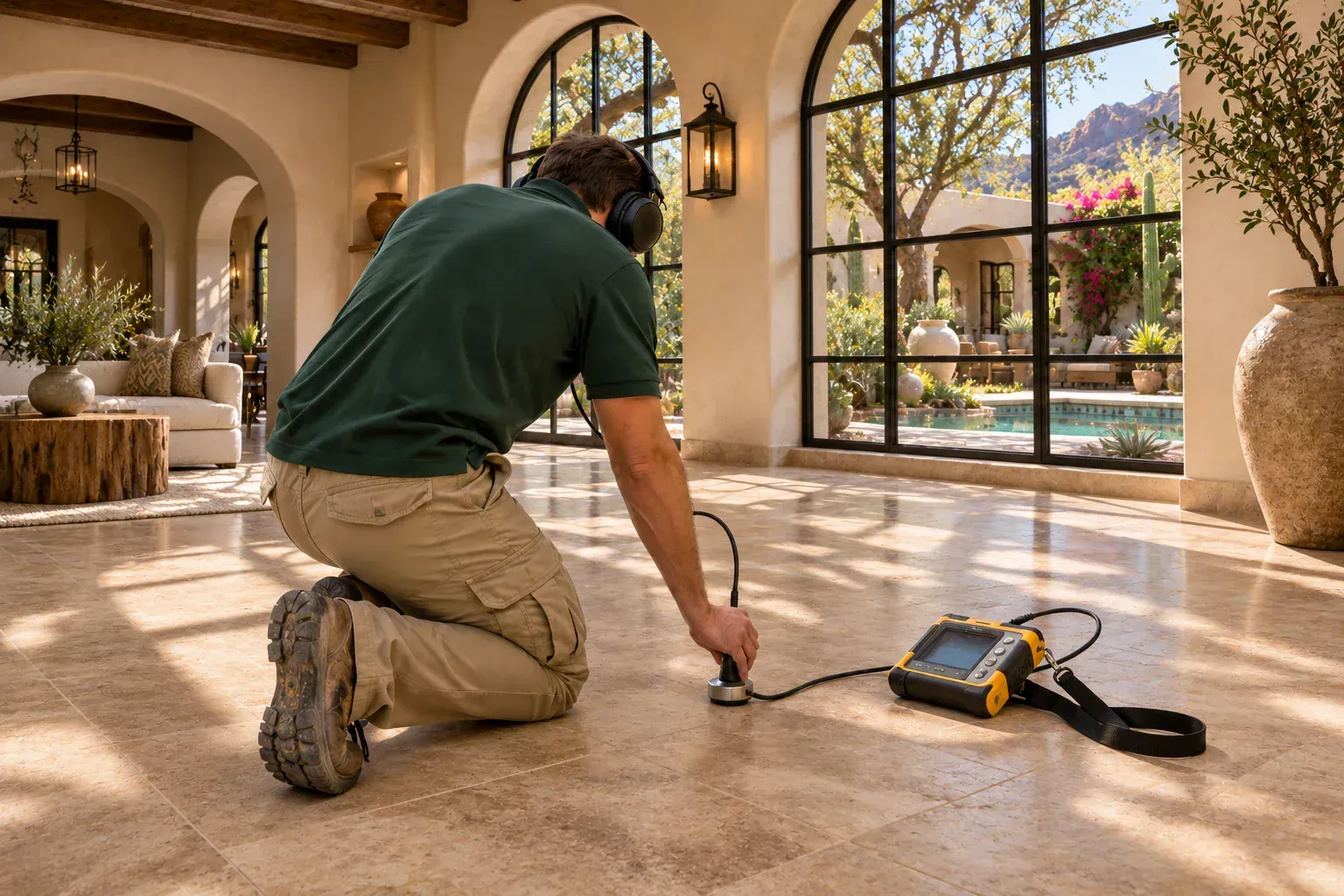
It reads the heat a hot-water leak leaves in the slab: a hot line shows as a warm zone on the image, which is why it suits a hot-water slab leak. A cold-water line gives the camera little to read, so thermal imaging is less useful on the colder leak.
Best for: a hot-water slab leak, where the warm line marks itself on the floor.
Fits: a home with a hot line running under stone or tile.
Skip it if: the leaking line is cold water, where the method is less useful.
Arizona note: a warm patch on a floor can also come from sun on the slab or from the water heater, so a contractor reads it with the hot water system off.
06Good to know
Acoustic listening
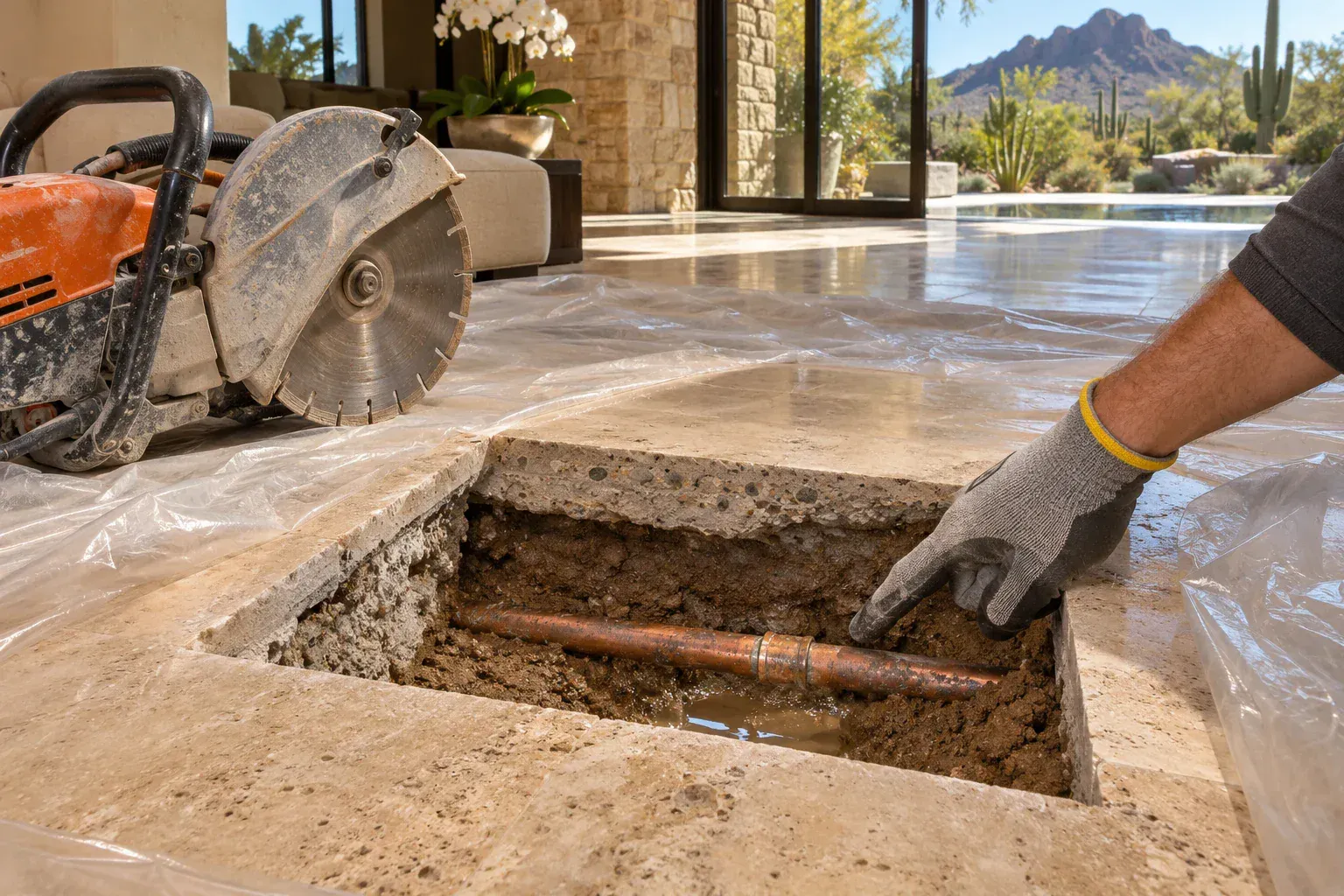
It turns the sound of escaping water into a location. A ground microphone moved across the slab in a grid finds the loudest point, which is usually close to the leak. Acoustic listening works best when the house is quiet, the leak is active and the line is under pressure, and thick concrete with rebar can scatter the sound.
Best for: pinpointing an active leak before concrete is opened.
Fits: a quiet home with a leak that is running now.
Skip it if: the slab is thick or the house is noisy.
Arizona note: in a home with the water otherwise off and the irrigation quiet, a running leak is easier to hear, so a contractor tests when the house is calm.
07Good to know
Pressure and isolation testing
It confirms which line, hot or cold, is losing pressure and how fast, by testing the hot and cold lines separately. The test names the leaking line before anyone cuts concrete.
Best for: scoping the repair, because it separates the hot line from the cold line and proves the leak is real.
Fits: a home where the meter test came back positive but the location is still unknown.
Skip it if: you need the exact spot immediately, since this test confirms but does not pinpoint.
Arizona note: a home with polybutylene pipe, which InterNACHI says was installed in up to 10 million US homes and can flake apart when disinfectants in the water act on it, is a case where this is the quick way to learn which line is losing pressure before anyone opens the floor.

08Local risk
Why this order follows the estate angle
The order moves from free to precise. A large home hides a leak in the longest run of pipe, so first prove water is leaving the system, which the meter test does for nothing. Next decide whether the leak is hot or cold, because that picks the tool: thermal for hot, flow or acoustic for cold. Skipping straight to the camera can miss a cold-water slab leak. The slab leak and burst pipe page covers what happens once the leak is found, and the protect plan folds these checks into a room-by-room schedule.

09How it works
Next step: confirm, then locate
What decides the next move is whether the meter is turning and which line is losing water. If the meter turns with everything off, shut the main valve and call for detection. If a floor is warm underfoot, the hot line is leaking and a thermal pass will find it. If the bill climbed but nothing feels warm, suspect the cold line and start with flow. A local contractor confirms which line is leaking before anyone opens the floor.
Already see water, stains or a musty smell? Call (602) 671-3561. Or read the water damage causes page to work out where the water is likely coming from.
103 questions
Questions people ask
Still have a question?
Call and describe what you see. Calls are answered day and night.
Call (602) 671-356101Can I find a slab leak myself?
You can confirm one with the meter test, which needs no tools. Locating it to a spot you can open takes a ground microphone, a thermal camera or a pressure rig, and that is where a specialist earns the call.
02How long can a slab leak run before it shows?
As long as nobody notices. In a home that sits empty, a slab leak can run unseen. Water goes into the ground and up through the slab, so the first sign is often a bill or a warm floor, and by then the structure below the finish floor has been wet for a while.
03Does the water meter test cost anything?
Nothing but a few minutes. Turn every fixture and the irrigation off, watch the leak dial for a few minutes, and if it moves, water is leaving the system.
11Sources
Sources
- Flume, Flume 2 Smart Water Monitor
- InterNACHI, Polybutylene for Inspectors (opens in a new tab)
- National Weather Service Phoenix, Monsoon Awareness Week (opens in a new tab)
- Town of Paradise Valley, Residents Guide (opens in a new tab)
Last checked: November 2026