Service 06 of 07 · Paradise Valley, AZ
Commercial Water Damage Restoration in Paradise Valley, AZ
You have water in your business and a reopen date to protect. Containment, a written scope and drying around your hours come first. Call day or night, or send the form, and someone from our team will call you back soon.
Paradise Valley · Scottsdale · Phoenix · Tempe · Fountain Hills · Cave Creek
01What you get
Wet zone contained, dried around your business hours
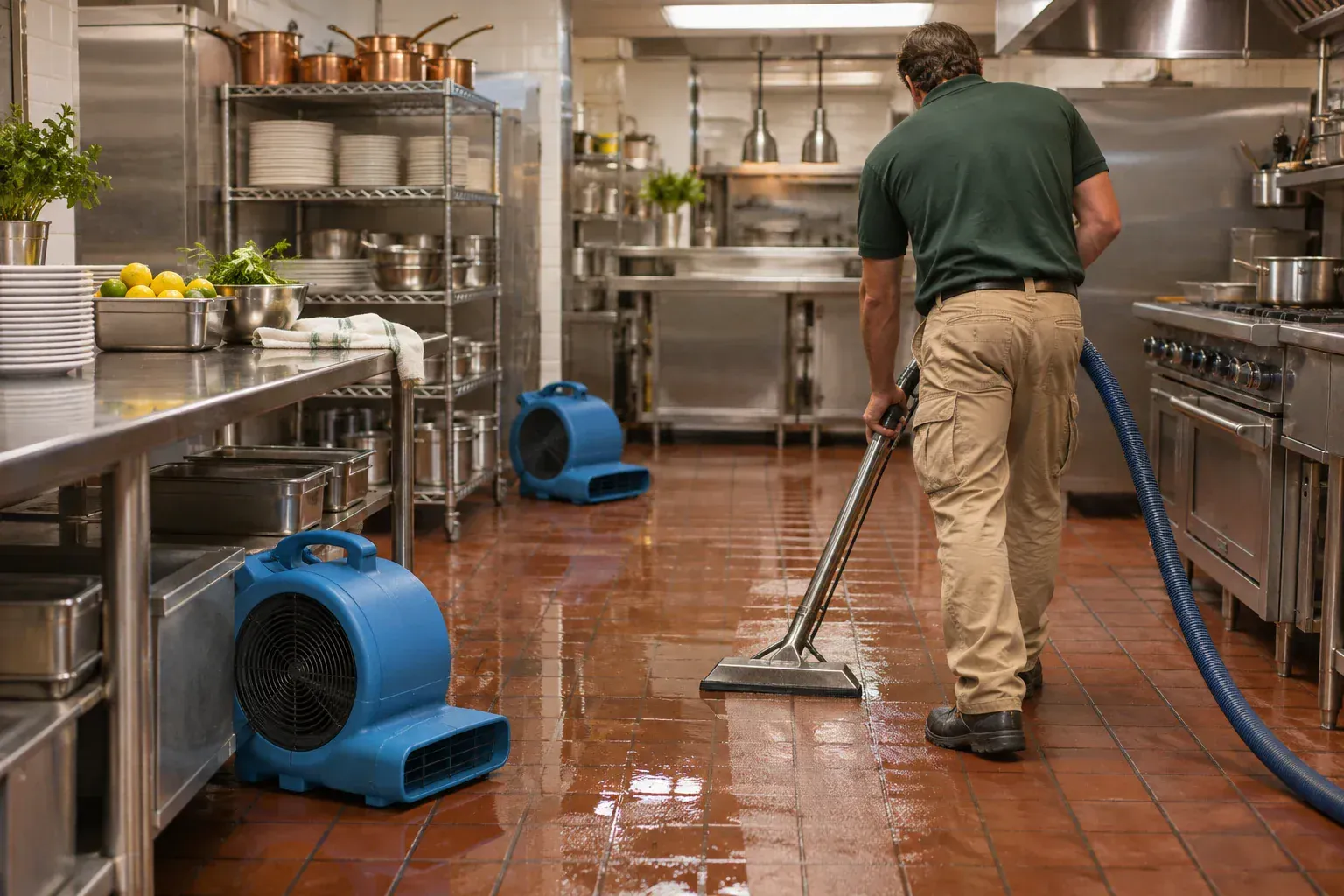
When water hits a business, the drying is one scope and the calendar is another. For offices, clinics, restaurants and the service businesses around Paradise Valley and the corridor towns, a wet zone can often be contained so the working side stays open.
- Containment around the wet zone so the working side can stay open where it can be separated
- Loud equipment scheduled for closed hours
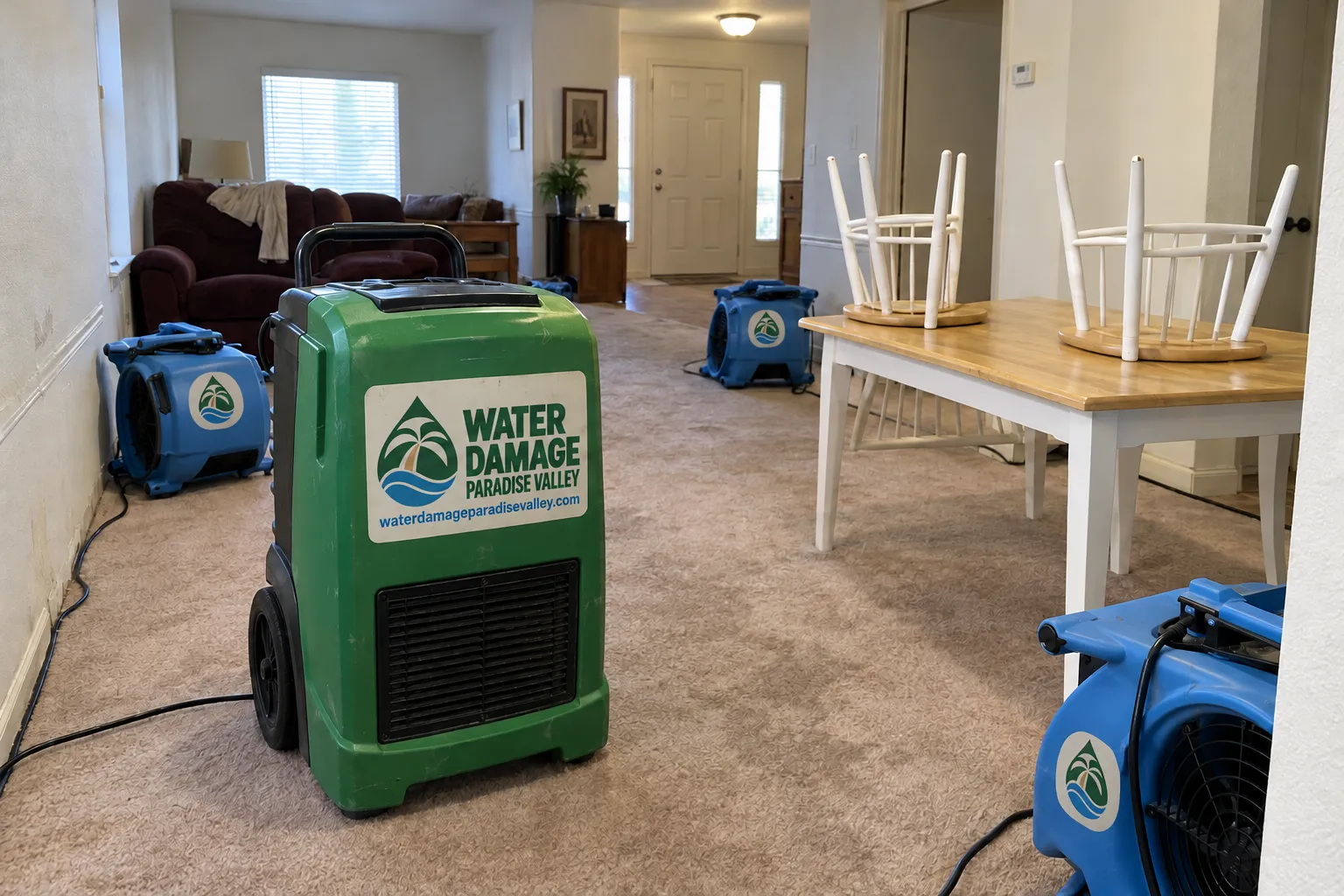
- A moisture map, dated drying readings and an equipment log
- A written scope and schedule, room by room
- Paperwork that names every party from the first visit: landlord, tenant and insurer
02Warning signs
5 signs you need commercial water damage restoration
- 01
A room is out of service and revenue stops
rent, payroll and lost sales run every day a space is unusable.
- 02
Staff or customers share the building with the wet zone
people come first, then pipes.
- 03
Inventory, electronics or records sit in or near the water
they get moved or protected before the drying setup goes in.
- 04
A landlord, a tenant and an insurer all touch the loss
the paperwork has to name every party.
- 05
The water was found after hours
a supply line that fails at 2 AM can run until the opener arrives at 7.
03How it works
Three steps from the first call to a reopen plan
- 1
Call or send the form, day or night. Tell us where the water came from.
- 2
Someone from our team calls you back. We go over what happened and what comes next.
- 3
A walkthrough, a written scope and drying follow. Containment goes up around the wet zone, readings are taken and dated, and the plan is built backward from your reopen date.
04Costs
How is a commercial job priced?
By the same variables as any water job, scaled up. Square footage that got wet, the water category, the materials it reached, and the access the building allows all move the number. Published cleanup and drying ranges in this market run about $3 to $7 per square foot (Home Restoration Costs), with extraction and drying figures on the pricing page, and commercial jobs sit above house jobs on the same curve because containment, hours and documentation run longer. Those are market figures, not a quote. The real number is set after a walkthrough that includes the places the water went, not just where it shows. The full breakdown by service is on the pricing page. A commercial scope also names the rooms that stay closed, not only the ones that get dried.
05Good to know
What counts as a commercial water damage job?
Any water loss where the building has to get back to work, not just back to normal. Offices, clinics, restaurants, retail, salons, and multi-unit properties all fit, and each one brings an extra layer the house next door does not have: staff and customers to keep safe, equipment and inventory to protect, and revenue that stops while a room is out of service. The water itself does not know the difference. A failed supply line under a dish station and a failed supply line under a kitchen sink start the same way. What changes is the plan: containment that keeps the public side open, work hours that fit the business, and paperwork that names every party involved, from the landlord to the tenant to the insurer.
06First steps
What should you do in the first 10 minutes at the business?
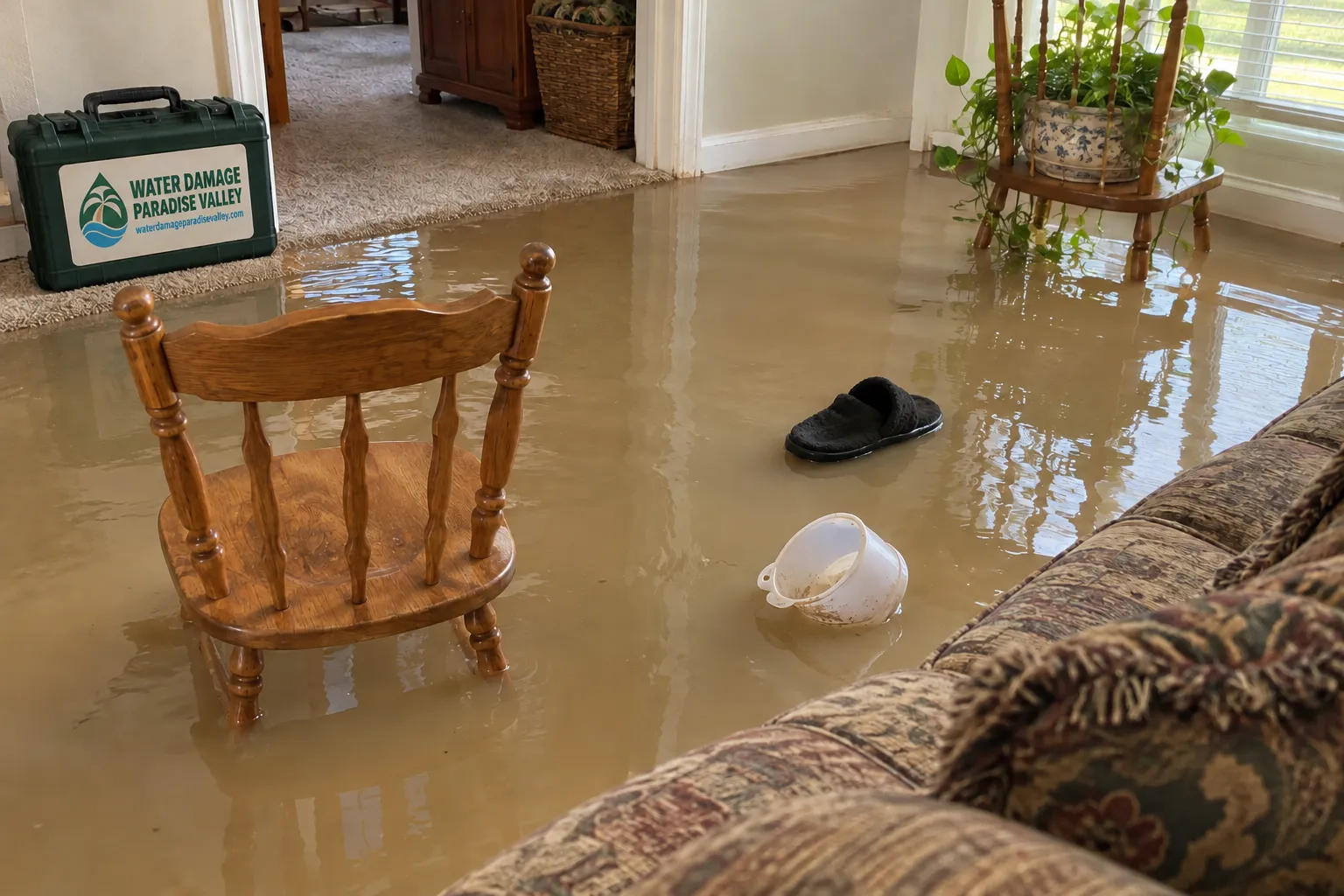
Move people first. Get staff and customers out of the wet area, and keep every person away from electrical panels, outlets and equipment in the water; Ready.gov is blunt about not touching electrical equipment when it is wet or when you are standing in water. Shut the water off at the main valve or the failed line if it can be reached safely. Photograph the source, the water, and the damage before anything moves, and write down the time the water was found, because the claim timeline starts there. Then call (602) 671-3561 and describe the building: what the business is, how many rooms are wet, and whether you are open, closed, or partially open right now. That last detail shapes the whole plan. Say whether you are open or closed early in the call; it changes who gets scheduled and how the visit is scoped. That is also why the first question on the call is about people, not pipes.
07Good to know
Can the business stay open while it dries?
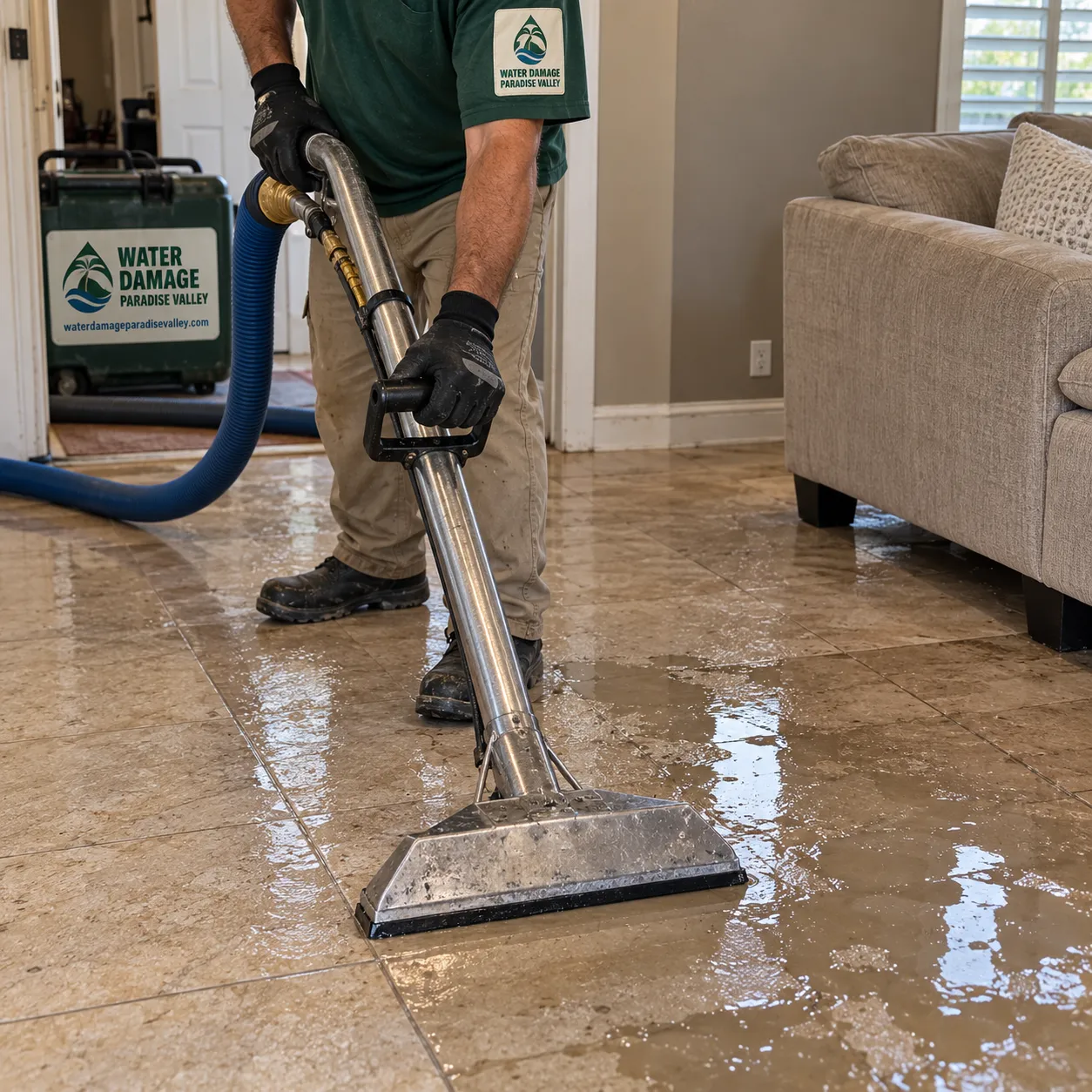
Often, yes, when the wet zone can be separated from the working side. The tools are the ones commercial jobs use: plastic containment from floor to ceiling around the affected area, negative air pressure so dust and odor flow into the work zone instead of out of it, floor protection on the routes people still walk, and loud equipment scheduled for closed hours. A restaurant might keep the kitchen line running while the dining room dries; an office might move a wing's worth of desks and keep the rest working. The deciding factors are safety and access, not convenience.
08Costs
Why does downtime cost more than the drying?
Because the drying is one invoice and the calendar is a different ledger. A business pays for the crew once; it pays rent, payroll and lost sales every day a space is unusable, and those numbers do not stop arguing with each other. That is why commercial water jobs get planned backward from the reopen date: what needs to be dry first, what can keep running, and what work happens overnight. It is also why the first call describes the business, not just the leak. A dental office, a boutique and a restaurant can have the same square footage of water and three completely different definitions of the word urgent. The drying plan gets built around your definition, not the invoice's.
09Insurance
What should the insurance file contain?
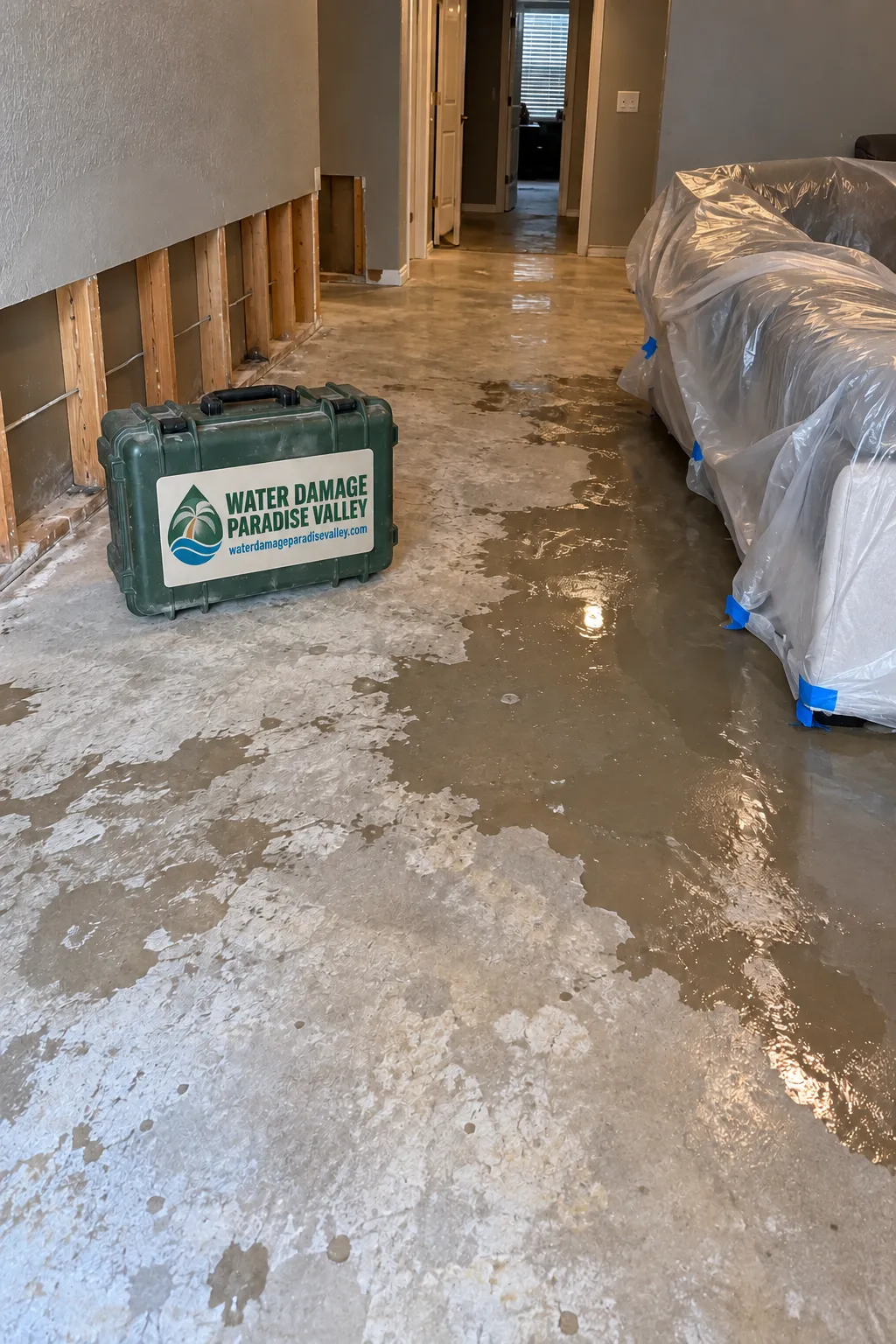
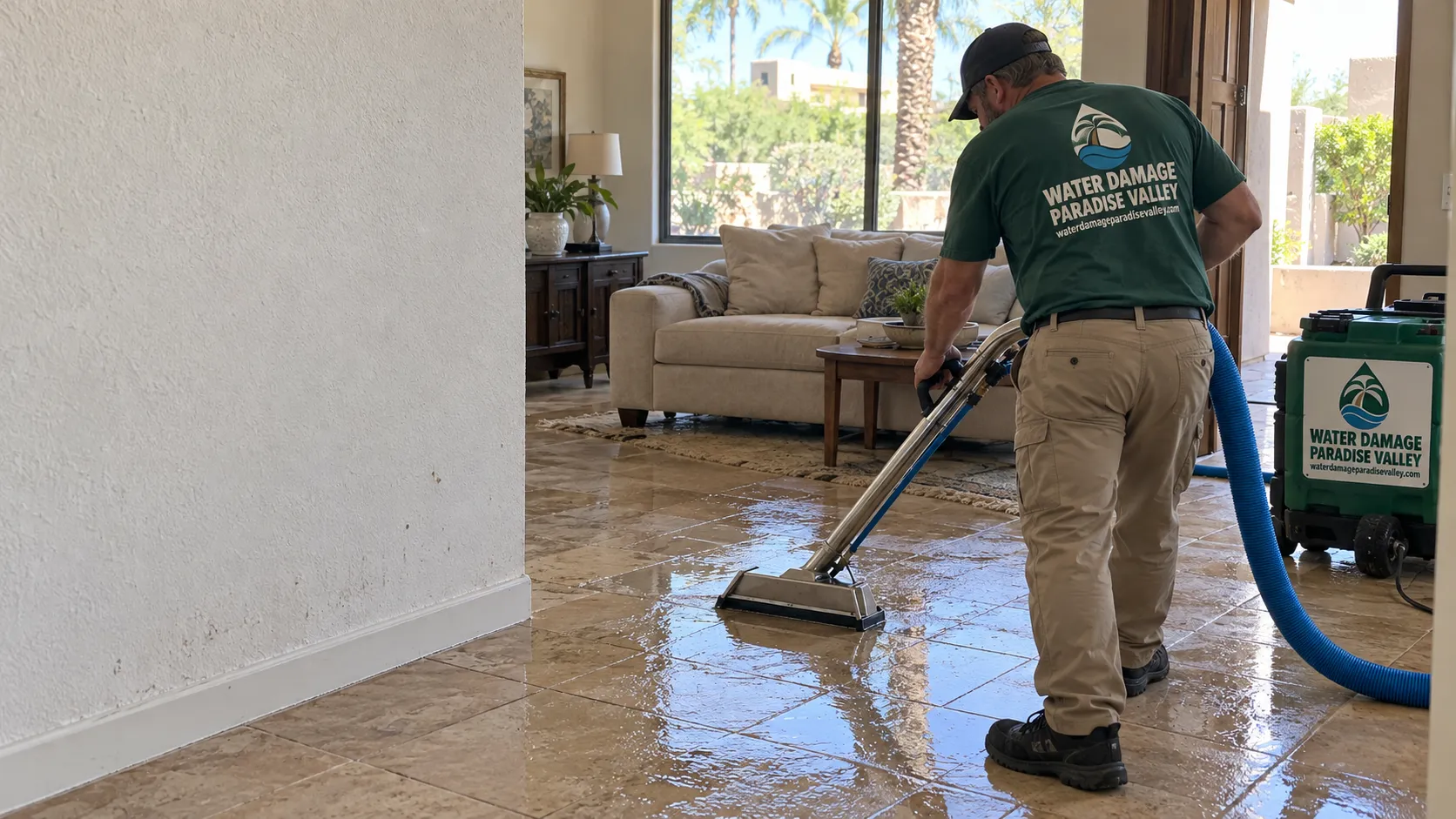
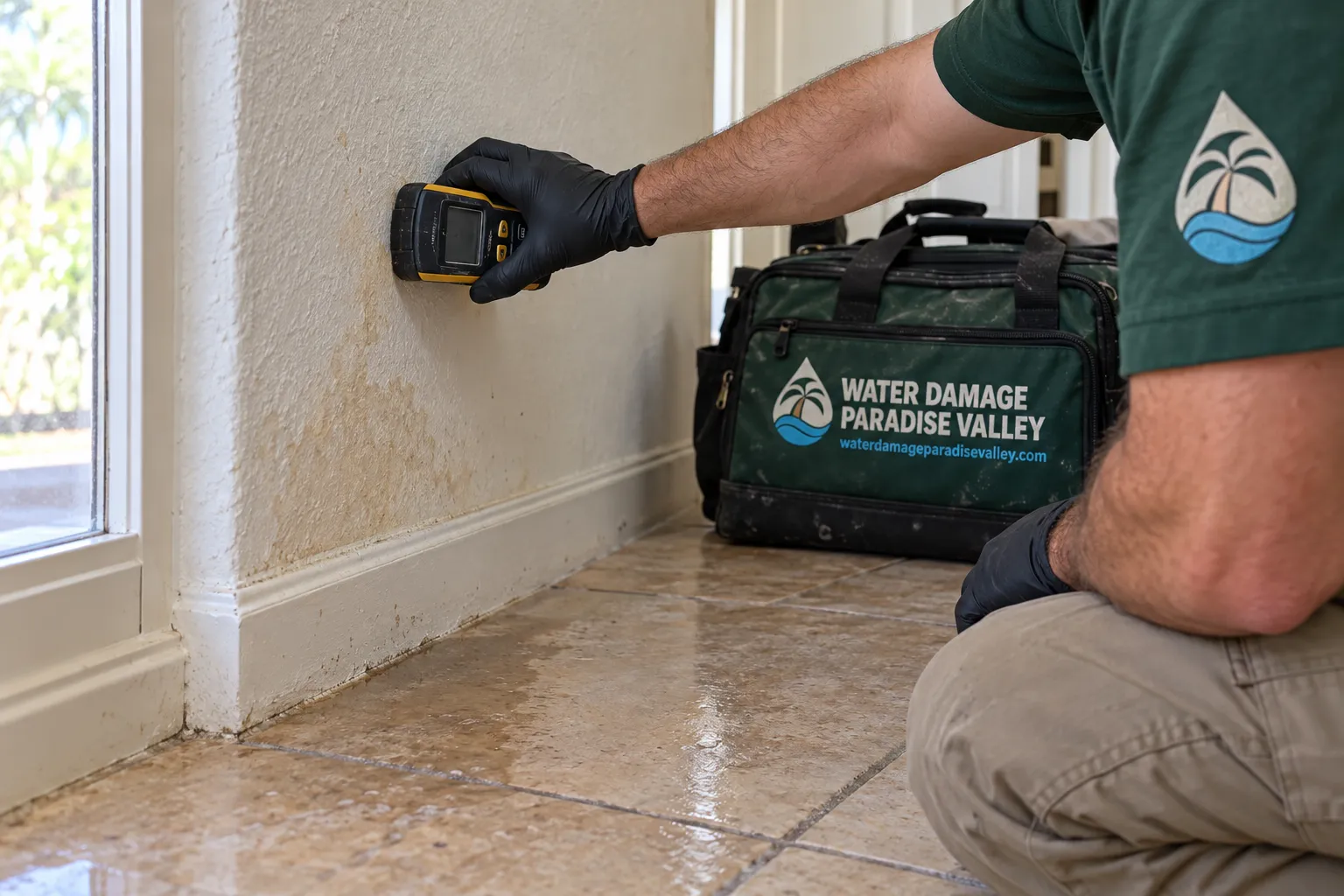
More than a house file, because more parties touch it. The core set: photos of the cause before anything moved, a moisture map of the affected area, daily drying readings with dates, an equipment log of what ran where and for how long, and a written scope of work. For a leased space, the file also separates the building from the tenant improvements and from the contents, since those can sit under different policies held by different people. Keep the discovery timeline tight: when the water was found, when the space was closed, when it reopened. The crew documents its side; the business should keep its own copy of everything, organized the same way. Nothing leaves the file, either; even a plumber's invoice helps tell the story later.
10Good to know
What changes by type of business?
The water category and the reopening rules. Restaurants and kitchens deal with grease and food safety, so water that touched them often gets treated as dirty water, with cleaning and sanitizing, not just drying. Clinics and dental offices need surfaces cleaned and sanitized to their own standards before people are treated in the space again. Salons carry chemicals on the floor and in the drains. Retail lives and dies by inventory, so stock protection drives the plan. Offices put electronics and records first. And multi-unit properties document unit by unit, because one riser failure can become several owners and several policies in one afternoon. For mixed-use buildings, each space gets treated to the strictest tenant on the block; a kitchen sets the standard for the wall it shares with an office.
11Good to know
Who does what when the building is leased?
The first job is figuring out where the water started, because that answer decides who pays for what. A line inside the tenant's suite, the roof over the whole building, and the riser in the common wall are three different claims. Call the landlord or the property manager the day you find it, keep both sides' documentation separate, and photograph everything before repairs start, including the parts the landlord owns. The work itself can usually proceed while the coverage questions sort out; the paperwork just needs to name every party from the first visit so nothing gets rebuilt before it has been seen and logged. And when the insurer wants an adjuster to visit first, the drying still starts; the paperwork can catch up to the physics.
12Service area
Which areas do you cover for commercial work?
Paradise Valley first, then Scottsdale, Phoenix and Tempe along the corridor, and Fountain Hills and Cave Creek to the northeast, which covers most of the area where these businesses sit. The service areas page lists the towns, and each town page covers its own local picture. For commercial losses, say the address and the building type when you call, because both change the plan: a restaurant on Scottsdale Road and a warehouse near the 101 need different schedules out of the same crew. Calls are answered day and night, and after-hours scheduling is normal for this work. Two examples of the same square footage: a cafe with water in the dining room, and a dental suite with water in the sterilization room. Same area, different first hour, and the call sorts it out. If the address sits outside these towns, call anyway; the answer is quick, and a no is a fast no.
13Good to know
What does a commercial job look like on day one?
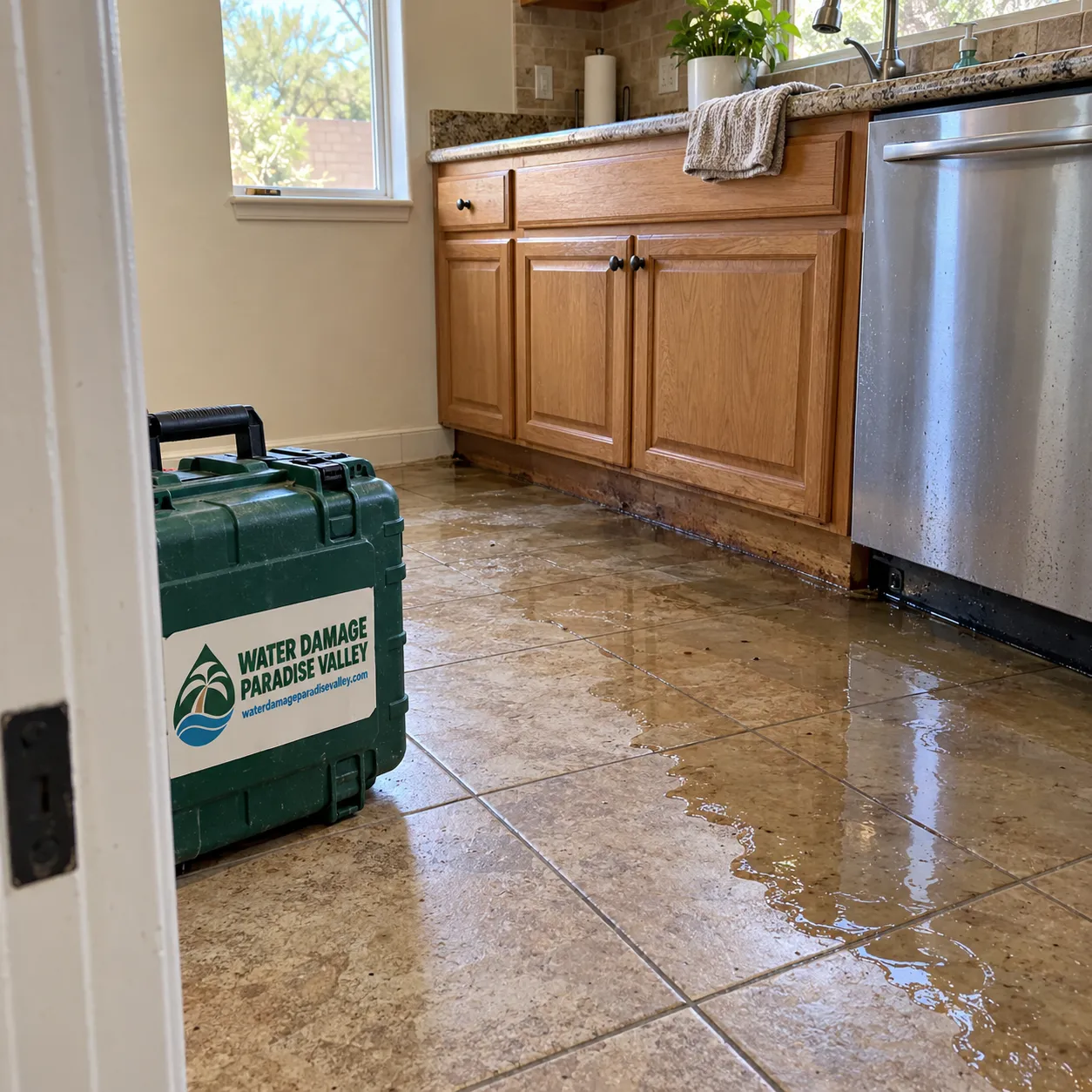
Day one is diagnosis, not demolition. The crew walks the building with you: the source, the wet rooms, the rooms that look dry but sit downhill of the water, and the priority list in your words, like the server closet or the health inspection coming Friday. Then the moisture map gets built, readings get taken and dated, and containment goes up around the affected zone before any loud work starts. A written scope and schedule follow, room by room. For a business, that first visit doubles as the first insurance document, and the whole claim file grows from the readings. That walkthrough also sets the reopen target, which is the number everyone actually cares about.
14Drying window
What about floods that happen after hours?
Commercial losses do not check the clock, and the building is often emptiest when they start. A supply line fails at 2 AM and runs until the opener arrives at 7. The practical playbook for that: shut off the water if anyone on site can reach the valve, keep the shutoff location written down somewhere in the office, and call when the water is found rather than when it is convenient. Calls are answered day and night, and the first hours are the ones that decide the size of the job. If the business is closed for the night, say so on the call, and say how access works, because the visit gets planned around getting in. An overnight head start is what keeps a Monday reopening on the table.
155 questions
Questions people ask
Still have a question?
Call and describe what you see. Calls are answered day and night.
Call (602) 671-356101Can you work outside our business hours?
Yes. After-hours and overnight schedules are common on commercial jobs, because the loud equipment runs when the building is quiet, and the readings get recorded before the team arrives in the morning.
02Do you coordinate with a facilities manager or property manager?
They become the point of contact: scope, schedule and daily readings all flow through them, with the owner and tenant getting the same record. Name the people who need updates when you call.
03What happens to servers and other electronics?
They come first. Electronics, records and anything else that water ruins fast get moved or protected before the drying setup goes in, and wet electronic equipment stays off until it has been checked.
04How fast can a crew get to a commercial loss?
Calls are answered day and night. Describe the building, the wet area and whether the business is operating right now, and the first answer will include the timing.
05Does a commercial job include mold if it is found?
Yes. If readings or smell point to growth, the mold remediation side handles it under the same project, so the business deals with one crew and one file instead of two.
16Keep reading
- All services: every water service for Paradise Valley and the corridor towns.
- Emergency water extraction: water still moving or standing right now.
- Mold remediation and removal: when water left growth behind.
- Pricing: published market ranges, with the source named for each range.
- All service areas: Paradise Valley and the 5 towns around it.
- Water Damage vs Flood Damage in Paradise Valley:
- Water Mitigation vs Restoration in Paradise Valley: