Local guide · 6 min read
Hidden Leaks in Casitas, Pool Houses and Guest Wings
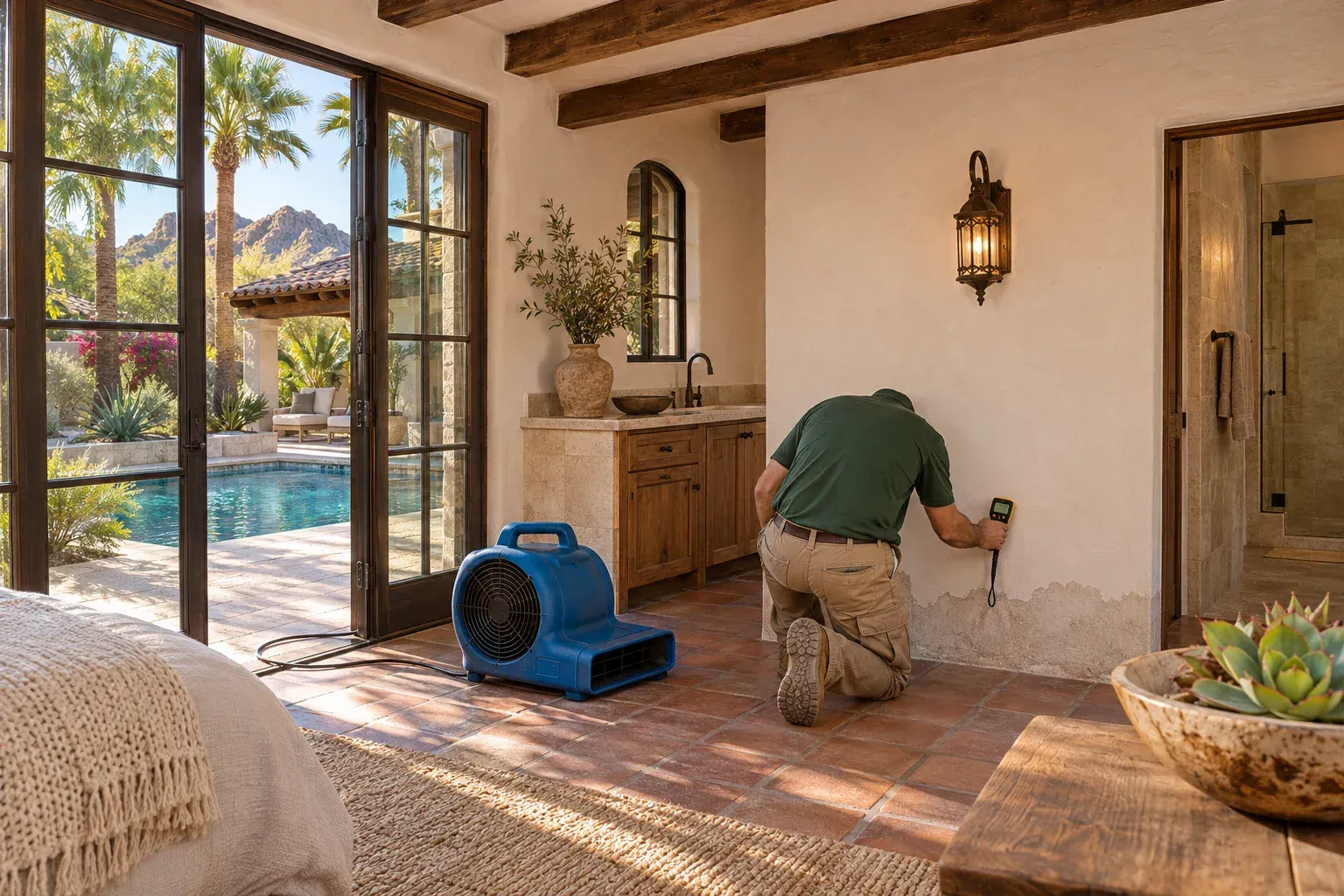
Hidden leaks in a Paradise Valley casita, pool house or guest wing start at the systems the building does not share with the main house: its own water heater, its own buried supply line, its own cooling line, and whatever pool plumbing sits next door. They can go unnoticed for a long time because nobody sleeps there every night, and the first sign is usually a water bill, a musty smell, or a damp corner in a room that is supposed to be empty. If you already see water, stains or a musty smell, call (602) 671-3561. Or tell us what you found and someone from our team will call you back.
01Good to know
The part most answers skip
A casita is not a small house, it is a second house with thinner attention. It often runs its own water heater and a dedicated supply line from the main house or the meter, and it has a cooling unit and a bathroom that can sit unused for months. Paradise Valley is zoned mostly R-43, lots of at least one acre with one home per lot, according to the town's Residents Guide, so a detached building can sit far from the person who would hear a drip.
02Local risk
Why does a casita leak go unnoticed so long?
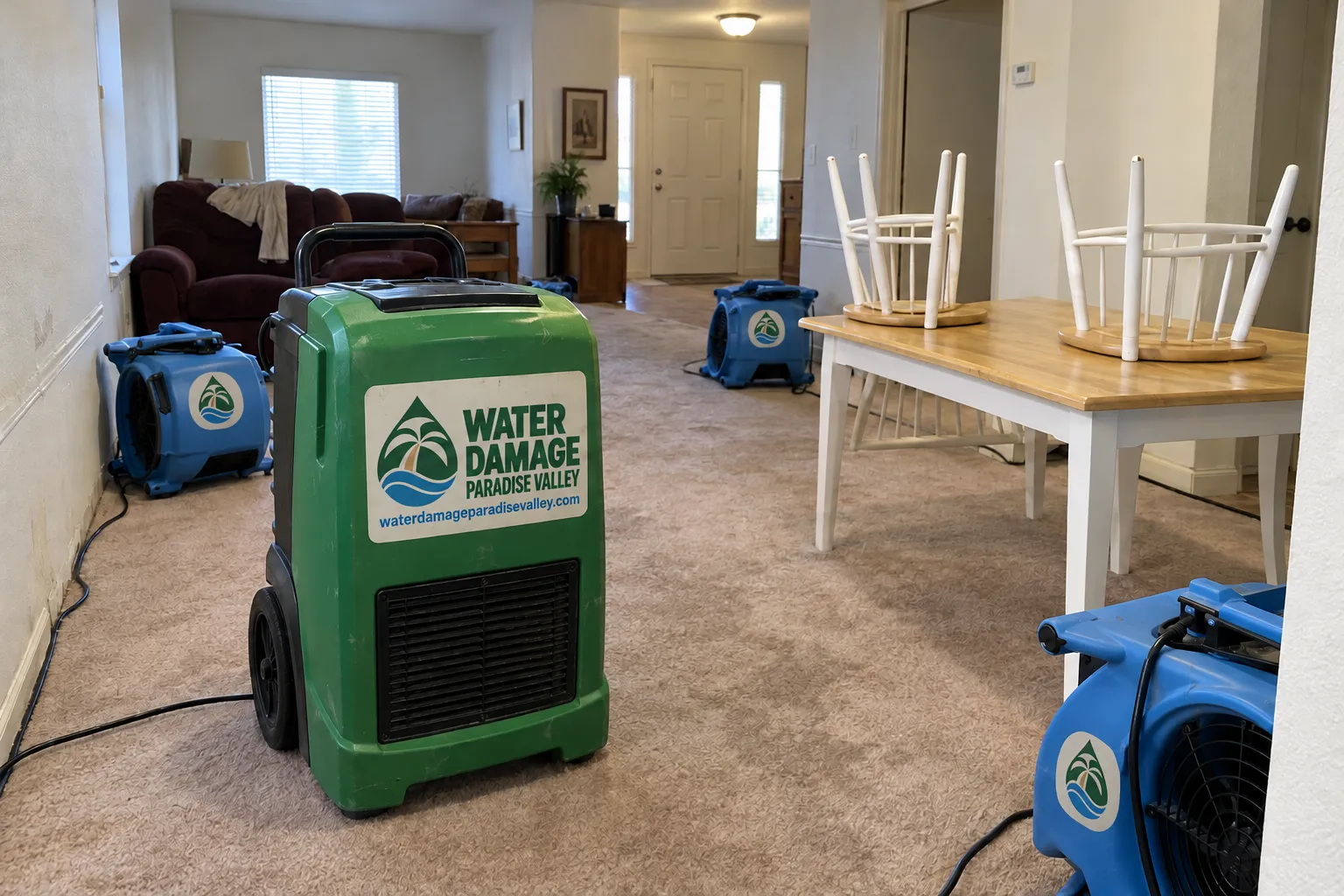
Because the warning systems live in the main house. The person who would hear a running toilet or see a puddle sleeps in the main house, while the casita heater, the guest bath and the wet bar sit silent for weeks at a stretch. A leak caught in a day in the family kitchen runs in a guest wing until the bill arrives or a musty smell drifts out when the door opens.
The timeline is what turns a small leak into a big job. The Environmental Protection Agency says to dry water-damaged areas and items within 24 to 48 hours to prevent mold growth, and a casita that sits wet for a month is well past that window before anyone notices. Unused plumbing adds its own risk: traps and fittings in a bathroom that sits unused can dry out, so a plumber should check a casita's plumbing before it goes back into regular use. Once the source is stopped, structural drying is the step that follows the water out.
03Good to know
Where do casita leaks usually start?
At the appliances the building carries on its own.
| Source | Why it hides | What it soaks | The check |
|---|---|---|---|
| The casita water heater | Can run untouched for years | The closet floor and wall behind it | Look at the pan and base monthly |
| The buried supply line | A leak on the run from the meter never pools indoors | The soil, then the slab or wall | Watch the meter and the bill |
| The cooling condensate line | A clogged line can overflow into the ceiling | Ceiling and the wall below | Check the line and pan each season |
| A guest bath or wet bar | Unused traps and fittings can dry out and leak | The vanity and the floor | Run every fixture once a month |
| The pool pad next door | An autofill line that keeps topping up the pool can hide a leak into the soil | The yard, then the casita wall | Walk the pad and check for wet ground |
The casita water heater is one of the first things to check because it may be a small, old unit nobody has looked at in years. A heater with its own pan and drain line is a step ahead, but only if someone checks the pan.
04Good to know
Does a pool house fail like a house or like a pool?
Both, and the pool side is the quieter one. The building has the usual house failures, a bathroom, a shower, a heater for the shower, plus a line of sight to the equipment pad. The pad is where the trouble hides: a pool autofill line tops off the water lost to evaporation, and a small crack or loose fitting can leak without making a puddle, because the water can disappear into the soil. The pad is also a spot many owners rarely check unless something stops working.
The autofill can make it worse by masking the leak. The pool level can look normal because the valve keeps replacing the water that is escaping underground. The tells are close to the ones a slab leak leaves: a bill that climbs or ground near the pad that stays wet.
05Good to know
What is on a monthly casita walkthrough?
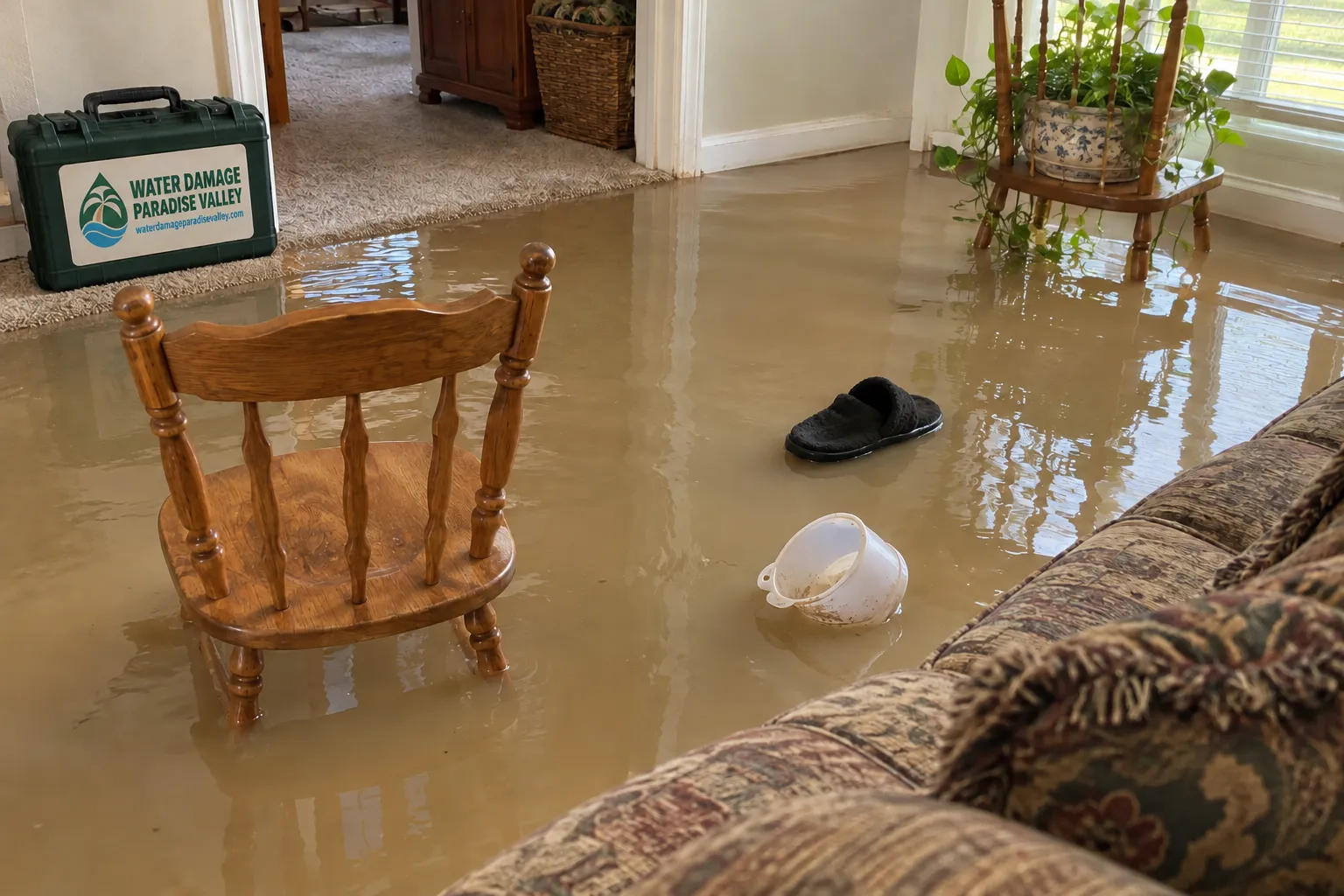
The same pass you would give a small house, but on a schedule, because nobody lives there to catch it by accident. Once a month, run every faucet and flush every toilet so the traps and fittings stay wet and sealed. Look at the water heater pan and the base of the unit. Check the cooling condensate line and its pan. Open the cabinet under the sink and the wet bar and look at the shelf. Then read the meter with everything off and note the number.
Let some fresh air into the room during the walkthrough too, so a damp corner is easier to spot and does not sit in a closed-up room. If the casita has its own septic tie-in, Maricopa County Environmental Services is the agency that regulates onsite wastewater systems, and the same slow-drain warnings apply there as in the main house.
06Good to know
Which shutoff and sensor does a guest wing need?
Its own shutoff, marked, and its own leak sensor, placed where the water is. The shutoff matters because in an emergency the person standing in the water should not have to walk back to the main house to find the main valve. The sensor matters because a beep in the main house does nothing for a leak in the casita; the sensor has to be in the casita, at the water heater, the wet bar and any laundry, and it has to reach a phone rather than an empty hallway.
When the estate closes for a stretch, the casita water should go off first, before the main house, because it is the building with the fewest eyes on it. Arizona's monsoon season runs June 15 through September 30, according to the National Weather Service office in Phoenix, and a casita that will sit empty for part of the year needs its water shut off before the owners leave.
07How it works
Next step: treat the casita as a second house
What decides the answer is where the casita's water comes from and whether it is shared or separate. A casita on the main house's meter fails differently from one with its own line from the street, and a pool house next to the equipment pad carries a risk the main house does not. A local contractor confirms it on site, because the shutoff map and the sensor placement have to match the actual pipes. The protect plan folds the casita into the estate-wide schedule, and the service areas page shows where that help reaches.
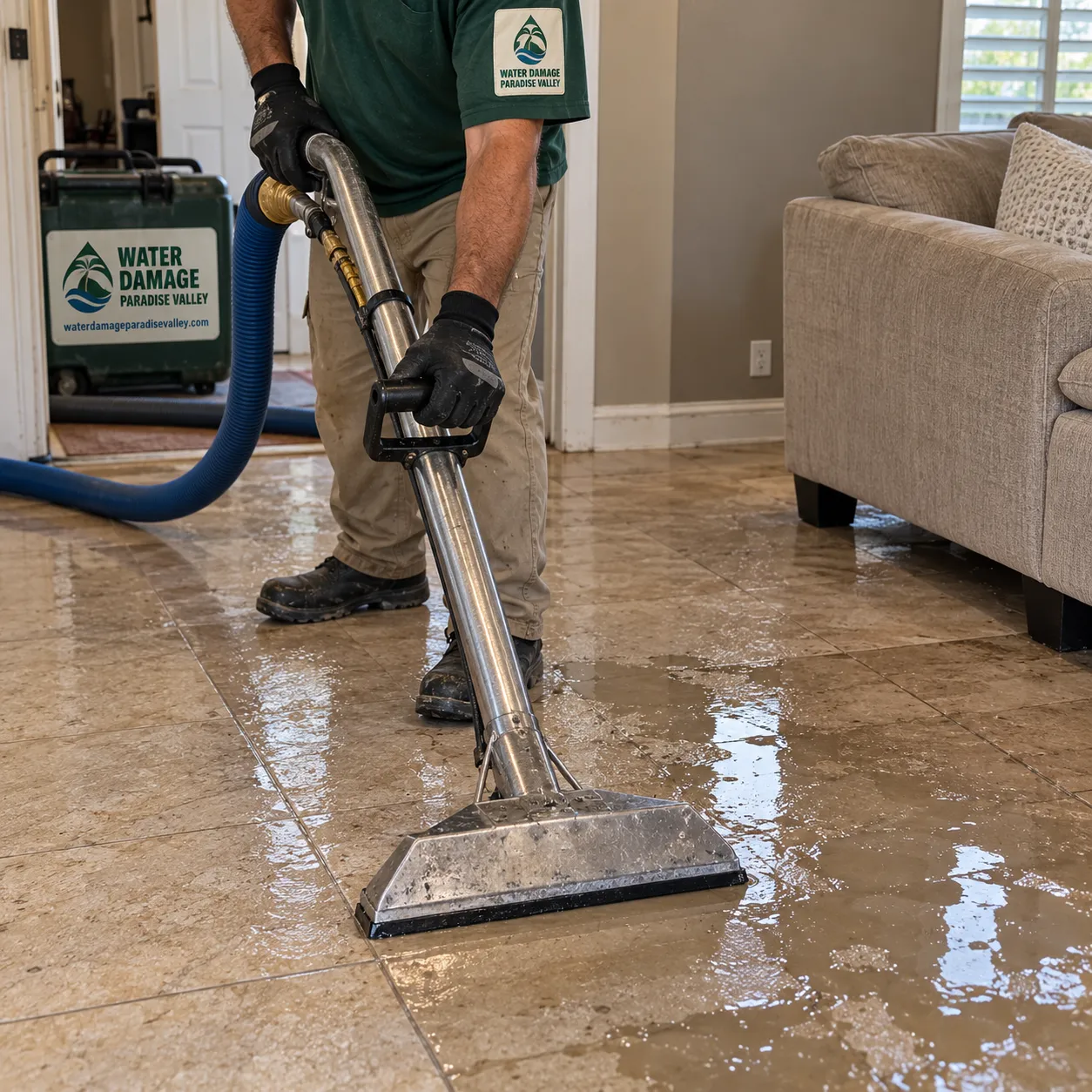
If the casita is already wet, shut off its water if you can reach the valve safely, stay out of standing water, move what can be moved, and call (602) 671-3561. Or send the form and someone from our team will call you back.
083 questions
Questions people ask
Still have a question?
Call and describe what you see. Calls are answered day and night.
Call (602) 671-356101Should I shut off the casita water when it is empty?
Usually, for any stretch where nobody will be inside. A closed valve takes the supply out of the picture, and the casita is the building with the fewest eyes on it. If it has its own valve, shut that one; otherwise ask a plumber which valve feeds it.
02Do I need a separate leak sensor in the casita?
Usually worth it. A sensor in the main house cannot hear or see a leak in a detached building, and a battery alarm only helps a person who is there to hear it. A sensor at the casita water heater and wet bar, wired to a phone alert, can catch a leak the main house would never notice.
03Can a pool autofill line flood the casita?
It can push water into the soil next to the building, and over time that water can reach the casita's slab or wall. The pool level can look fine because the autofill keeps replacing what escapes, so the real warnings are the bill or a wet patch of ground near the pad.