Service 02 of 07 · Paradise Valley, AZ
Structural Drying and Dehumidification in Paradise Valley, AZ
You got the water out, but the walls and floors are still wet. Drying with fans, dehumidifiers and readings follows until the numbers say dry. Call day or night, or send the form, and someone from our team will call you back soon.
Paradise Valley · Scottsdale · Phoenix · Tempe · Fountain Hills · Cave Creek
01What you get
Walls and floors dry to the readings, not to the touch
Structural drying is the stage that follows water extraction: pulling moisture out of walls, floors, cabinets and the air until the structure is genuinely dry. A home is dry when calibrated readings say so, not when the carpet feels dry or the paint looks fine. You can reach us day and night at (602) 671-3561.
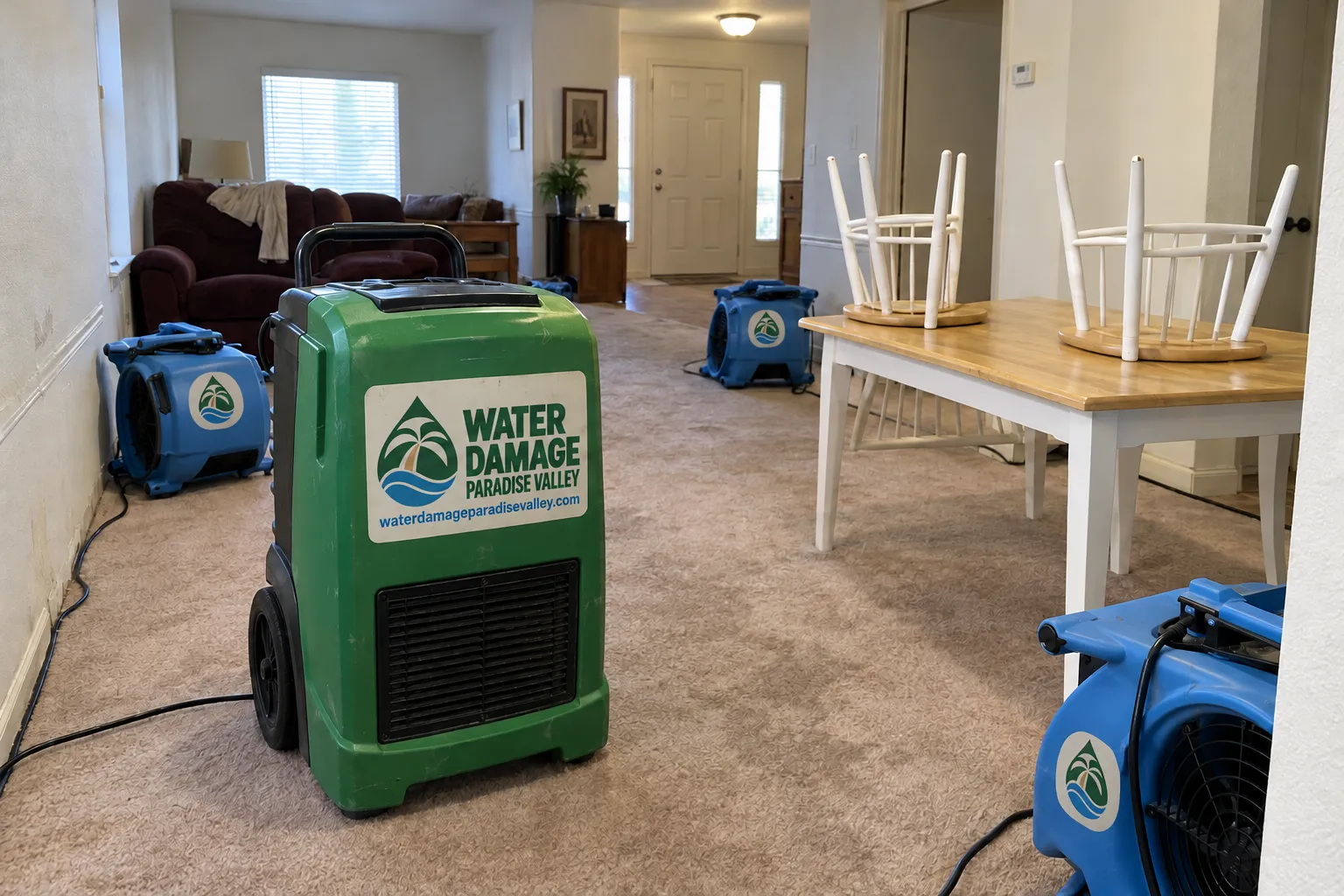
- Air movers and dehumidifiers placed to match the readings and the size of the wet area
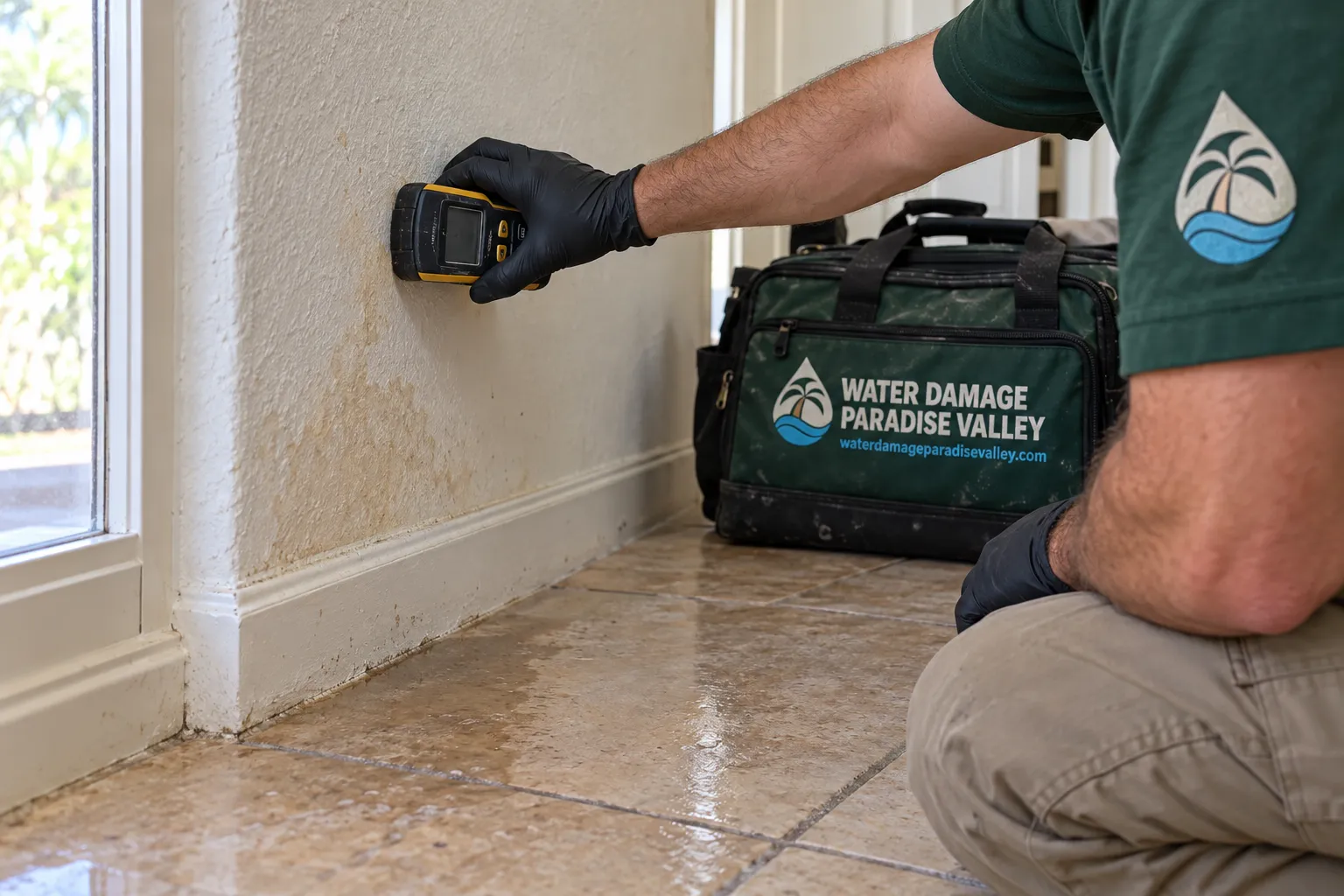
- Moisture readings before, during and after the work
- Equipment running around the clock until every material reaches its dry standard
- Final readings compared with the first ones, in the same spots
- Each keep-or-remove call documented in the scope
02Warning signs
5 signs your home still needs structural drying
- 01
Carpet that feels dry
a structure is not dry because the carpet feels dry or the paint looks fine.
- 02
A wall that feels dry to the touch
the studs behind it can stay wet.
- 03
A wood floor that looks normal
the subfloor below it can hold moisture.
- 04
Moisture in wall cavities, under cabinets or below tile
each of those spaces dries at a different speed.
- 05
Equipment pulled after a set number of days
a home is dry when the readings say so, and moisture trapped under a new floor sends a home back into drying.
03How it works
Three steps from the first call to a dry structure
- 1
Call or send the form, day or night. Tell us where the water came from.
- 2
Someone from our team calls you back. We go over what happened and what comes next.
- 3
Drying and readings follow. Air movers and dehumidifiers run until the materials reach their dry standard.
04Costs
What does structural drying cost?
Published ranges for structural drying, the fans and dehumidifiers stage, run about $500 to $2,500, according to Home Restoration Costs (drying cost (opens in a new tab)). Water cleanup and drying as a whole is commonly quoted at $3 to $7 per square foot, and most water damage restoration jobs land between $1,200 and $8,500. Ranges are published by cost guides and Phoenix-area companies on their websites (checked October 2026). They are market figures, not a quote. The actual price is set after an on-site assessment, and it depends on the affected area, the water category, and how many days the equipment runs. The real variable is scope creep: when a second room or a concealed cavity shows up in the readings, both the machine count and the days go up.
05Good to know
What is structural drying?
Structural drying is the controlled removal of moisture from building materials and the air inside a building, after the standing water is gone. It is planned work rather than fans left running: the restoration industry's reference standard is IICRC S500 (IICRC S500 (opens in a new tab)), which defines water categories, sets how materials are classified as wet, and calls for readings before, during and after the work. A structure is not dry because the carpet feels dry or the paint looks fine. Moisture hides in wall cavities, under cabinets, in ceiling assemblies and below tile, and each of those spaces dries at a different speed. Drying finishes when calibrated readings show the materials have reached a dry standard, not when a visual check says so.
For the keep-or-remove call on stone, wood, plaster and cabinetry, what survives a leak and what has to come out runs material by material.
06Drying window
How long does structural drying take?
Most homes dry in about 3 to 5 days, but the honest answer is that the timeline depends on the materials and the water. Carpet and padding dry fastest. Drywall, baseboards and wood studs take longer, and dense assemblies, such as tile over a mortar bed or hardwood over plywood, take longer still. How much water there was, how long it sat before extraction, what it soaked into, and the conditions inside the home while equipment runs all move the number. The timeline is confirmed with readings, not carried in from the calendar; if a wall is still above its dry standard on day 4, the setup changes or the equipment stays. Closed-up rooms dry more slowly, and steady airflow with dehumidification is what keeps the number moving.
07Good to know
What equipment does structural drying use?
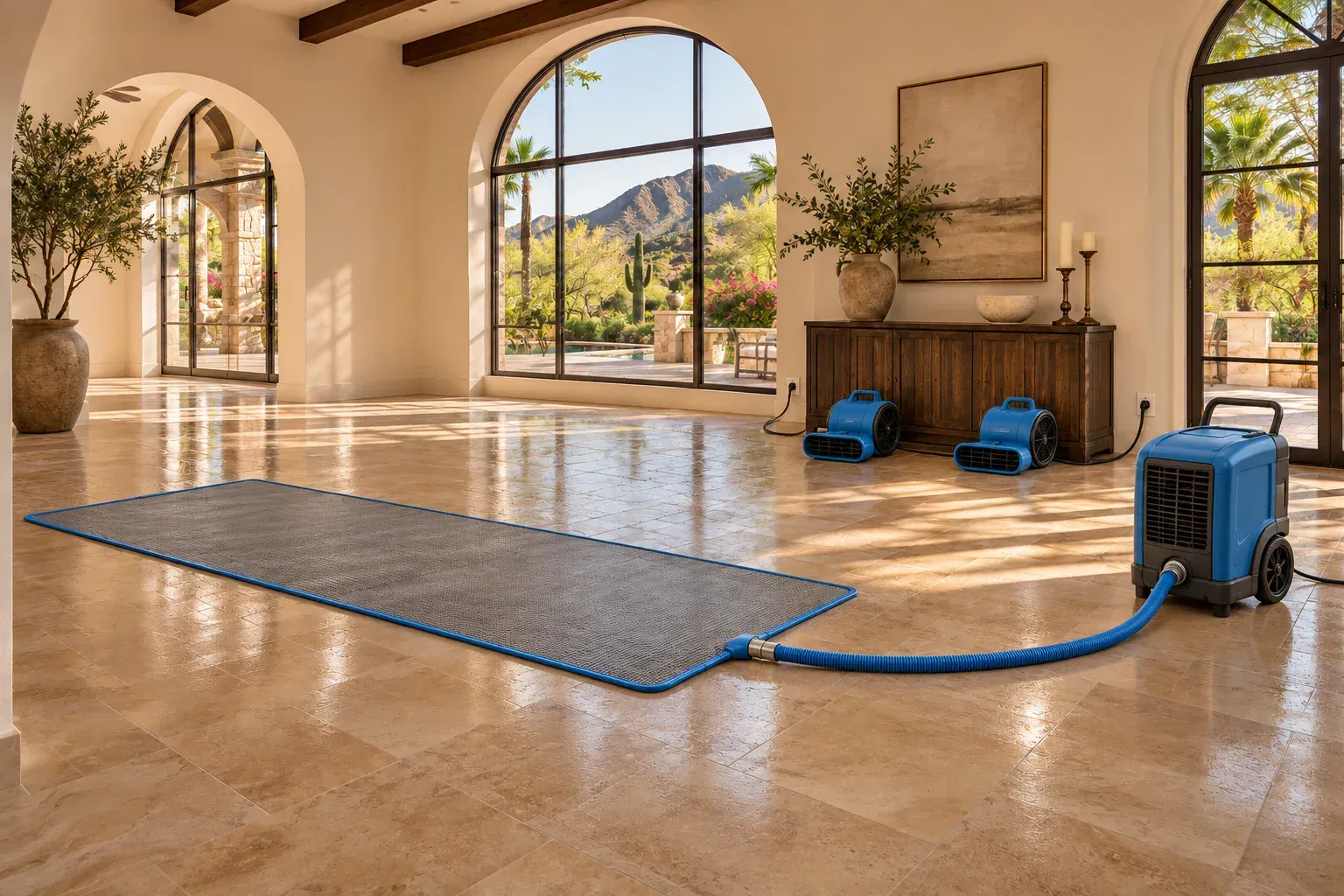
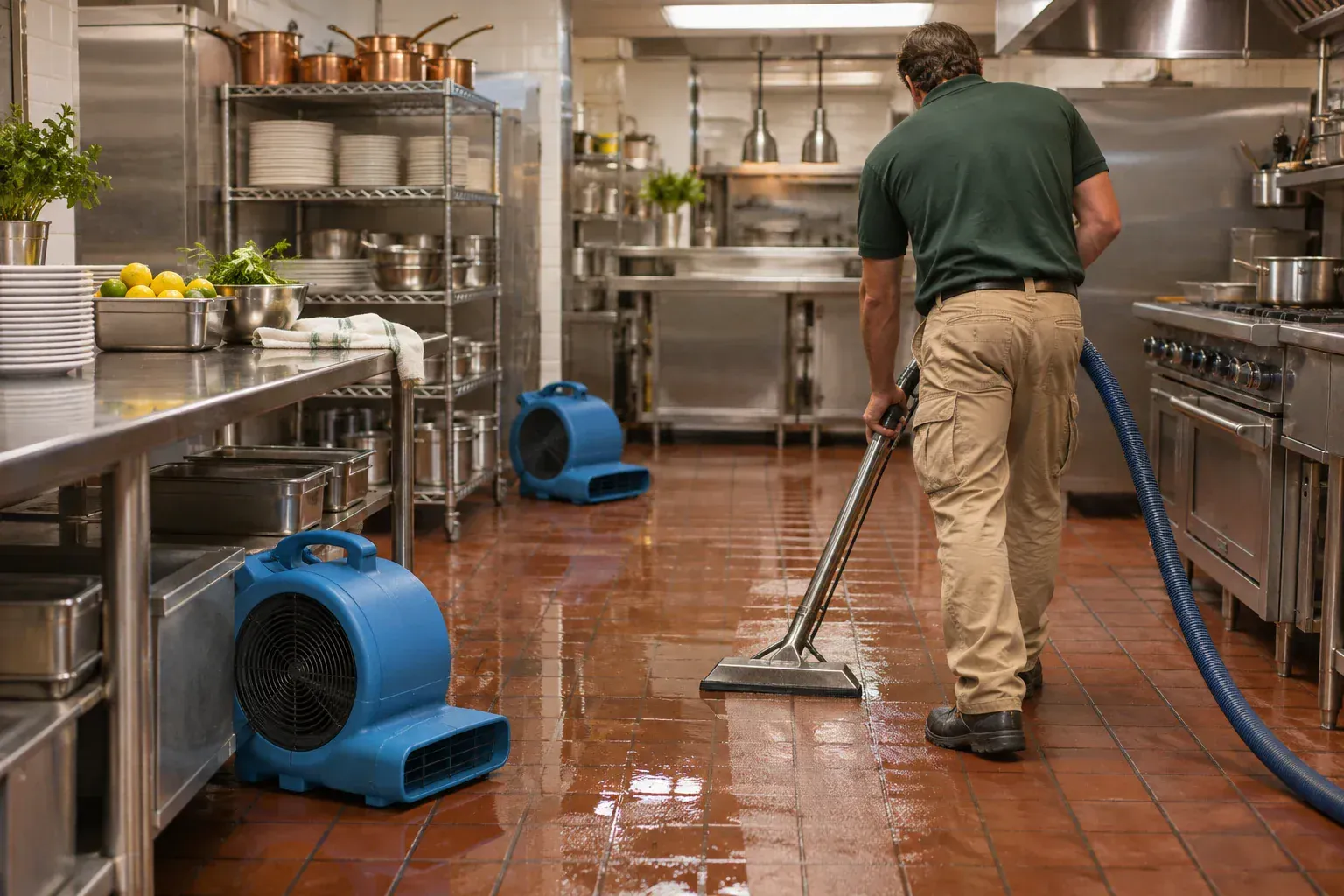
The work comes down to 3 tools. Air movers are high-velocity fans positioned to sweep air across wet surfaces, lifting moisture into the air instead of letting it sit. Dehumidifiers pull that moisture back out of the air so the same air can keep absorbing more; running fans without one in a closed room mostly moves humidity around. Moisture meters and probes measure the actual condition of materials: pin meters for wood and drywall, non-invasive meters for scanning before and after, and thermo-hygrometers to track the air itself. Some jobs add cavity drying systems that push air into closed wall spaces and mats that draw moisture through hard floors. Placement and machine count follow the readings and the size of the affected area, and the equipment typically runs around the clock.
08Local risk
Why does moisture measurement matter?
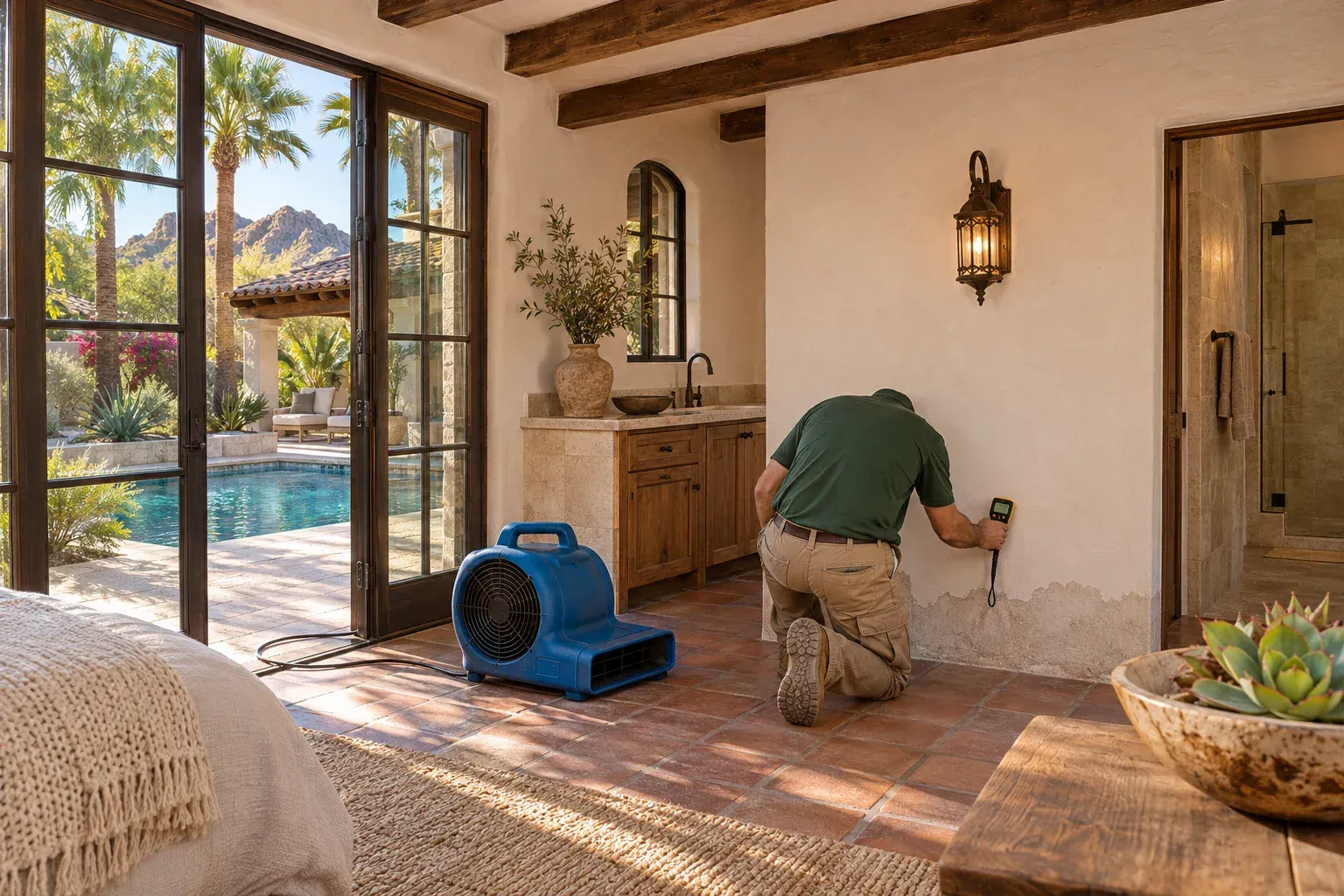
Readings are what separate real drying from guesswork. A wall can feel dry to the touch while the studs behind it stay wet, and a wood floor can look normal while the subfloor below it holds moisture. Meters give each material a number, that number is compared to a dry standard for the same material, and the gap tells the technician where to aim equipment and when to move it. Measurements taken at the start become the baseline that shows progress: you can see whether a wall's moisture content is falling each day and whether the trend is on track. Readings also decide when drying is finished, which matters before new flooring or paint goes down. If you are not sure where a drying job stands, call (602) 671-3561 and ask for a fresh set of readings.
09Good to know
What can be dried and what has to be replaced?
Most structural materials can be dried in place: wood framing, drywall that is wet but intact, hardwood that has not cupped badly, solid wood cabinets, concrete, and tile over a stable base. What usually cannot be saved is material that lost its structure or absorbed contamination. EPA mold guidance notes that absorbent materials, including drywall and carpet padding, may have to be thrown away once they are moldy, and that killing mold on a surface is not enough when the material keeps feeding it (EPA mold cleanup (opens in a new tab)). In practice, swollen particleboard, delaminated plywood, padding after black water, and drywall with visible growth come out, while framing and hard surfaces get cleaned and dried. Each keep-or-remove call is documented in the scope, so your insurer can see why a material stayed or went.
10Good to know
When is my home actually dry?
Your home is dry when the readings say the materials have reached their dry standard, not when surfaces feel dry or the equipment has run a set number of days. On the final visit, moisture readings are taken on the same materials that were logged at the start, in the same spots, and compared: floors, baseboards, wall cavities, cabinets and any framing that was exposed. If the numbers match the dry standard, drying is finished and the equipment comes out. If one area lags, it gets a change in setup rather than a guess. The condition of the subfloor matters as much as the finish material, because moisture trapped under a new floor is how a home ends up back in drying a second time. Ask us for the final readings in writing for your records.
115 questions
Questions people ask
Still have a question?
Call and describe what you see. Calls are answered day and night.
Call (602) 671-356101Can I stay in my home during structural drying?
Usually, yes. Most drying setups run with people in the house, though you will hear the equipment day and night. Contaminated water, strong odors, or equipment staged in every bedroom can change the answer. If anyone in the home has asthma or another breathing condition, raise it before the setup is finalized so machine placement can be discussed.
02Do I need to move furniture out of the room?
Move what you can: electronics, paperwork, rugs and anything on wet flooring. Heavy furniture often stays, with blocks under the legs or a few feet of clearance so air can pass below. Porous items that sat in contaminated water should not be handled with bare hands. Photograph the room before it is rearranged, since the before pictures are part of the claim record.
03Can I run my own fans to help?
You can, but household fans only move air; they do not remove moisture, so a closed room can end up more humid rather than drier. The dehumidifier is what pulls water out of the air. If you add your own fans, keep them along wet surfaces, away from any sagging ceiling, and tell the technician so the readings account for the extra airflow.
04Does the equipment need to run at night?
Yes. Drying works best when airflow and dehumidification run continuously, because moisture redistributes whenever the equipment pauses. The machines are built for long runs, and stopping overnight usually adds days to the job. If the noise is a problem for sleeping, ask about placement, since air movers can often be aimed away from bedroom walls without slowing the drying.
05Will my floors have to come up anyway?
Not automatically. Hardwood that has not cupped badly, tile over a stable base and drywall that is wet but intact can often be dried in place. What forces removal is swelling that will not reverse, contamination, or a base that stays wet anyway. The readings decide, and the decision is documented for your claim.
12Keep reading
- Water damage services: the full list of services in Paradise Valley.
- Slab leaks and burst pipes: common sources of the water that starts a drying job.
- Sewage cleanup: for contaminated water, where cleaning comes before drying.
- Pricing: how water damage jobs are priced across the area.
- Scottsdale water damage help: for homes just over the town line.
- Dehumidifier vs Air Mover in Paradise Valley:
- Insurance Claim vs Paying Out of Pocket in Paradise Valley: