
Service 05 of 07 · Paradise Valley, AZ
Flood and Storm Damage in Paradise Valley, AZ
You have storm water inside, or a stain spreading after the monsoon. Sorting what can be dried from what has to go comes first. Call day or night, or send the form, and someone from our team will call you back soon.
Paradise Valley · Scottsdale · Phoenix · Tempe · Fountain Hills · Cave Creek
01What you get
Storm water out, damage sorted, structure dry
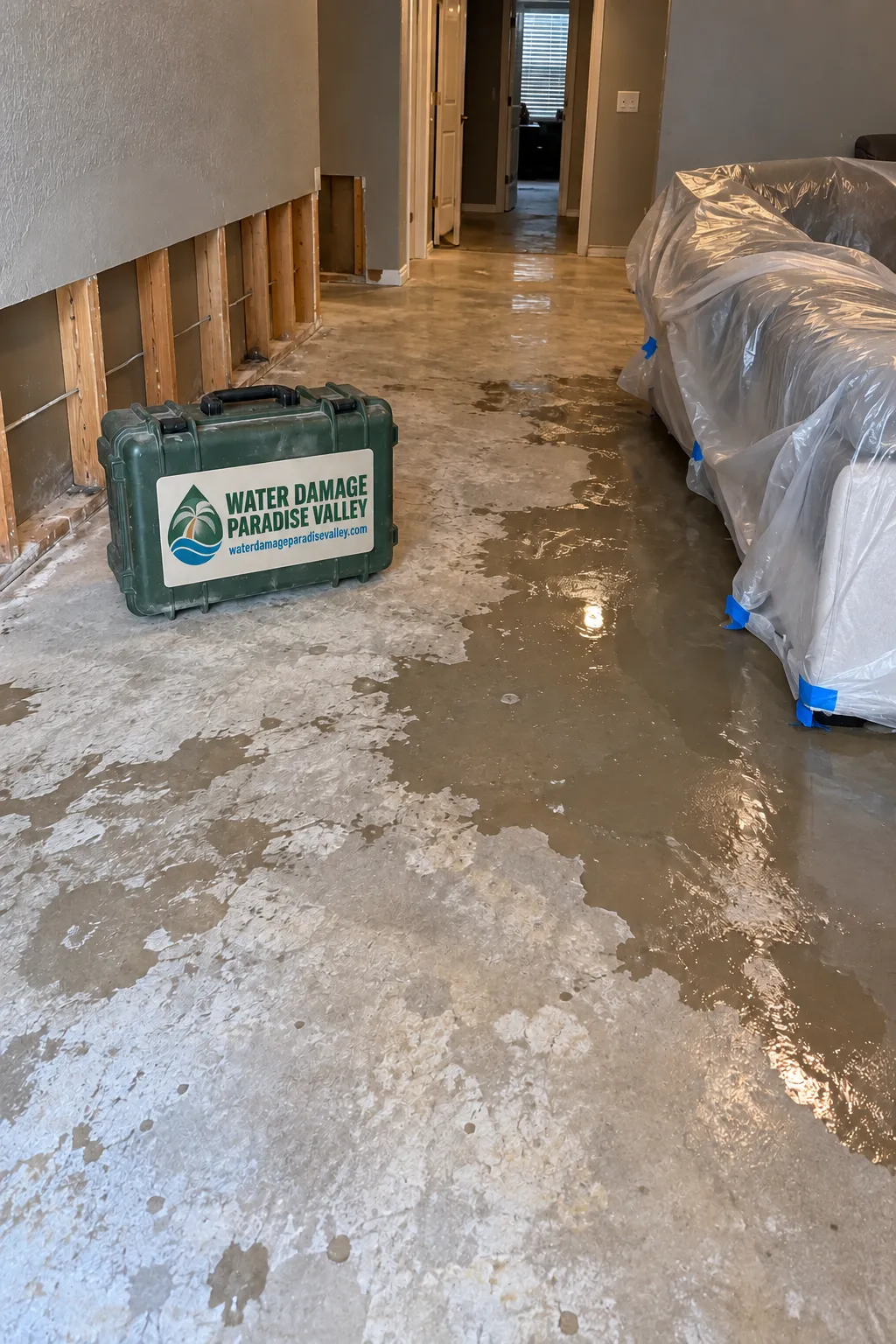
Monsoon storms move through Paradise Valley fast, and water can be inside a home before the rain stops. Storm water has crossed roofs, ground and washes, so it is treated as contaminated, and soaked materials are sorted into what can be dried and what has to go. If water is in the house right now, call (602) 671-3561 and we can talk through the next step.
- Extraction and drying that start as soon as it is safe
- Soaked carpet, pad, drywall and insulation removed instead of dried in place
- Surfaces cleaned before drying equipment runs
- What can be saved decided first, then what stays dried
02Warning signs
6 signs of flood or storm damage in your home
- 01
A ceiling stain after wind-driven rain
water pushed under shingles, flashing or vents.
- 02
Water at a window or door frame
seals dry out in desert heat, and rain driven against a frame can work past them.
- 03
A stain or soft spot on a stucco wall
hairline cracks let rain into the wall cavity, where the damage stays hidden.
- 04
Water pooled against the slab, a patio door or a retaining wall
runoff from a wash, a street or an uphill lot.
- 05
A ceiling that bulges or sags
keep everyone out from under it.
- 06
A damp smell days after the storm
if a room still smells damp, it is not dry, no matter how the floor feels.
03How it works
Three steps from the first call to a dry home
- 1
Call or send the form, day or night. Tell us where the water came from.
- 2
Someone from our team calls you back. We go over what happened and what comes next.
- 3
Cleanup and drying follow. Soaked materials are sorted into what comes out and what stays, surfaces are cleaned, and what stays is dried with readings.
04Costs
What does flood damage cleanup cost?
Published market ranges give a starting picture. Fixr puts a typical water damage restoration at $1,200 to $5,000, average $3,000, and Home Restoration Costs puts most homes at $1,200 to $8,500. Extraction alone commonly runs $500 to $3,500 and structural drying $500 to $2,500, with cleanup and drying quoted at $3 to $7 per square foot. Storm water jobs often land at the higher end, because contaminated water means removing soaked materials instead of drying them, and monsoon water can reach more than one room. Two storms can produce two very different bills, because the water category and the affected area decide most of the total. Ranges are published by cost guides and Phoenix-area companies on their websites (checked October 2026). They are market figures, not a quote. The actual price is set after an on-site assessment, and it depends on the affected area, the water category, and how many days the equipment runs. The pricing page lists the full range table with every source.
05Monsoon
What does monsoon season mean for Paradise Valley homes?
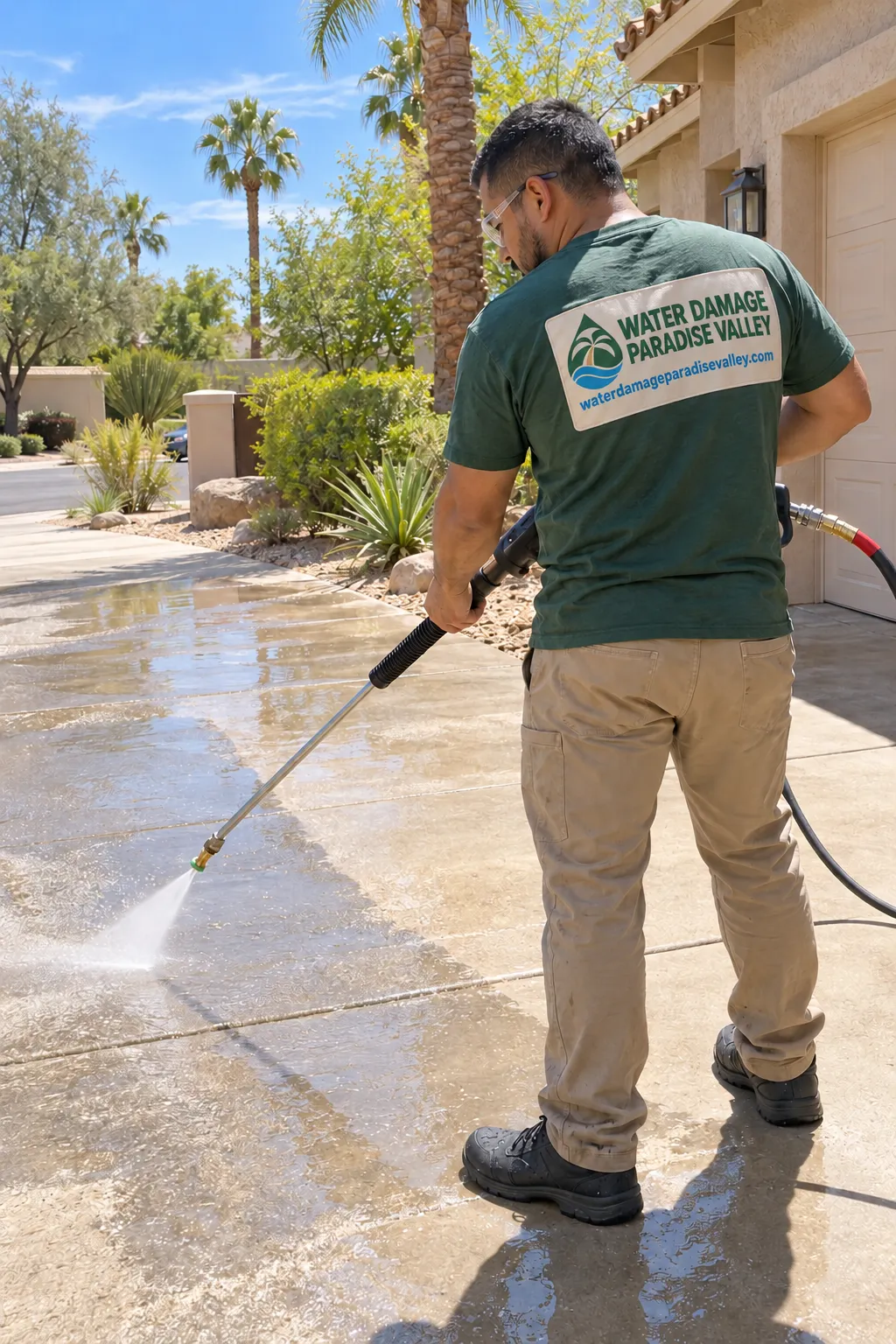
Monsoon season in Arizona runs June 15 to September 30, and it does not arrive gently. Storms build fast over the desert and can drop heavy rain in a short time, sometimes on one part of the Valley while another stays dry (NWS Phoenix (opens in a new tab)). For Paradise Valley, that means runoff pouring off Mummy Mountain and the Camelback Mountain ridgeline, through the washes the town studied after the 2013 and 2014 storm seasons. Homes on hillside lots can see water cross a yard; homes on lower interior lots can see it pool along the foundation and the back patio. Wind comes with these storms and drives rain sideways into roofing, windows and exterior walls, which is when water finds old caulk and hairline cracks. The danger does not end when the rain does: washes and low spots stay dangerous while water is moving, so keep children and pets away even after the sky clears.
06Monsoon
How does storm water get inside a home?
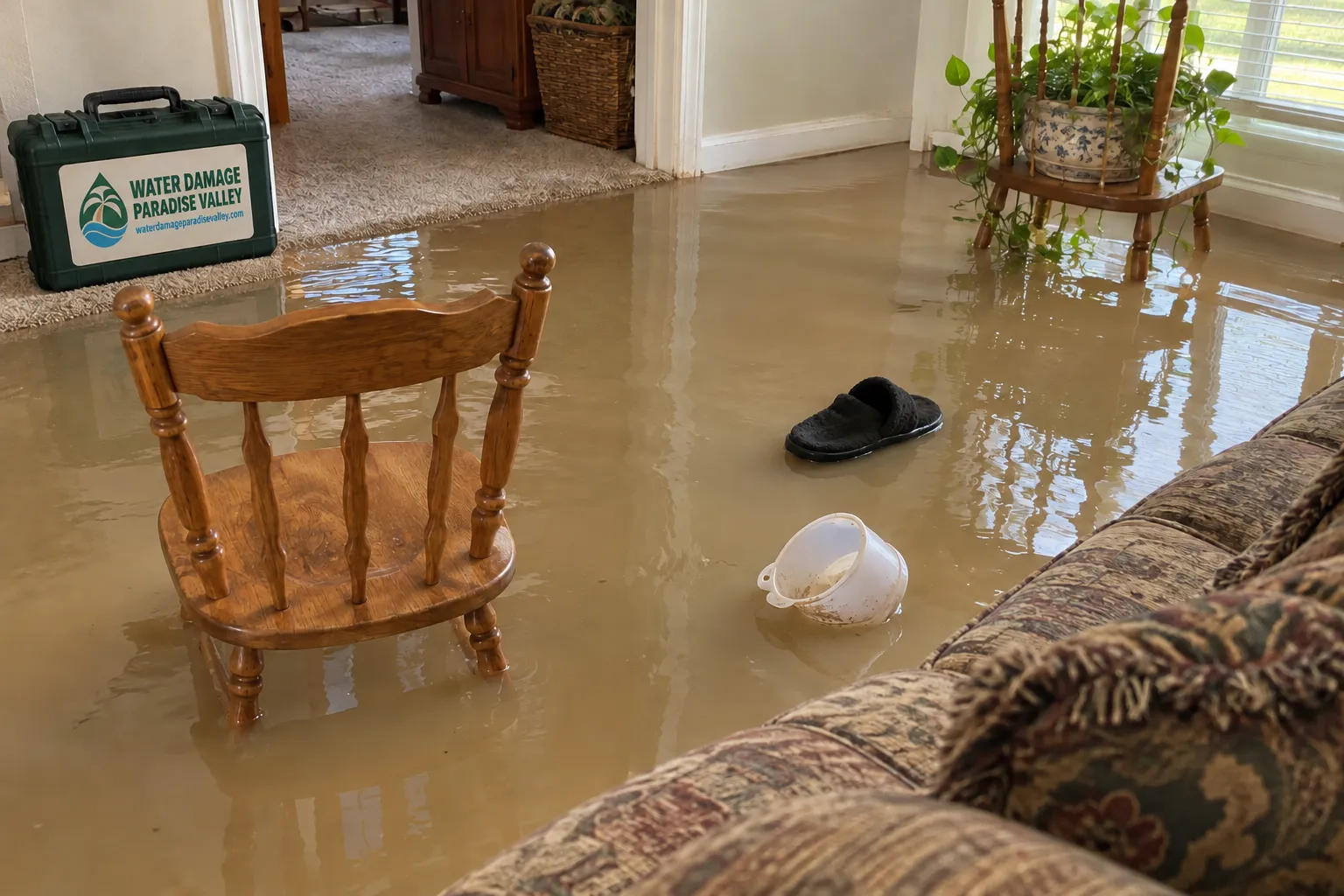
Through one of four paths: the roof, the windows and doors, the stucco itself, or runoff crossing the ground.
- 01
Roof
wind-driven rain pushes under shingles, flashing and vents that have not been checked in years, and the leak often shows up as a ceiling stain.
- 02
Windows and doors
seals dry out in desert heat, and rain driven against a frame can work past them.
- 03
Stucco
hairline cracks open as walls age, and wind-driven rain can push into a wall cavity, where the damage stays hidden until a stain or a soft spot appears.
- 04
Ground
runoff from a wash, a street or an uphill lot can collect against the slab, a patio door or a retaining wall.
The desert soil can work against a house, too: layers of caliche and dense soil block water from draining down, so it pools where it lands. Water inside a wall rarely stays in one room; it follows framing, insulation and the path of least resistance.
07Monsoon
What should I do after storm water gets inside?
Safety first, then speed. Stay out of rooms where water is near outlets, appliances or a wet electrical panel, and do not turn equipment on or off while standing in water. For sewage, electrical hazards or structural concerns, keep everyone away and call 911 for emergencies. If it is safe to do so, shut off the water source, lift furniture and rugs off wet floors, and move what you can to a dry room. Photograph and video everything before anything moves, because your insurer will want it. If a ceiling looks bulging or sagging, keep everyone out from under it and let a professional check it. Then extraction and drying should start, since every hour of standing water widens the repair. For help, call (602) 671-3561. Calls are answered day and night. If all lines are busy, leave a message or send the form and someone will call you back.

08Monsoon
Is flood water different from other water damage?
Yes. Water that has crossed the ground, a roof or a wash is treated as contaminated, and it is handled differently from clean water out of a supply line. The restoration industry's reference standard, the IICRC S500, sorts water damage into categories: clean water, gray water with some contamination, and black water that may carry sewage or other hazards (IICRC S500 (opens in a new tab)). Storm water that has run across soil usually lands in the dirtier categories, and contaminated water is not dried in place. Porous materials it soaks into, like carpet, pad, drywall and insulation, usually have to be removed, and surfaces are cleaned before drying equipment runs. Drying dirty water where it sits can spread contamination and leave odors behind. A flood cleanup therefore starts with deciding what can be saved and what has to go, then drying what stays. Storm water and a clean supply-line leak can end up with very different repair lists, even when they wet the same floor area.

09Insurance
Does homeowners insurance cover flooding?
No. A standard homeowners policy does not cover flood damage, and flood insurance is a separate policy, most commonly through the National Flood Insurance Program (FloodSmart (opens in a new tab)). FloodSmart, the program's public education site, states that most homeowners and renters policies do not cover flood damage. So when a storm pushes water in from the outside, payment depends on coverage many homeowners do not carry. What a standard policy often does cover is sudden water from inside the house, such as a burst supply line, though policies differ and your insurer decides. Whether you carry flood coverage is worth knowing before storm season, not after it. After a storm, report the loss early, keep photos, receipts and dates, and ask your insurer in writing how the cause is classified. One question worth asking: if the water came in through a roof or a window that the storm damaged, is the loss treated as storm damage or as flood? That determination belongs to your insurer.
105 questions
Questions people ask
Still have a question?
Call and describe what you see. Calls are answered day and night.
Call (602) 671-356101Should I wait until the storm passes to call?
No, call while the rain is still coming down if water is moving into the house. Extraction that starts early saves more of the structure and the contents, and it gives you time to document the damage before anything is moved. If a room is not safe to stand in, get to a dry part of the home first, then call from there.
02Can monsoon damage show up weeks after the storm?
Yes. Water that slips behind stucco or under roof flashing can travel inside a wall or ceiling for weeks before a stain or a musty smell appears. Pool and fountain lines, irrigation lines and water features are common failure points on larger Paradise Valley lots. If a stain, a soft spot or an odor shows up after a storm, treat it as an active leak until proven otherwise.
03Is it safe to touch floodwater in the house?
No. Floodwater can carry sewage, chemicals, mud and debris, so keep skin contact to a minimum and wash up if you do touch it. Children and pets should stay out of the wet area, and anyone with open cuts or a weakened immune system should stay out entirely. For sewage or electrical hazards, safety comes first; call 911 for emergencies and let a professional crew handle the cleanup.
04How quickly does mold become a problem after storm water gets in?
Mold needs moisture, and water-damaged areas and items should be dried within 24 to 48 hours to prevent growth, according to the EPA. After that window the risk climbs, especially in closets, under cabinets and inside walls where air does not move. If a room still smells damp days after a storm, it is not dry, no matter how the floor feels.
05Who do I call first, my insurer or a cleanup team?
Open the claim early, but do not wait on it to act. Your insurer decides what is covered and what it pays, so report the loss and keep every photo, receipt and note. Cleanup should start as soon as it is safe, because damage grows while paperwork is pending. Document the conditions, share the photos with your adjuster, and ask what the policy requires before repairs go further.
11Keep reading
- Services overview: the seven services, one page each.
- Emergency water extraction: when water is still in the room, this is step one.
- Structural drying: how fans, dehumidifiers and daily readings finish the job.
- Water damage pricing: published ranges by job type, with every source.
- Mold and wash clock: the hours left in the drying window after storm water gets in.
- Scottsdale water damage: storm runoff, washes and hard water leaks next door.
- Insurance Claim vs Paying Out of Pocket in Paradise Valley:
- Dehumidifier vs Air Mover in Paradise Valley: