Guide 05 · 4 min read
Septic Backups in Paradise Valley: Signs and First Steps
Many Paradise Valley properties run on septic systems, and when one backs up it brings water into the house that is nothing like a clean-water leak. Stop using water everywhere and keep people and pets out of the room.
01Warning signs
What are the early warning signs of a septic backup?
Slow drains and gurgling lead the list. One slow sink is usually that fixture or that branch line; slow drains in several fixtures at once point to the main line or the tank, and that is the version that matters. Listen after the washing machine discharges or someone takes a shower: gurgling from a toilet or a floor drain means air is being pulled through water that should be moving away. Toilets that fill slowly, or one that backs up once and then seems fine, tell the same story. Outside, watch for soggy ground or odor near the tank or the drain field in dry weather. When several fixtures slow down together, stop using water and get the system looked at before it comes inside.
02Good to know
What should I do the minute a backup starts?
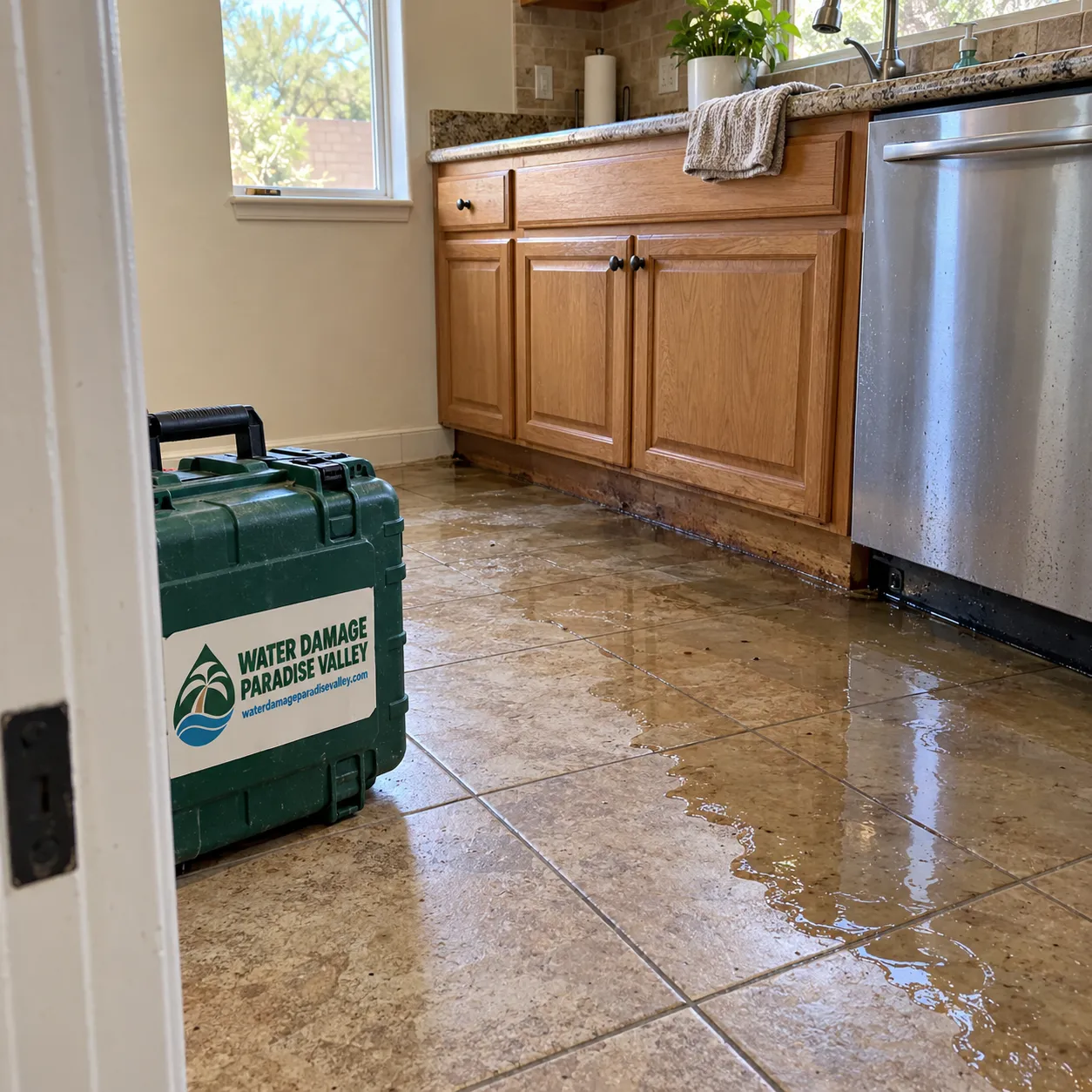
Stop using water everywhere, then keep people and pets out of the room. Do not run the shower, flush or start the laundry to try to clear it; more water pushes more of the backup toward the house. Do not mop it up or wade through it in bare feet. If you can reach the breaker panel without crossing wet floor, cut power to the affected rooms, the same rule as any flood. Then make the calls; the section below covers which number fits your setup, and if you want the cleanup handled while you sort out the cause, reach us at (602) 671-3561. Keep windows open while you wait, and leave the heavy cleaning to a crew that handles contaminated water.
03Local risk
Why is a septic backup treated as contaminated water?
Because it is. Restoration work sorts water into categories, and sewage sits at the top of the scale. The industry's reference standard, IICRC S500 (opens in a new tab), spells out the handling rules: this is water that carries pathogens, and materials that soaked it up, like carpet, pad, drywall and insulation, generally cannot be dried back to a healthy state and have to be removed. The standard also calls for cleaning before drying when water is contaminated, because drying first can spread contamination through the air and deeper into the house. In practice that means protective gear, containment and careful disposal are part of the job, not add-ons. It is also why nobody should be sleeping or playing in an affected room while the work is pending.
04Service area
Do I call the county, the town, or a plumber first?
Start with where your waste goes, then match the number. Many properties here are on septic systems, and the rest tie into the town sewer system, which is run by Scottsdale; the town's Utility Services page (opens in a new tab) lists the contacts for both, plus the four water providers that serve different parts of town. Septic failures and questions go to Maricopa County Environmental Services, whose septic line is 480-483-4703. Town sewer problems go to 480-312-5650. Either way, the company that maintains your system is the first call for a backup inside the house. Ask them to find the cause, not just clear the line: a backup that keeps returning means something is wrong that clearing does not fix. The check should cover the tank and the line.
05Costs
What does a sewage cleanup cost?
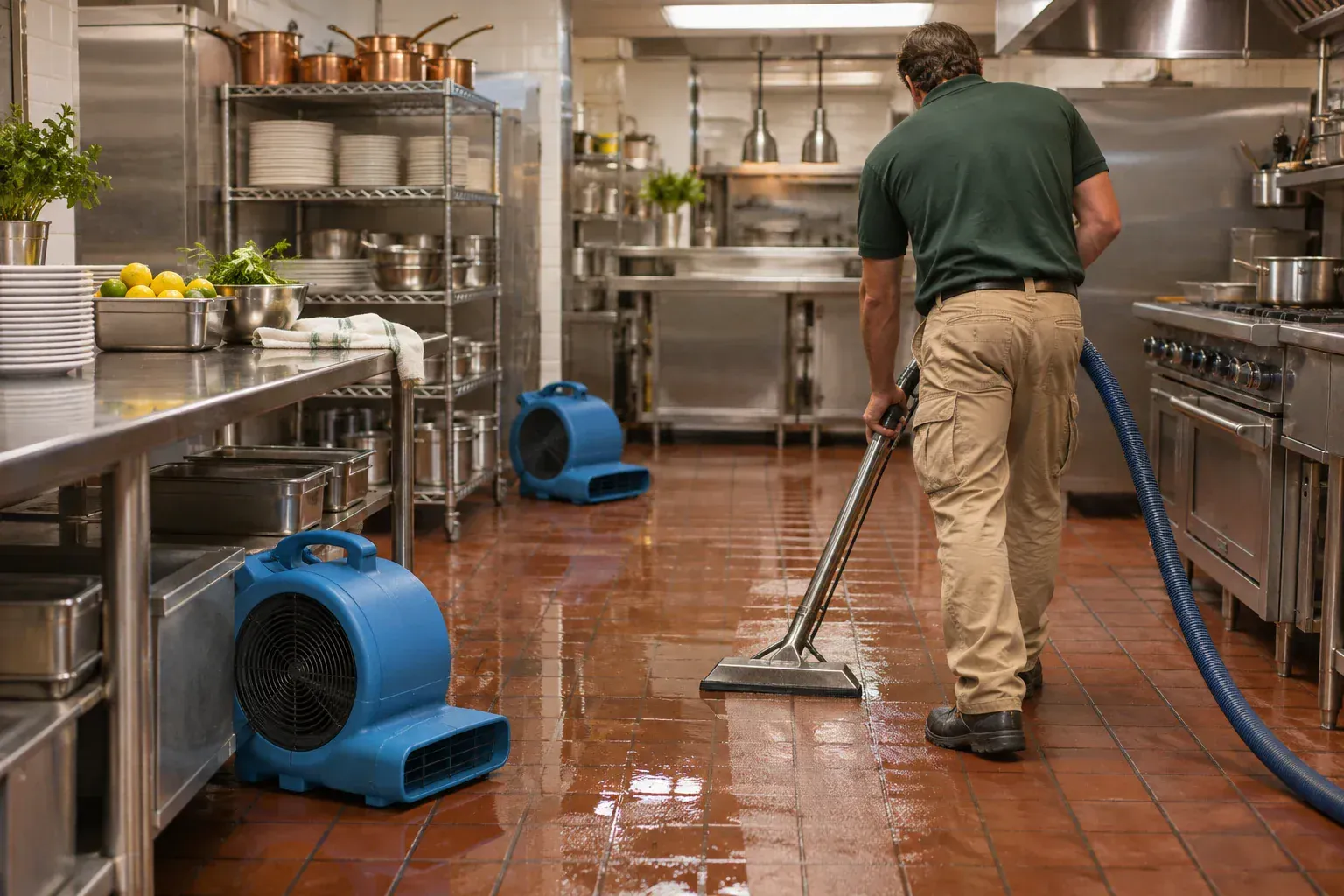
Published cost guides put a typical sewage cleanup at about $6,000, with most jobs landing between $2,000 and $10,000. Ranges are published by cost guides and Phoenix-area companies on their websites (checked October 2026). They are market figures, not a quote. The actual price is set after an on-site assessment, and it depends on the affected area, the water category, and how many days the equipment runs. A backup that stops at one bathroom floor is a smaller job than one that ran for two days and reached a hallway; the assessment separates the two. Our sewage cleanup service covers the removal, disinfection and drying, and the cost guide (opens in a new tab) is where the ranges above come from. Most of the variables show up in the first walkthrough.
064 questions
Questions people ask
Still have a question?
Call and describe what you see. Calls are answered day and night.
Call (602) 671-356101Does homeowners insurance pay for a sewage backup?
That depends on your policy; your insurer decides what applies. Start with the claims line, take photos before cleanup, and keep every receipt. Our guide to water damage insurance in Arizona explains how coverage splits between pipes, seepage and flood.
02Can we stay home while the cleanup runs?
Usually yes, if the crew can seal off the work area. If the area is large or the odor reaches the living spaces, a few nights away is easier on everyone. Whether lodging is covered is a question for your insurer.
03How do I keep this from happening again?
Cleanup and prevention are two different jobs, and the second belongs to a plumber or septic service. Afterward, have the tank pumped or the blockage cleared and ask what caused it: roots, a saturated drain field or a failed component. Then put the next pump-out on a calendar.
04Is a gurgling drain really an emergency?
No, but it is worth a same-week call. Gurgling and slow drains are the stage where a fix is usually simple, like a pump-out or a cleared line. When sewage is standing in a bathroom, cleanup, materials removal and a possible claim enter the picture.
07Keep reading
- Sewage Cleanup: how contaminated water gets removed and the room made safe.
- Does Homeowners Insurance Cover Water Damage in Arizona?: what policies cover and how to document a loss.
- The First 24 Hours After a Water Leak: the order of moves and calls when water is inside.
- Insurance Claim vs Paying Out of Pocket in Paradise Valley:
- Category 1 vs Category 2 Water in Paradise Valley: