Service 03 of 07 · Paradise Valley, AZ
Slab Leak and Burst Pipe Damage in Paradise Valley, AZ
You have a meter that keeps turning with every fixture off, or a floor that is warm or wet for no reason. Finding the leak and drying what it soaked come first. Call day or night, or send the form, and someone from our team will call you back soon.
Paradise Valley · Scottsdale · Phoenix · Tempe · Fountain Hills · Cave Creek
01What you get
The leak found, the water out, the structure dry
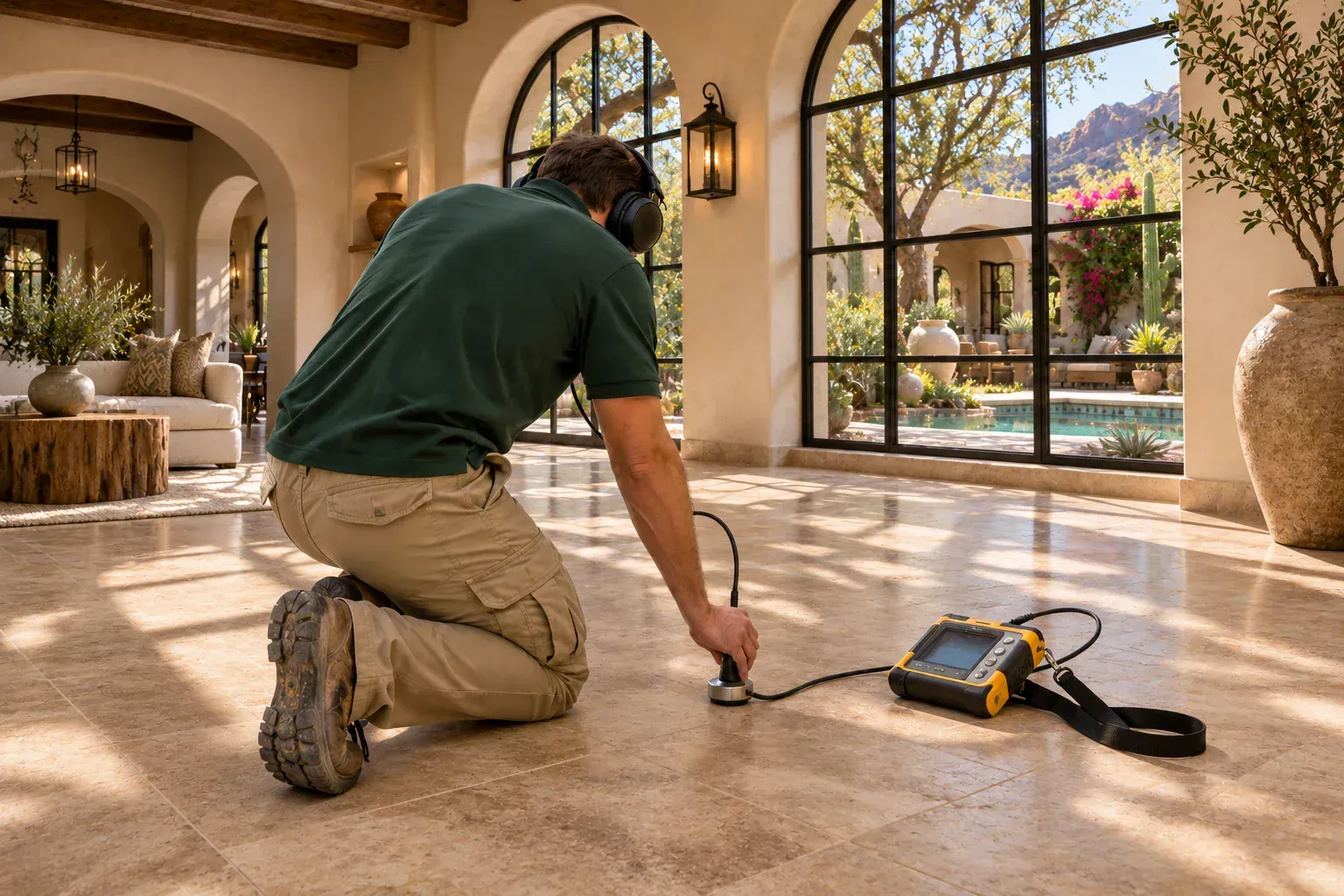
A slab leak is water escaping from a plumbing line under the concrete the home sits on, and it can stay hidden for weeks. Paradise Valley's older housing stock is prone to them: the median home in town was built in 1985, according to American Community Survey data. If water is moving right now, shut off the supply and call (602) 671-3561.
- Leak detection before any concrete is opened
- Standing water out and the structure dried, from flooring and baseboards to the bottom of the drywall
- The plumbing repair and the water damage restoration kept as separate scopes
- Materials tested dry before the job is done
02Warning signs
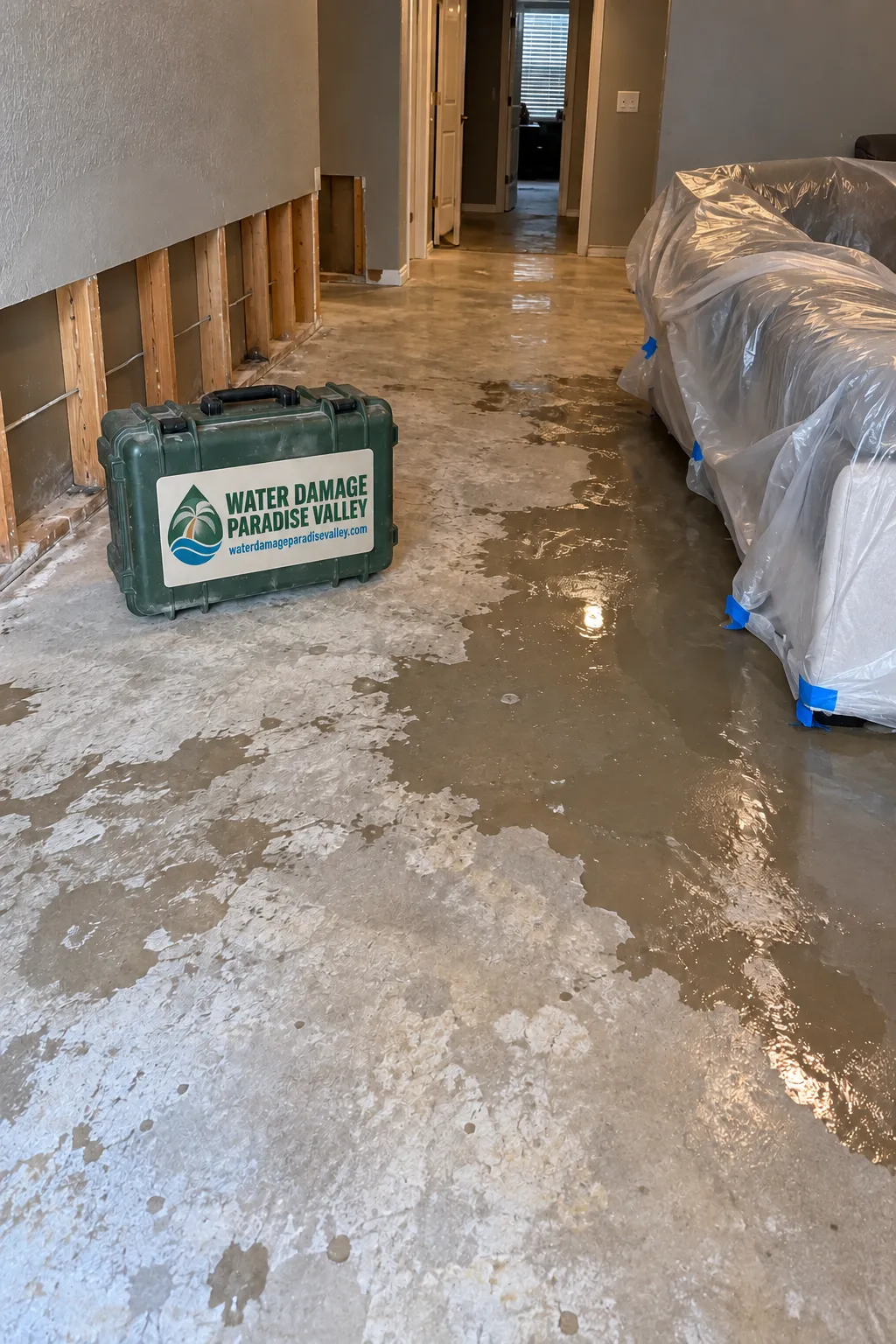
6 signs of a slab leak or burst pipe
- 01
A water meter that spins with every fixture off
the meter test shows water leaving the system.
- 02
Warm or hot spots on the floor
the hot line is losing heat into the slab.
- 03
The sound of running water
when nothing in the house is running.
- 04
A water bill that jumps for no reason
no change in habits, a higher bill.
- 05
Damp carpet, cupped flooring or baseboards pulling away
water wicks up out of the slab into the floor and the walls.
- 06
A musty smell near a closet or hallway floor
a leak can run for weeks in a home that sits empty.
03How it works
Three steps from the first call to a found leak
- 1
Call or send the form, day or night. Tell us where the water came from.
- 2
Someone from our team calls you back. We go over what happened and what comes next.
- 3
Leak detection and drying follow. Finding the line comes first, then the water it released comes out and the structure dries.
04Costs
What does slab leak water damage cost to restore?
Home Restoration Costs puts slab leak plus water damage restoration at $2,500 to $15,000. This Old House reports an average slab leak repair of $2,300, with most repair jobs falling between $630 and $4,400; that figure covers the plumbing line, not the cleanup. The 2 numbers measure different scopes, stopping the water versus extracting it, drying the structure and replacing what was ruined, and the restoration side moves with how far the water traveled. Ranges are published by cost guides and Phoenix-area companies on their websites (checked October 2026). They are market figures, not a quote. The actual price is set after an on-site assessment, and it depends on the affected area, the water category, and how many days the equipment runs.
05Local risk
What is a slab leak, and why does it happen in Paradise Valley homes?
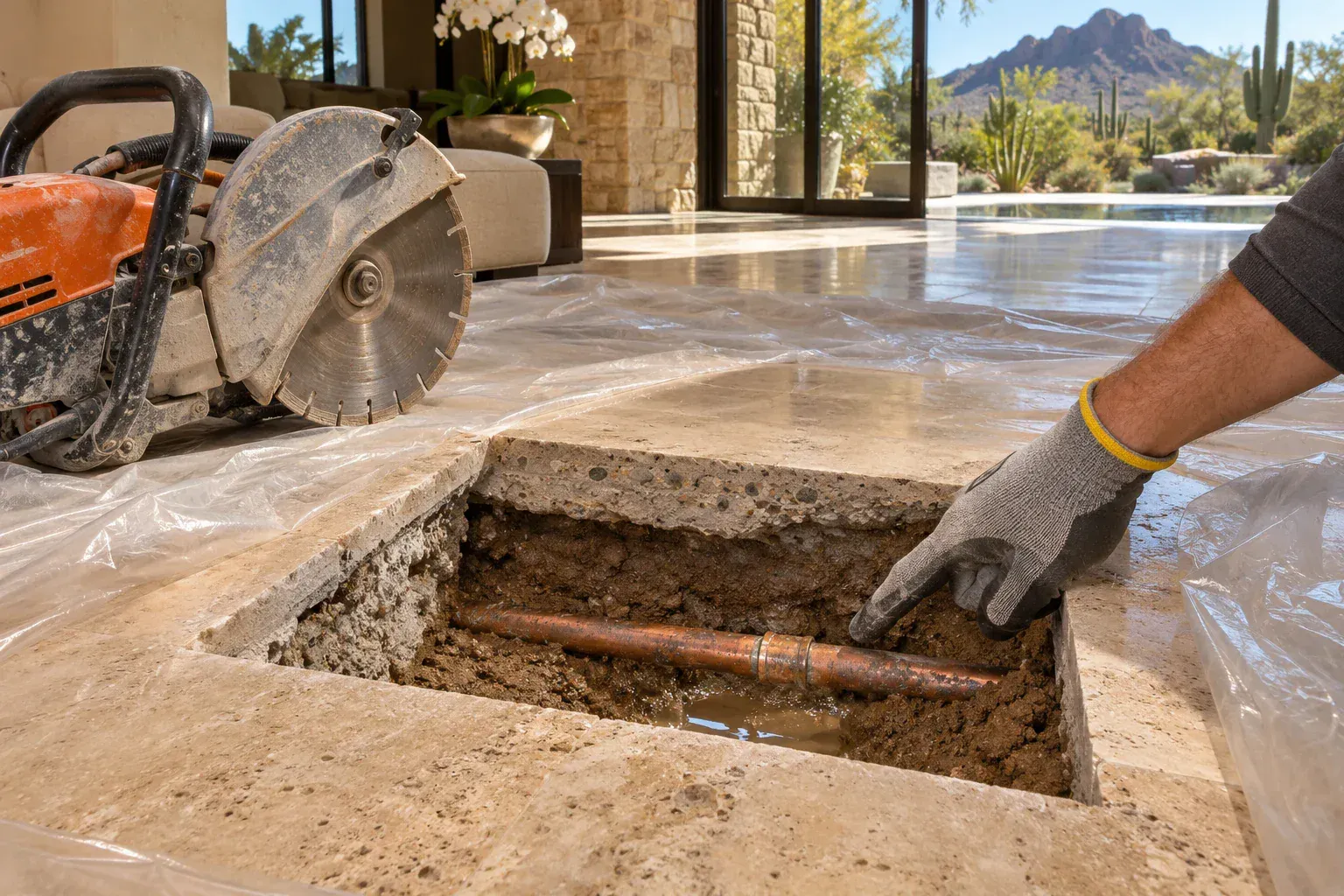
A slab leak is water escaping from a plumbing line that runs beneath the concrete slab the home sits on. Supply lines and drain lines both run under slabs in most Paradise Valley homes, so a leak can start below a bedroom, a hallway or a kitchen and stay hidden for weeks. The housing stock explains a lot of it: the median home in town was built in 1985, and 42% were built before 1980, according to American Community Survey data. IBHS (opens in a new tab) reports that homes around 30 years old were about 3 times as likely to have a plumbing supply or drainage problem. On the town's large lots, irrigation lines, pool and fountain auto-fill lines and water features add failure points of their own. Homes closed for the summer are the worst case: a supply line that starts to drip in June has the whole season to work into a wall or a cabinet.
If the goal is keeping water out in the first place, protecting a Paradise Valley estate from water damage runs room by room, from the slab up to the art.
Before the leak is found, five ways to catch a slab leak early rank the meter test, flow monitoring, thermal imaging, acoustic listening and pressure testing.
06Warning signs
What are the warning signs of a slab leak or a supply line failure?
Three signs point straight at a hidden leak: a water meter that spins with every fixture off, warm or hot spots on the floor, and the sound of running water when nothing in the house is running. A water bill that jumps for no reason belongs on the same list, along with damp carpet, cupped flooring, baseboards that pull away from the wall, and a musty smell near a closet or a hallway floor. The meter test is the one test most people can run themselves: shut every faucet, appliance and irrigation valve, then watch the meter. If it keeps turning, water is leaving the system somewhere. Hot water slab leaks show up as warmth underfoot, because the hot line is losing heat into the slab on its way to a fixture. Because a leak can run for weeks in a home that sits empty through the summer, any one of these signs is a reason to act the same day.
07First steps
What should I do first when I suspect a leak?
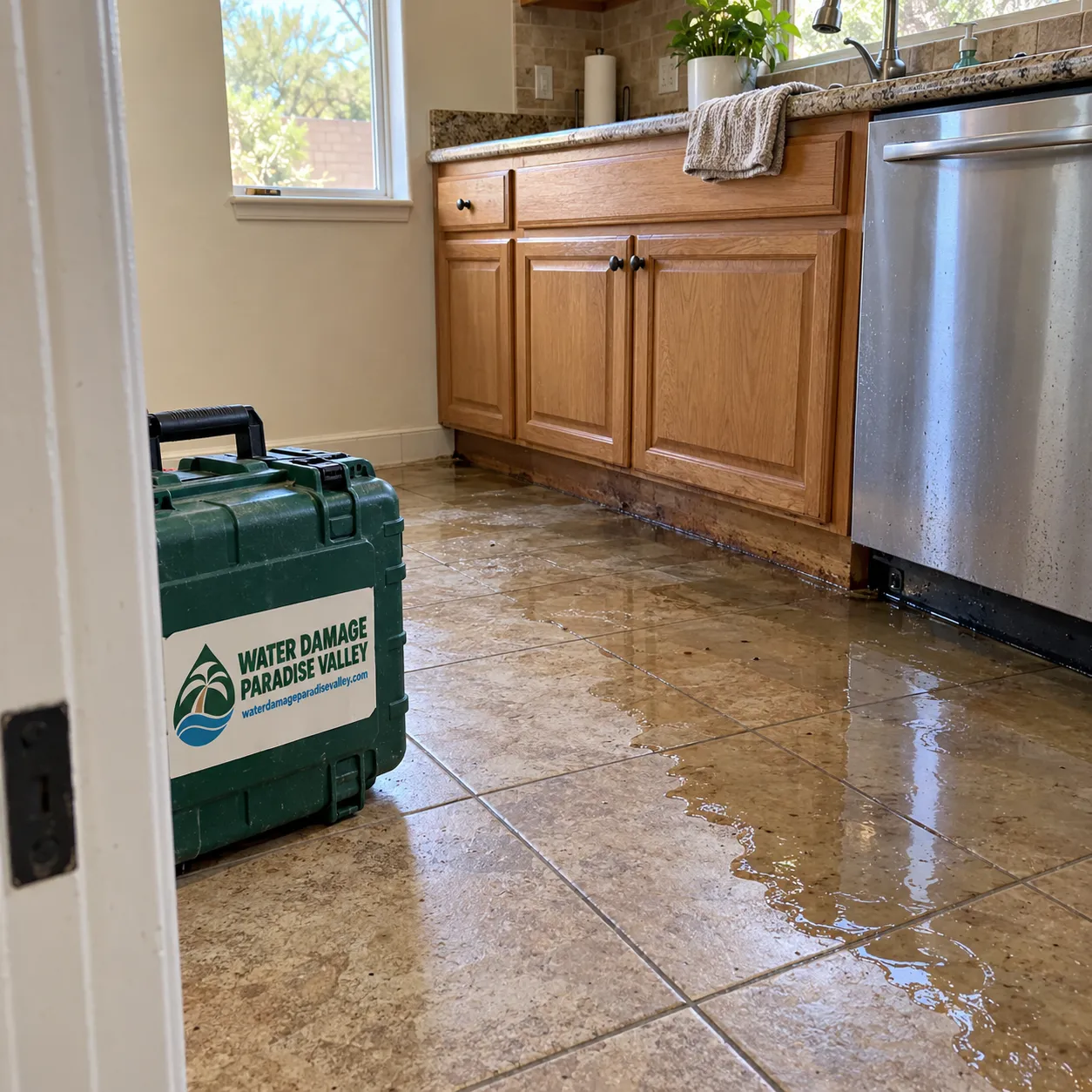
Shut off the main water supply, then confirm with the meter test. The shutoff is usually where the service line enters the house, often near the water heater or in a utility area; if you cannot find it, call your water provider's 24-hour line. Paradise Valley is served by 4 providers depending on address: Berneil Water Company 480-947-5044, City of Phoenix 602-261-8000, City of Scottsdale 480-312-5650 and EPCOR 800-383-0834. With the water off, run the meter test from above; a meter that still turns with everything off points to water leaving the system. Move boxes and furniture off wet flooring, and photograph what you see before anything is moved, because your insurer may ask for it. If water is anywhere near outlets, a panel or a gas appliance, stay clear and call (602) 671-3561.
08Good to know
How does a slab leak get fixed?
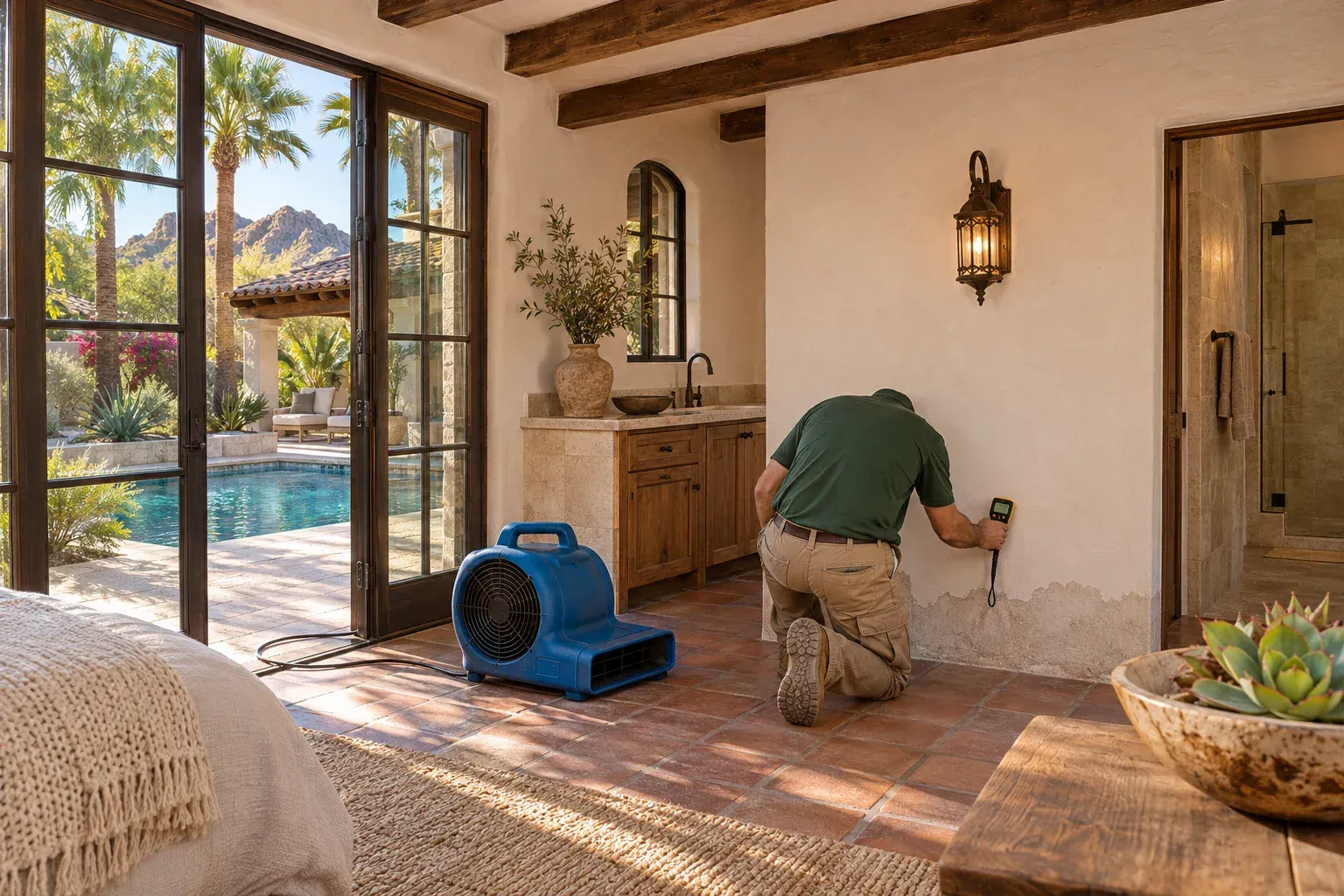
Detection comes first, because opening concrete on a guess helps no one. Leak detection is published at $150 to $600, according to This Old House (opens in a new tab), which also lists the 2 main repair routes. The first is a spot repair: the failed section of line is reached through the slab and replaced in place, with under-slab plumbing work published at $500 to $4,000. The second is a reroute: the line is moved overhead or through walls so the slab stays closed, published at $1,500 to $15,000. That gap is why the method matters more than any other single number in an estimate. The plumbing repair and the water damage restoration are separate scopes. Ranges are published by cost guides and Phoenix-area companies on their websites (checked October 2026). They are market figures, not a quote. The actual price is set after an on-site assessment.
09Good to know
What water damage does a slab leak leave behind?
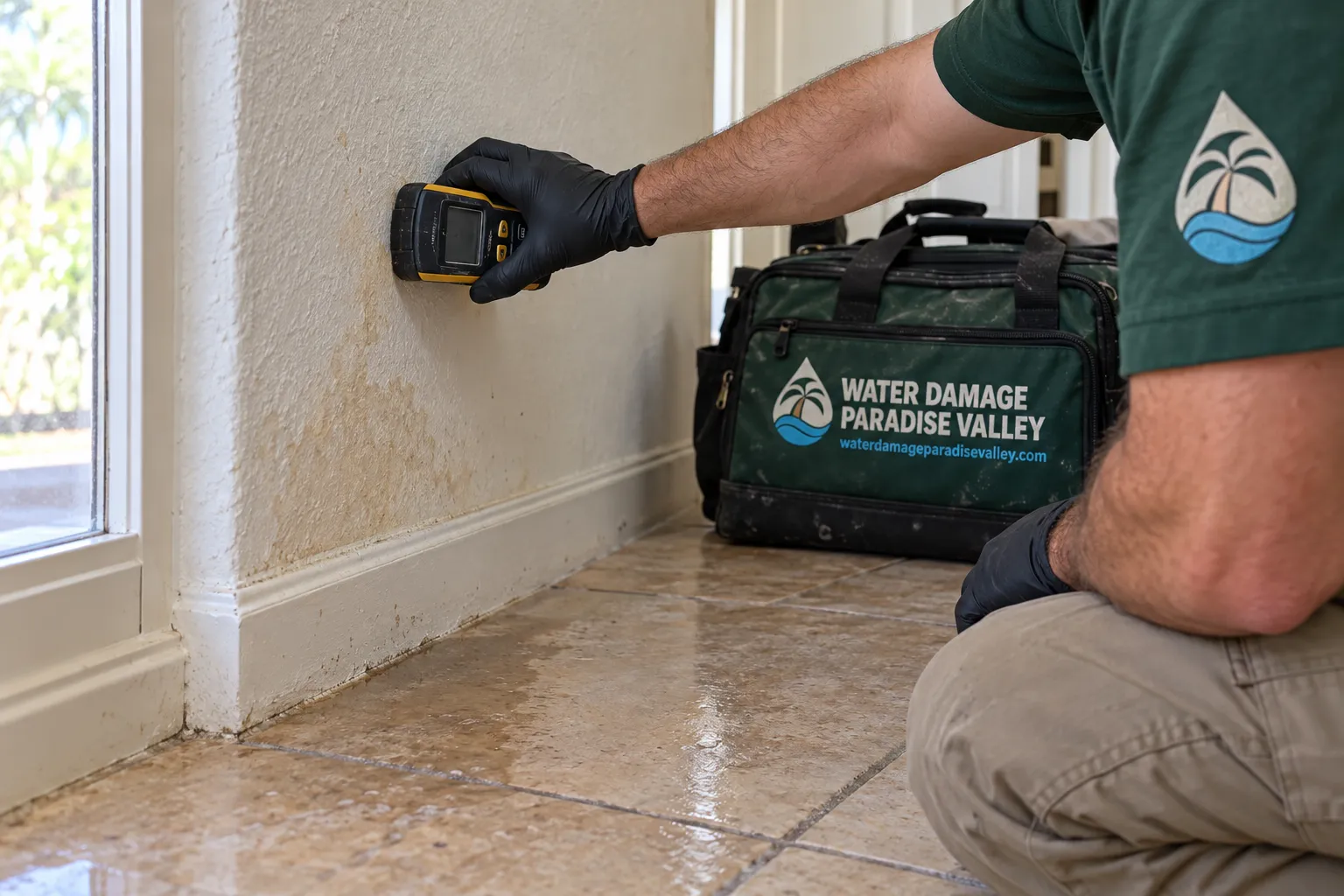
The longer a slab leak runs, the wider the damage. Water wicks up out of the slab into flooring, baseboards and the bottom of drywall, and it can travel sideways under laminate or tile before anything shows on the surface. Common outcomes include ruined carpet and pad, cupped or buckling hardwood, stained and swollen baseboards, soft spots in drywall, and cabinets that absorb water at their toe kicks. The EPA's guidance is to dry water-damaged areas and items within 24 to 48 hours to prevent mold growth, which is why the clock starts the day the leak is found, not the day the plumber arrives. Materials that stay wet past that window often have to be thrown away rather than dried. Once the line is fixed, drying equipment pulls the remaining moisture out of the structure, and the job is done when the materials test dry.
10Insurance
Does homeowners insurance cover slab leaks?
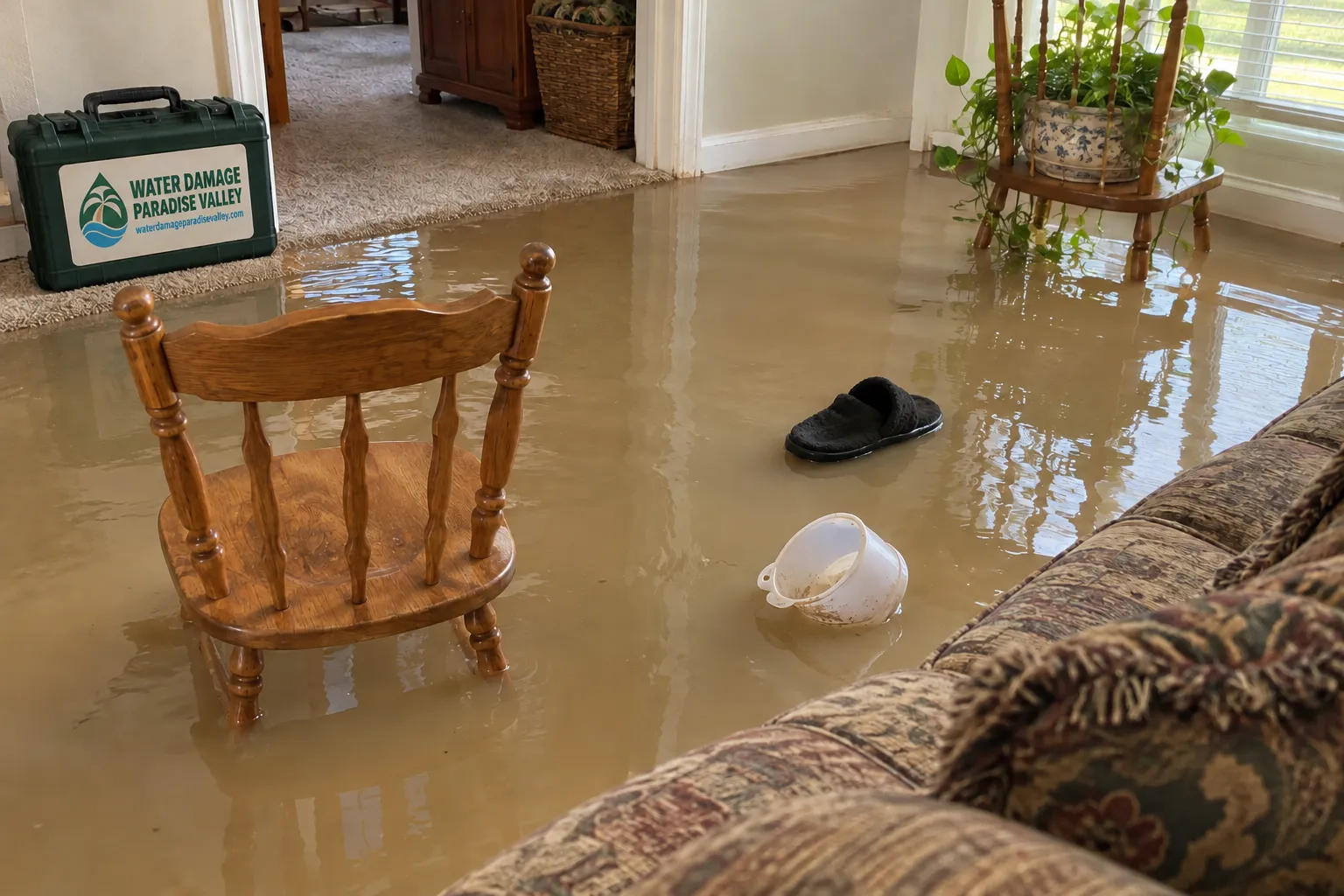
Coverage depends on the cause and on the policy, and your insurer decides. Triple-I (opens in a new tab), the Insurance Information Institute, explains that an HO-3 policy, the most common homeowners form, covers accidental discharge of water from a plumbing system, such as a burst supply line. Seepage that has been going on over time is excluded, along with flood damage, which standard policies leave to separate flood insurance. That difference is usually the deciding question on a slab leak claim: a line that fails suddenly points toward a covered event, while water that has been feeding into the soil for months points toward the exclusion. Report the loss promptly, photograph everything before it is moved, and keep receipts for extraction, drying and repairs. Ask your adjuster, in writing, how the loss was classified. Water damage and freezing was the second-largest cause of homeowners insurance losses in 2022, at 27.6% according to Triple-I's figures from ISO data.
115 questions
Questions people ask
Still have a question?
Call and describe what you see. Calls are answered day and night.
Call (602) 671-356101How do I test whether a slab leak is real?
Run the meter test: shut off every faucet, appliance and irrigation valve, then watch the water meter for movement. If it keeps turning with the whole house off, water is leaving the system somewhere, and it is worth calling for leak detection. Warm spots underfoot point to the hot water line, and a cold line leak often shows only on the meter and the bill.
02Can a slab leak stop on its own?
No. A failed pipe under a slab does not seal itself, and the water keeps moving into the soil and the structure until the line is repaired or rerouted. A slow leak can look like it paused, but the moisture it has already left behind stays until it is dried, and slow moisture is what feeds rot and mold.
03Should I keep the water off until the repair?
Keep it off if you can live without it, and definitely keep it off overnight or whenever the house is empty. Every hour the main stays open is more water under the slab and in the walls. If you need water to function in the house, open the main briefly, use it carefully, and shut it off again.
04Will the repair crew have to break up my floor?
Sometimes. A spot repair means breaking out a section of slab to reach the line, while a reroute avoids the slab by moving the line overhead or through walls; the published ranges are $500 to $4,000 and $1,500 to $15,000 respectively. Detection tells you which option fits before any concrete comes out.
05Are the repair and the water cleanup the same job?
No, they are 2 scopes. Plumbing repair stops the water, and water damage restoration removes standing water, dries the structure and replaces flooring, drywall and trim that absorbed water. Published separately, slab leak repair averages $2,300 (This Old House), while slab leak plus water damage restoration runs $2,500 to $15,000 (Home Restoration Costs). Drying still needs to start as soon as the leak is found.
12Keep reading
- Water damage services: extraction, drying, slab leak and sewage work for Paradise Valley and the nearby towns.
- Emergency water extraction: the first step when water is still moving or standing.
- Structural drying: fans, dehumidifiers, and drying that follows water into walls and floors.
- Pricing: published market ranges for every service, with the source named for each range.
- Scottsdale: older plumbing, hard water and the same slab leak profile next door.
- Water Damage vs Flood Damage in Paradise Valley:
- Repair vs Replace Wet Flooring in Paradise Valley: