Guide 03 · 5 min read
Drywall Repair vs Replace After Water in Paradise Valley, AZ
Repair is patching a section that is dry, solid, and clean. Replace is cutting out everything the water reached plus the wicking allowance above it. The decision is not about how the stain looks. It is about how far water traveled inside the wall cavity.
01Good to know
The short answer
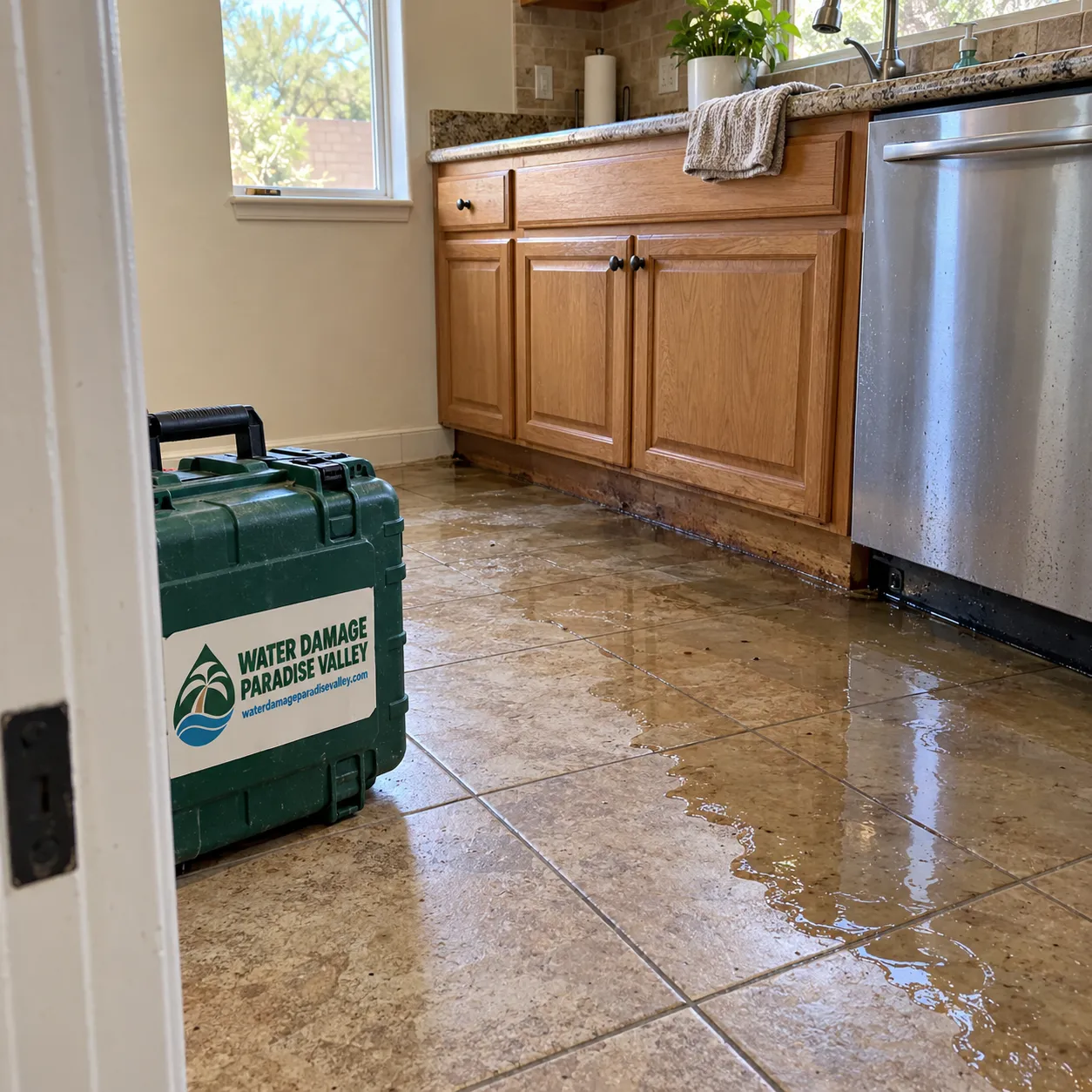
If the drywall is dry, firm, and the paper is intact, a patch is enough. If water touched it, especially category 2 water, the board comes out. Water wicks upward inside a cavity far past the visible line, and new paint over a wet cavity is a mold farm waiting. The right choice depends on the slab, the soil, the wall, or the building, and on what is behind the board.
02Good to know
Drywall repair: what it actually is
Repair is patching dry board. A hole gets backed, filled with compound, taped, textured, and painted. The board stays in place because it was never really wet, or because it dried completely and the paper never separated. Repair works on surface damage: a dent, a nail pop, a small cut. It also works on the top edge of a loss after replace has been done below, the feather line where new board meets old. What repair cannot do is clean the inside of a cavity. Whatever the water carried in there stays there. The compound matters too. Setting compounds dry by chemical reaction and tolerate a little moisture better than pre-mixed compound, which dries by evaporation, and in a humid monsoon house that difference shows up as a patch that shrinks and cracks.
03Good to know
Drywall replace: what it actually is
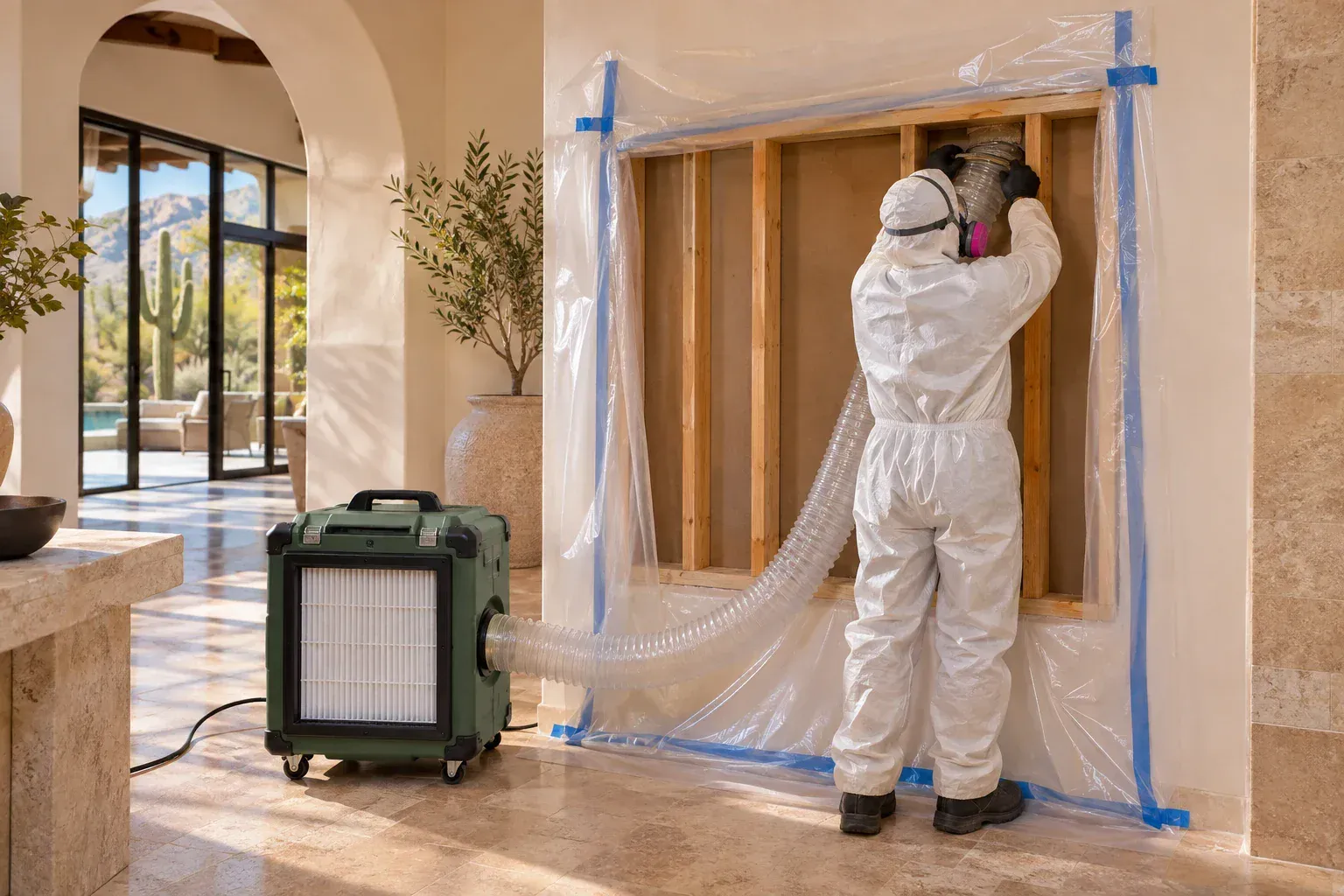
Replace means cutting out the affected board and everything the water wicked into. The cut runs above the visible waterline, because water climbs the paper and the gypsum beyond the stain, and the allowance above the line is what catches that climb. The cavity gets opened, insulation comes out if it is wet, and the framing gets dried with equipment before anything goes back. Then new board goes on, the seams get taped and floated, texture gets matched, and paint goes up. The order matters more than the materials: dry first, board second, texture third, paint last. Rebuilding before the readings hit the dry standard is how mold appears inside a rebuilt wall.
04Good to know
Water damage ceiling repair
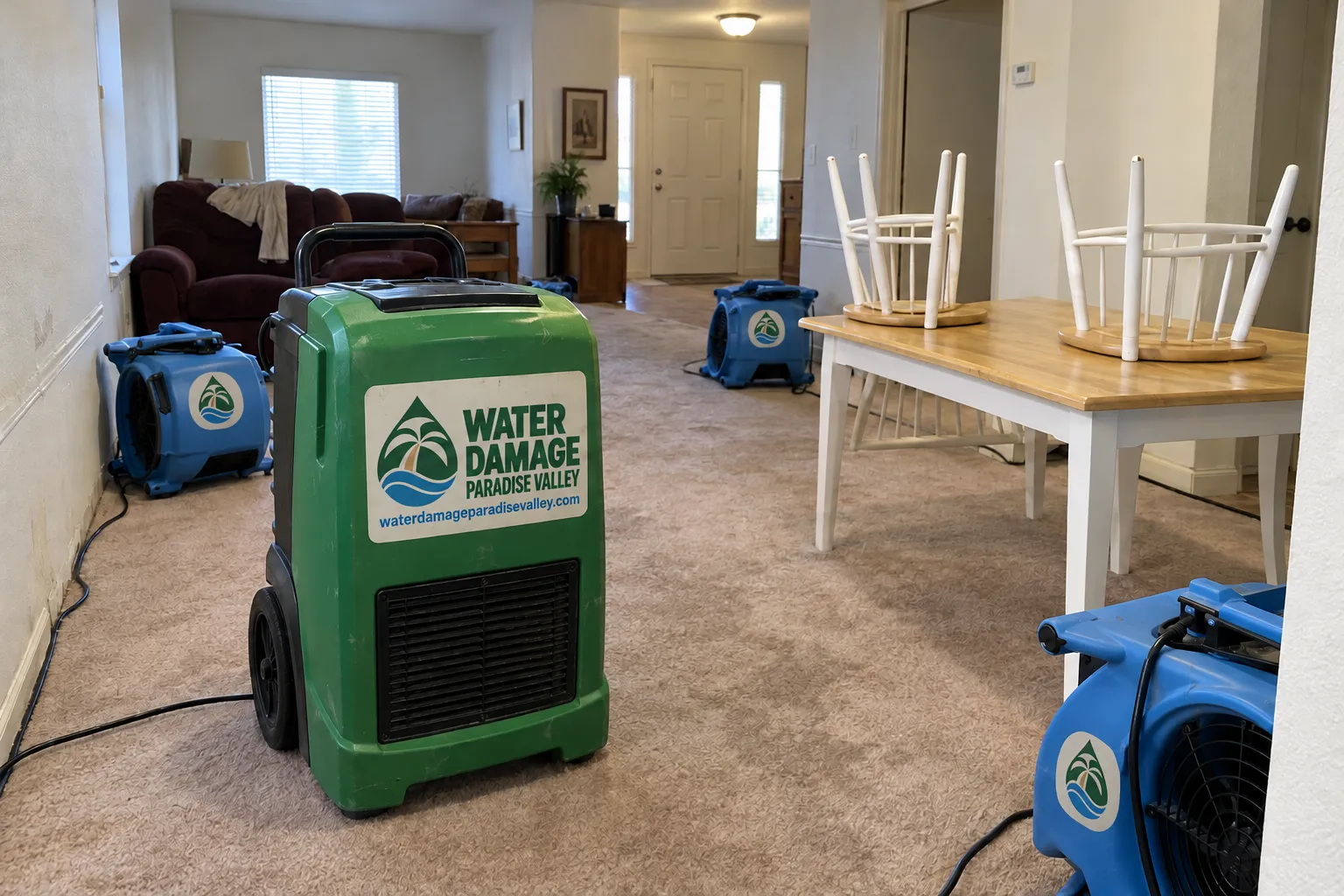
Water damage ceiling repair is drywall work overhead: cutting out the stained or sagging board, drying the joists above it, then re-boarding, texturing and painting. A ceiling holds water differently than a wall, because water pools above the board and follows the joists, so the stain you see is often smaller than the wet area above it. If the water came from the roof, the roof is fixed before the cavity is dried and the ceiling rebuilt. When the board has swollen or sagged, or the water was category 2, the ceiling comes down and gets replaced rather than patched. See how drying is measured on the structural drying page.
05Good to know
Where drywall repair fails here
Paradise Valley's monsoon humidity is the repair killer. In July and August the air is already close to saturated, and a cavity opened for a patch dries slowly even with equipment. Patch over a cavity that still holds monsoon moisture and the compound will not cure right, the paper softens, and the patch fails inside a year. Then there is the texture problem. Paradise Valley homes carry custom textures and high-end finishes, and a small patch in a large wall reads as a patch forever if the texture is not matched by hand. On a twelve foot wall in a large room, a hasty patch is the first thing you see from the doorway. Size matters too: patching is a small area solution, and a wall that wicked water is not a small area, whatever the stain says. The same logic applies to the compound schedule: in humid monsoon air a patch needs more time between coats, and a rushed coat leaves a patch that shows every pass. See what a fair price looks like when the texture question comes up.
06Good to know
Where drywall replace fails here
The wet plate is the classic failure. Drying stops too early, the bottom plate is still wet, and new drywall goes over it. The paper backing is food and the plate is the water source, so mold appears inside a rebuilt wall, the second remediation costs more than the first, and the finish work gets torn out twice. On flat-roofed homes the cavity problem is bigger, because a roof leak travels a ceiling cavity and surfaces far from the entry, so the replace job has to chase the wet run, not just the stain. And the finish side of replace fails when the new texture does not match the house. A high-end Paradise Valley home needs a texture hand matched by someone who has done it, and that costs more than the board itself. The rebuild scope has to say so in writing. Board choice matters on large walls as well. Short pieces from a stock run leave more seams than a full run, and every seam is a line that can show later under the finish. The documentation side matters too. Photos of the cut lines and the cavity before new board goes up are what prove the wet board actually came out, and that proof is part of the claim.
07Costs
What it costs and what drives the number
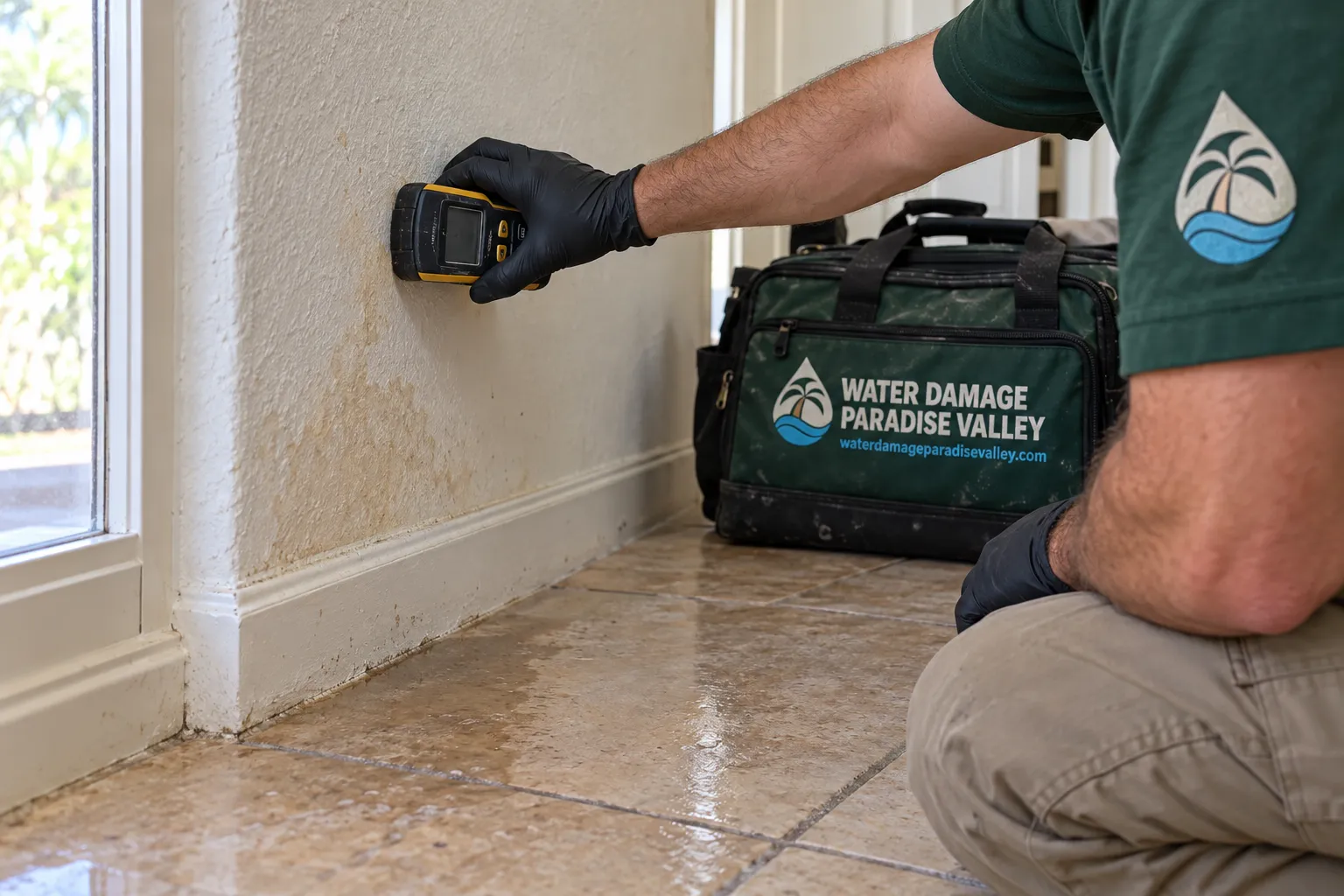
Repair is cheap, a patch, texture, and paint. Replace is more, because the number includes removal, cavity drying with equipment, new board, and the finish match. Both vary with the finish level of the house. A builder grade texture in a small room is one number; a hand matched custom texture on a large Paradise Valley wall is another, and the difference is all labor. The labor is what you are paying for, and the finish is where it shows. The dehumidifier vs air mover page covers the equipment half of the drying line.

08Good to know
What good work looks like in Paradise Valley
- Moisture levels in the cavity get read before anyone decides patch or replace, and the numbers get shown.
- The replace scope names the wicking allowance, so the cut actually gets the wet board out.
- Texture matching gets lined up before the board goes up, not after, so the patch does not announce itself.
- The plate gets checked dry before new drywall goes back, because nobody should rebuild over a wet plate.
096 questions
Drywall Repair vs Replace After Water: your questions
Still have a question?
Call and describe what you see. Calls are answered day and night.
Call (602) 671-356101How high do you cut when drywall gets wet?
Above the visible waterline plus an allowance for wicking. Water climbs the paper past the stain, and the cut has to catch it. The exact height depends on the cavity readings.
02Can I patch over a small water stain?
Only if the board is dry, firm, and the paper is intact. If the stain came from a leak, verify the cavity is dry first. A stain with soft paper is a replace job.
03Why does mold grow inside walls after a water leak?
The paper backing is food and the cavity is damp. A wet plate behind new drywall feeds the colony from inside. That is why drying the cavity before board goes up matters more than the board itself.
04Does texture matching really matter?
In a Paradise Valley home with custom texture and high ceilings, yes. A mismatched patch reads from across the room and hurts the finish value of the house. It costs a little more to match, and much more to fix later.
05How long before new drywall can go up?
When the moisture readings hit the dry standard for the materials in the cavity, not before. Monsoon season stretches that out, because the air is wet and evaporation is slow.
06What if the leak was in the flat roof ceiling?
The wet run in a ceiling cavity travels, and the cut has to follow the readings, not the stain. Fix the roof first, then dry the cavity, then rebuild the ceiling. See flood and storm damage for the entry paths.