Service 01 of 07 · Paradise Valley, AZ
Emergency Water Extraction in Paradise Valley, AZ
You have standing water in the house, and it soaks deeper every hour. Pumping out and moisture readings come first. Call day or night, or send the form, and someone from our team will call you back soon.
Paradise Valley · Scottsdale · Phoenix · Tempe · Fountain Hills · Cave Creek
01What you get
Standing water out before it soaks deeper
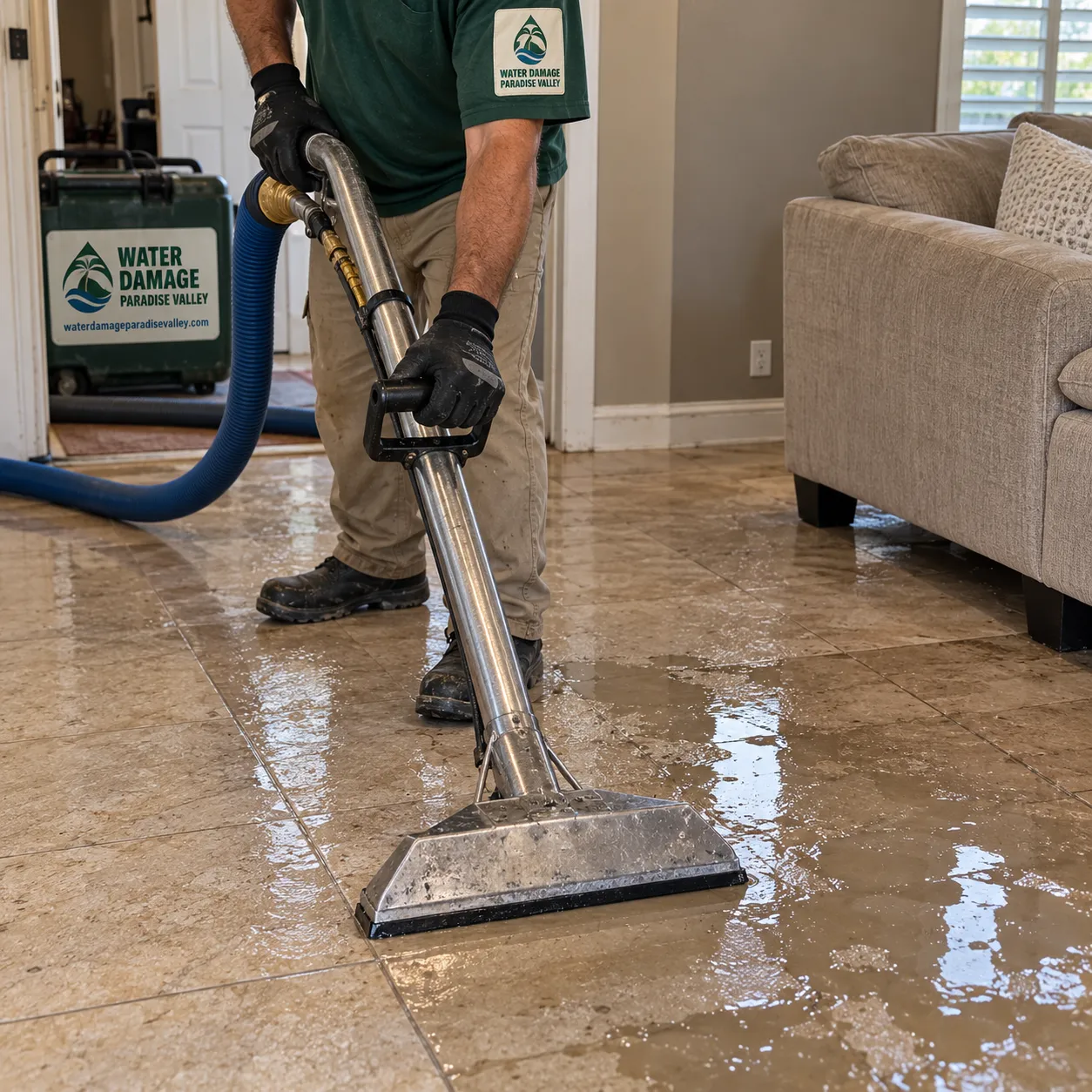
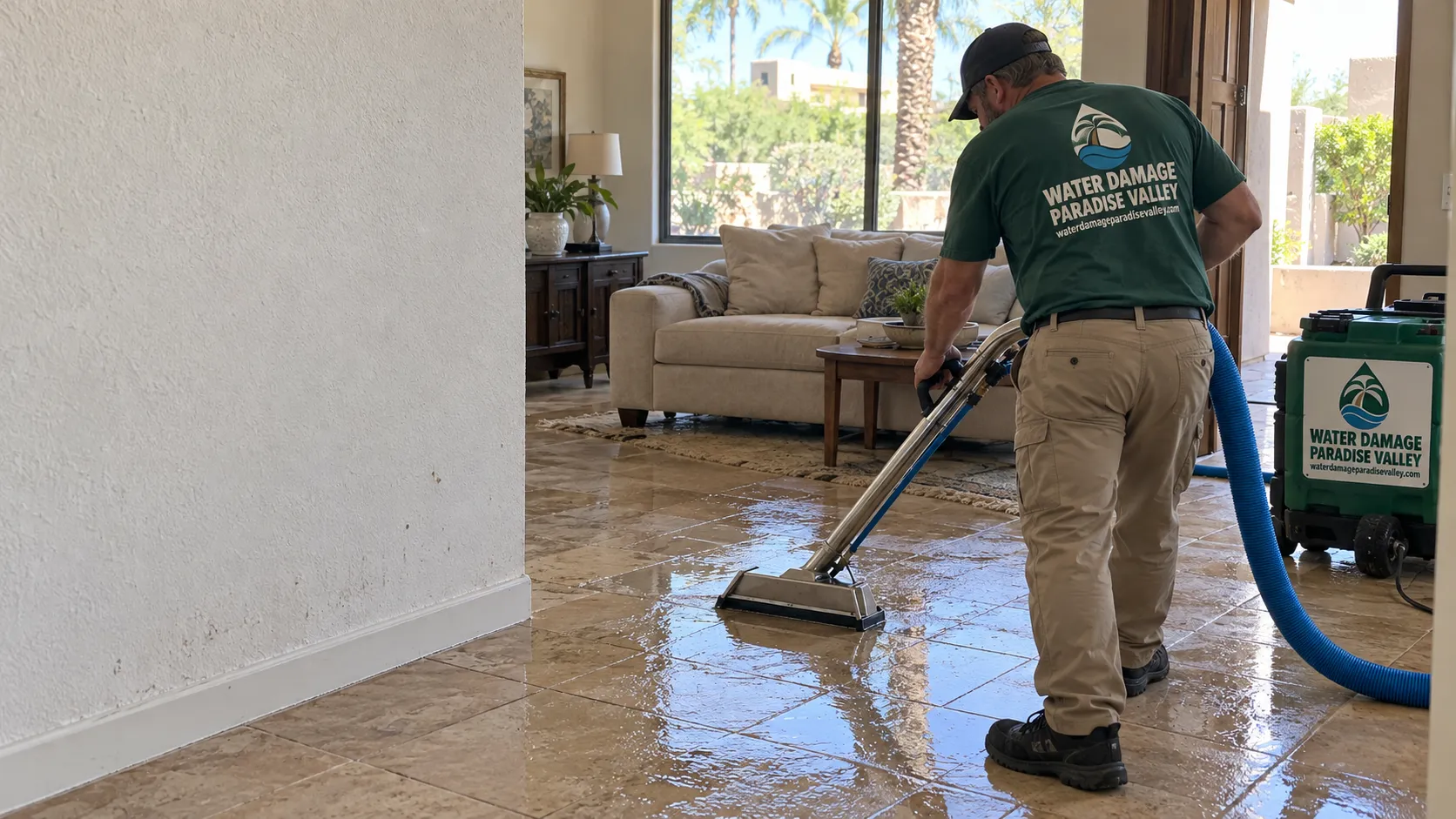
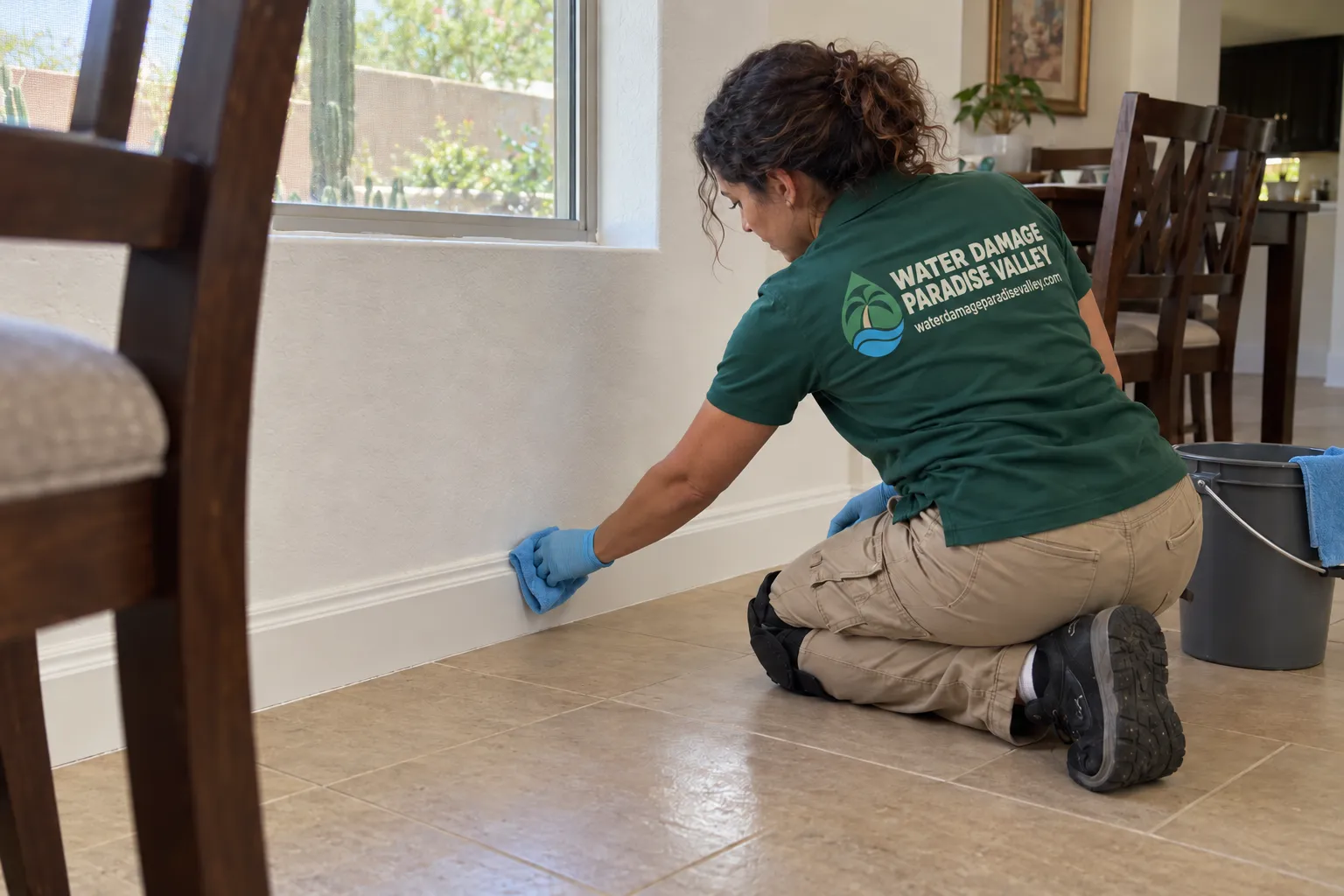
Emergency water extraction is the first step after a leak, a burst pipe, an appliance failure or storm water gets into your home. The standing water comes out before it soaks deeper into floors, walls and cabinets, and moisture readings set up the drying that follows. Calls are answered day and night at (602) 671-3561.
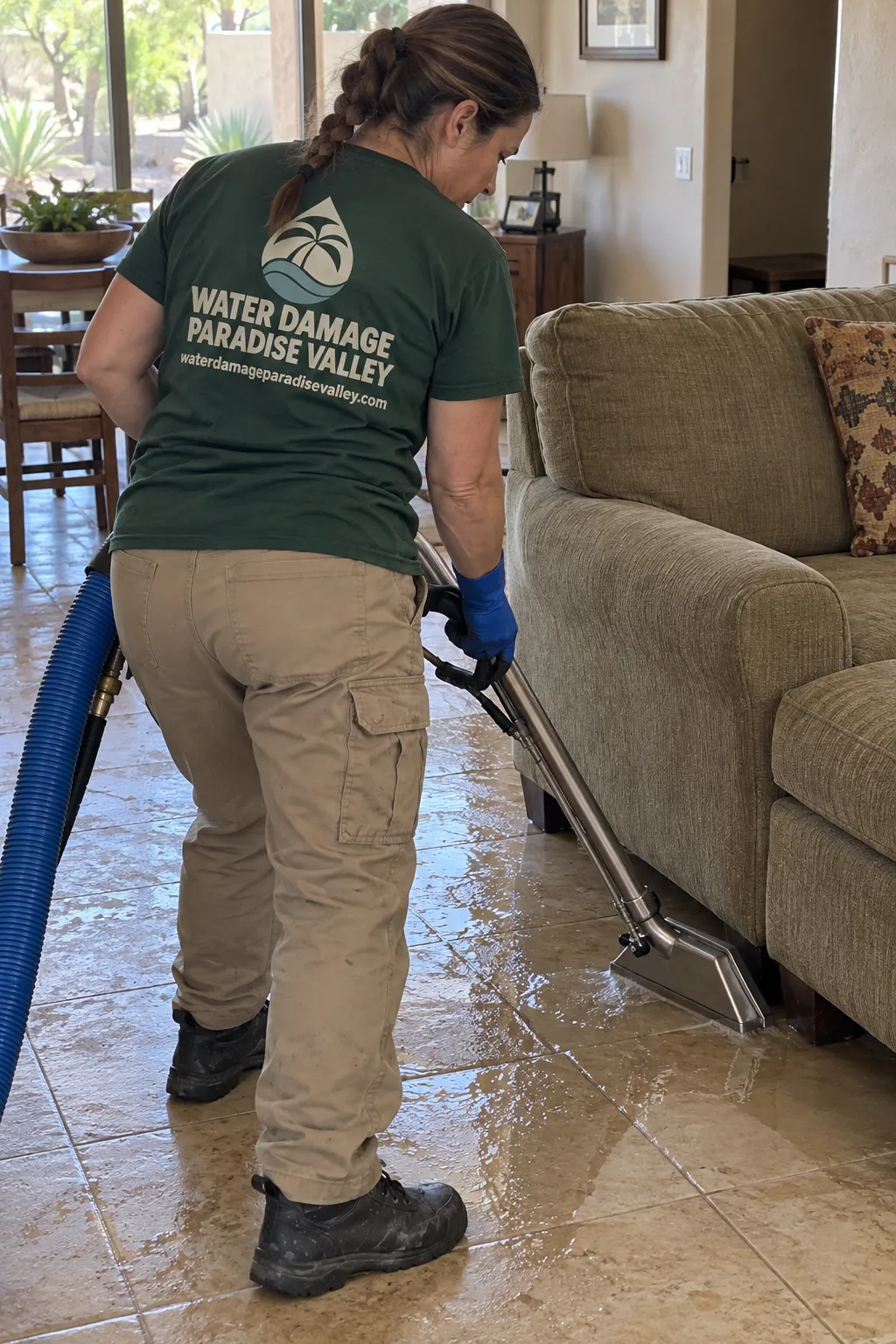
- Standing water pumped and vacuumed out, working from the deepest area outward
- Carpet lifted where the padding underneath is soaked
- Baseboards, drywall, cabinets and flooring checked with moisture meters
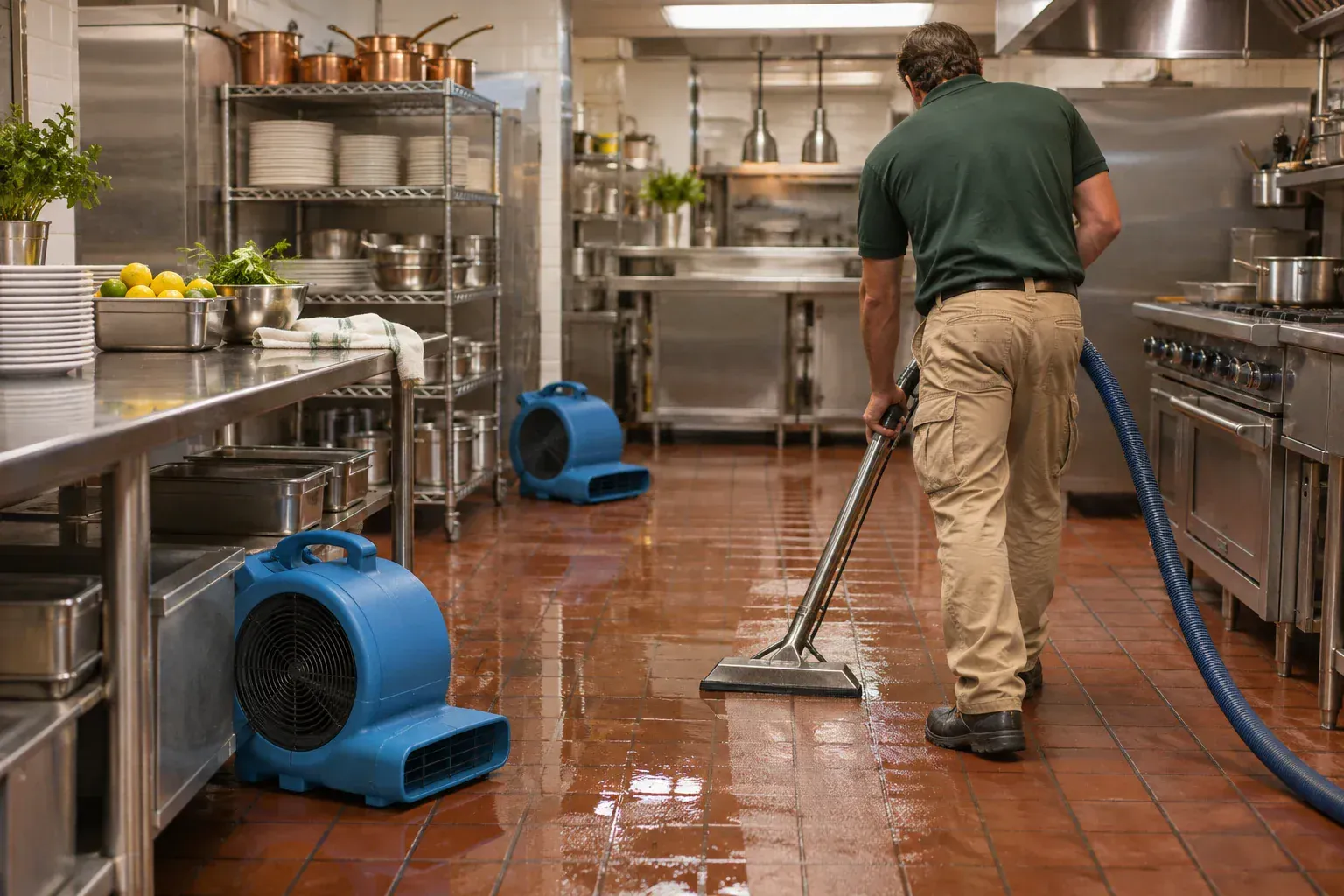
- Air movers and dehumidifiers set up before the visit ends
- Readings logged and a drying plan that matches what is actually wet
02Warning signs
5 signs you need emergency water extraction
- 01
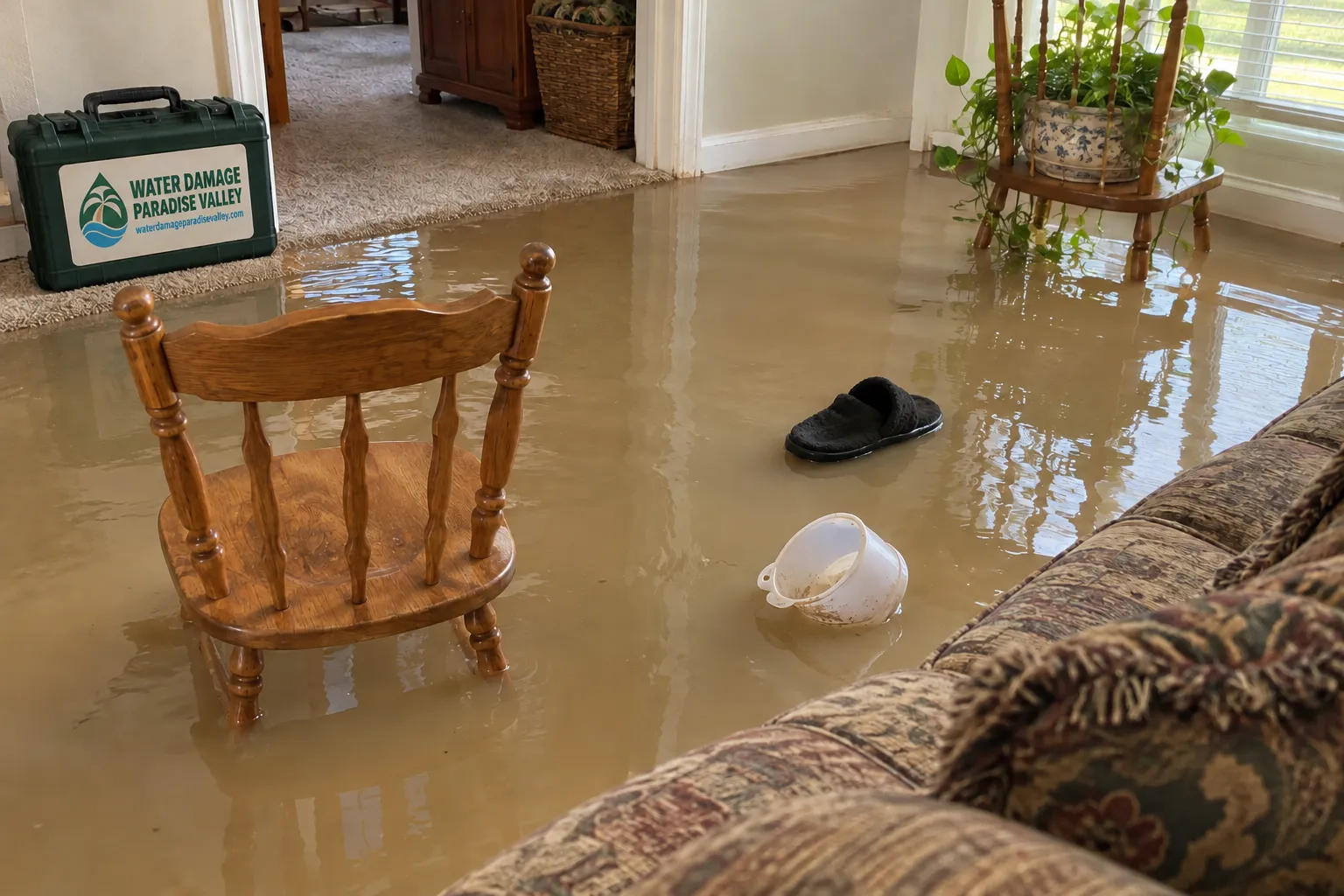
Standing water on the floor
from a leak, a burst pipe, an appliance failure or storm water.
- 02
Carpet padding that stays soaked
a wet vacuum only reaches the surface.
- 03
Baseboards or drywall pulling in water
drywall wicks water up its paper face.
- 04
Swollen particleboard, cupped hardwood or buckling floors
the longer water sits, the more of the job moves from drying to replacement.
- 05
Water left in place for a day or more
the EPA says to dry water-damaged areas and items within 24 to 48 hours to prevent mold growth.
03How it works
Three steps from the first call to a drying plan
- 1
Call or send the form, day or night. Tell us where the water came from.
- 2
Someone from our team calls you back. We go over what happened and what comes next.
- 3
Extraction and moisture readings follow. Standing water comes out first, the materials get checked, and drying is set up.
04Costs
What does emergency water extraction cost in Paradise Valley?
Published guide ranges for emergency water extraction run about $500 to $3,500, according to Home Restoration Costs (water extraction cost (opens in a new tab)). That figure covers the extraction itself; water cleanup and drying as a whole is commonly quoted at $3 to $7 per square foot, and most water damage restoration jobs land between $1,200 and $8,500. Ranges are published by cost guides and Phoenix-area companies on their websites (checked October 2026). They are market figures, not a quote. The actual price is set after an on-site assessment, and it depends on the affected area, the water category, and how many days the equipment runs. Water category matters as much as size: clean water from a supply line is the simplest job, while contaminated water adds cleaning and disposal before drying even starts.
05Good to know
What is emergency water extraction?
Emergency water extraction is the removal of standing water from your home before it soaks deeper into floors, walls and cabinets. It combines pumps and wet vacuums with a survey of what the water touched, because extraction sets up everything that follows: drying, repairs and any mold work. It is not a mop and towel job. Water sits in carpet padding, under baseboards, inside wall cavities and below tile, and a wet vacuum only reaches the surface. The goal of the visit is to get the bulk of the water out and take moisture readings, so the drying plan matches what is actually wet. If the water came from a sewage backup or outdoor flooding, the job changes: that water is treated as contaminated, and cleaning or removal comes before drying equipment goes down.
06Services
What should I do while I wait for help?
Stop the water if you can do it safely. Shut off the fixture valve or the main supply. If water is near outlets, the electrical panel or a fuse box, stay back and treat it as a hazard: a sparking outlet or a sagging ceiling means call 911 and keep everyone out of the room. Move furniture, rugs and anything sitting on wet carpet to a dry surface, and put foil or plastic under metal furniture legs to stop rust stains. Do not run a household vacuum over standing water, and do not wade through it in bare feet if it came from a drain or toilet. Photograph and video the room before anything is moved, because your insurer will want the record, and shut the door so kids and pets stay out.
07How it works
How does the extraction process work?
The visit runs in 4 steps: stop the source, extract standing water, check materials, and set up drying. Stopping the source means shutting the supply valve or the failed fixture so no new water enters the room. Extraction uses pumps and wet vacuums, working from the deepest area outward, and lifts carpet where the padding underneath is soaked. The materials check probes baseboards, drywall, cabinets and flooring with moisture meters, and anything that has swelled or delaminated is documented for repair or replacement. Drying comes last: air movers and dehumidifiers are placed before the crew leaves, because extraction removes only the water you can see and the equipment takes on what has already soaked in. The visit ends with readings logged and a plan, which is where structural drying begins.
08Drying window
Why do the first 24 to 48 hours matter?
Mold has a head start if water is left in place. The EPA says water-damaged areas and items should be dried within 24 to 48 hours to prevent mold growth (EPA guidance (opens in a new tab)), and once mold settles into drywall or padding, wiping the surface is not a real fix.
Material damage builds the same way. Drywall wicks water up its paper face, particleboard swells and does not return to shape, hardwood cups at the seams, and wood floors can buckle. The longer water sits, the more of the job moves from drying to replacement, which changes both the repair bill and the insurance conversation. That is why we ask you to call (602) 671-3561 as soon as you see water where it should not be, not after a weekend of towels.
09Local risk
What causes water emergencies in Paradise Valley homes?
The sources are predictable even when the timing is not. Plumbing supply lines are the classic one: IBHS reports that homes around 30 years old were about 3 times as likely to have a plumbing supply or drainage problem, and the town's median home was built in 1985. Water heater risk rises after year 5, and about 3 in 4 fail before year 12, so a tank or a fitting in a utility closet is a common start to the story. On large lots, pool and fountain auto-fill lines, irrigation lines and water features are common failure points, and many properties sit on septic systems. Summer adds its own version: monsoon season runs June 15 to September 30, and homes closed for the season hide slow leaks for weeks, so a supply line that starts to drip in June may not be found until fall.
10Insurance
Will homeowners insurance cover water extraction?
Often, yes, when the water started inside the house. A standard HO-3 homeowners policy covers accidental discharge of water from a plumbing system, per Triple-I (Am I covered? (opens in a new tab)), and extraction and drying are typically part of that claim. What standard policies exclude is water that came from outside: ground seepage and surface flooding, and flood insurance is a separate policy. Some causes are excluded no matter where the water started, and every policy carries its own deductibles and limits. Your insurer decides what is covered, so open the claim early and ask what documentation your adjuster wants. Photos, moisture readings and an itemized scope of the affected materials are the first things most adjusters ask for, and they cost nothing to collect while the damage is fresh.
115 questions
Questions people ask
Still have a question?
Call and describe what you see. Calls are answered day and night.
Call (602) 671-356101How quickly does mold start after a water leak?
Mold needs moisture to grow, so the clock is really about drying time. EPA guidance is to dry water-damaged areas and items within 24 to 48 hours to prevent mold growth, and the risk climbs after that window. That timeline is why extraction and drying equipment start on the same visit.
02Can I extract the water myself with a shop vac?
A shop vacuum can pull water from a small, clean spill, but a household vacuum is not safe near standing water, and the visible water is only part of the problem. Padding, baseboards and subfloor hold moisture a vacuum cannot reach. If the wet area is bigger than a few square feet or has reached a wall, it is a job for equipment and readings.
03Does extraction fix the leak?
Extraction removes the water, not the cause. If a supply line, fitting or appliance is still leaking, the source gets shut off first, but the repair itself is a separate job, often a plumber's. If the water comes from a line on the city side, the water provider for your address may need a call; Paradise Valley has 4 providers, depending on the address.
04What if the water came from a sewage backup or outdoor flooding?
Then it is not a clean-water job. Sewage and outdoor floodwater can carry contamination, and EPA mold guidance notes that absorbent materials, including drywall and carpet padding, may have to be thrown away once they are moldy. Cleaning and disposal come before drying, and some materials are removed instead of dried. Keep people and pets away from the area, and treat soaked items as contaminated until they are dealt with.
05Do I need to be home for the visit?
Plan to be there, because someone needs to point out where the water started, open gates or locked areas, and confirm what the readings cover. The walkthrough at the end, where the readings and drying plan are explained, is worth hearing in person. If you cannot be there, arrange for someone with keys to stand in and take notes.
12Keep reading
- Water damage services: all seven services across Paradise Valley and the nearby towns.
- Structural drying: the drying stage that follows extraction.
- Slab leaks and burst pipes: common sources of the water that starts this job.
- Pricing: how water damage jobs are priced and what changes the number.
- Mold and wash clock: where standing water puts the house on the 24 to 48 hour window.
- Phoenix water damage help: for Arcadia and central Phoenix homes near the town line.
- Drywall Repair vs Replace After Water in Paradise Valley:
- Category 1 vs Category 2 Water in Paradise Valley: