Guide 06 · 5 min read
Repair vs Replace Wet Flooring in Paradise Valley, AZ
Repair is drying and refinishing what can be saved. Replace is pulling the material and putting down new. The material decides: carpet pad almost never survives, solid wood sometimes can, engineered wood often cannot, and tile hides its problems in the slab under it.
01Good to know
The short answer
Carpet and pad: the pad comes out, the carpet can sometimes be saved. Solid hardwood can cup and be sanded flat, or it can be past saving. Engineered wood and laminate take water between their layers, and the answer is usually replace. Tile over slab sits on concrete, and the questions are about the subfloor and the grout. The right choice depends on the slab, the soil, the wall, or the building, and on what the floor sits on.
The material decides, and whether travertine, hardwood, plaster and cabinets can be saved after a leak is its own question for each surface.
02Good to know
Repairing wet flooring: what it actually is
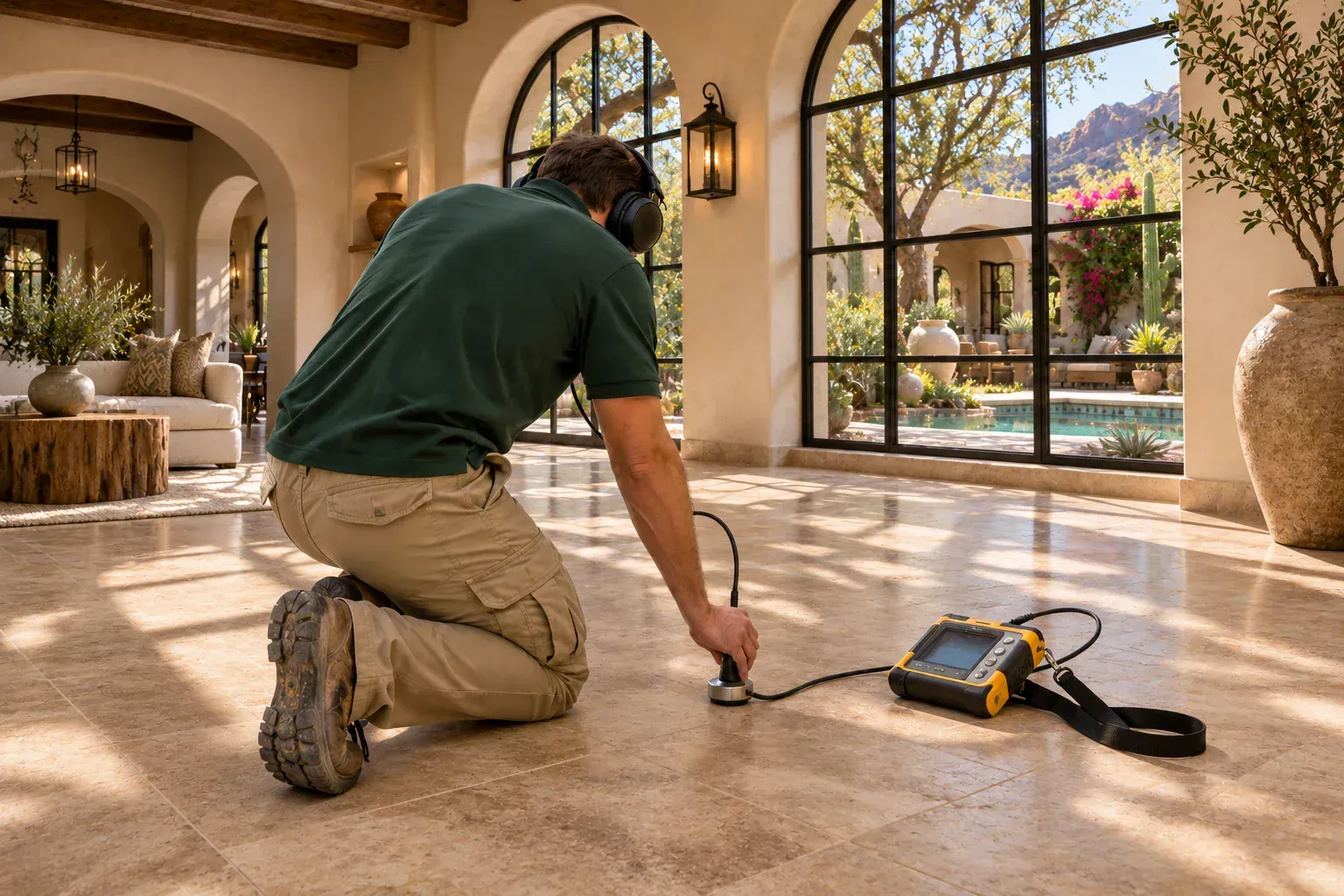
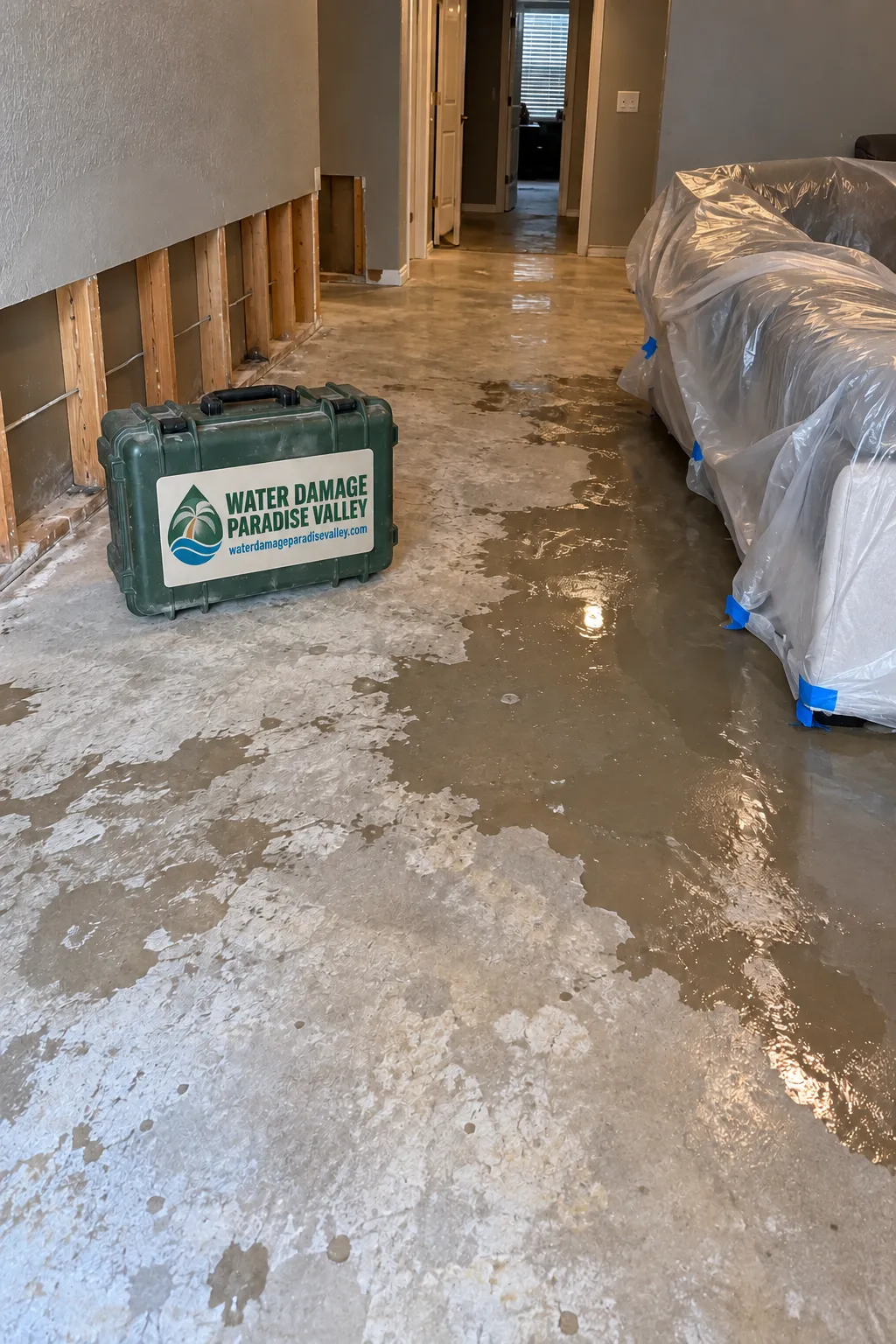
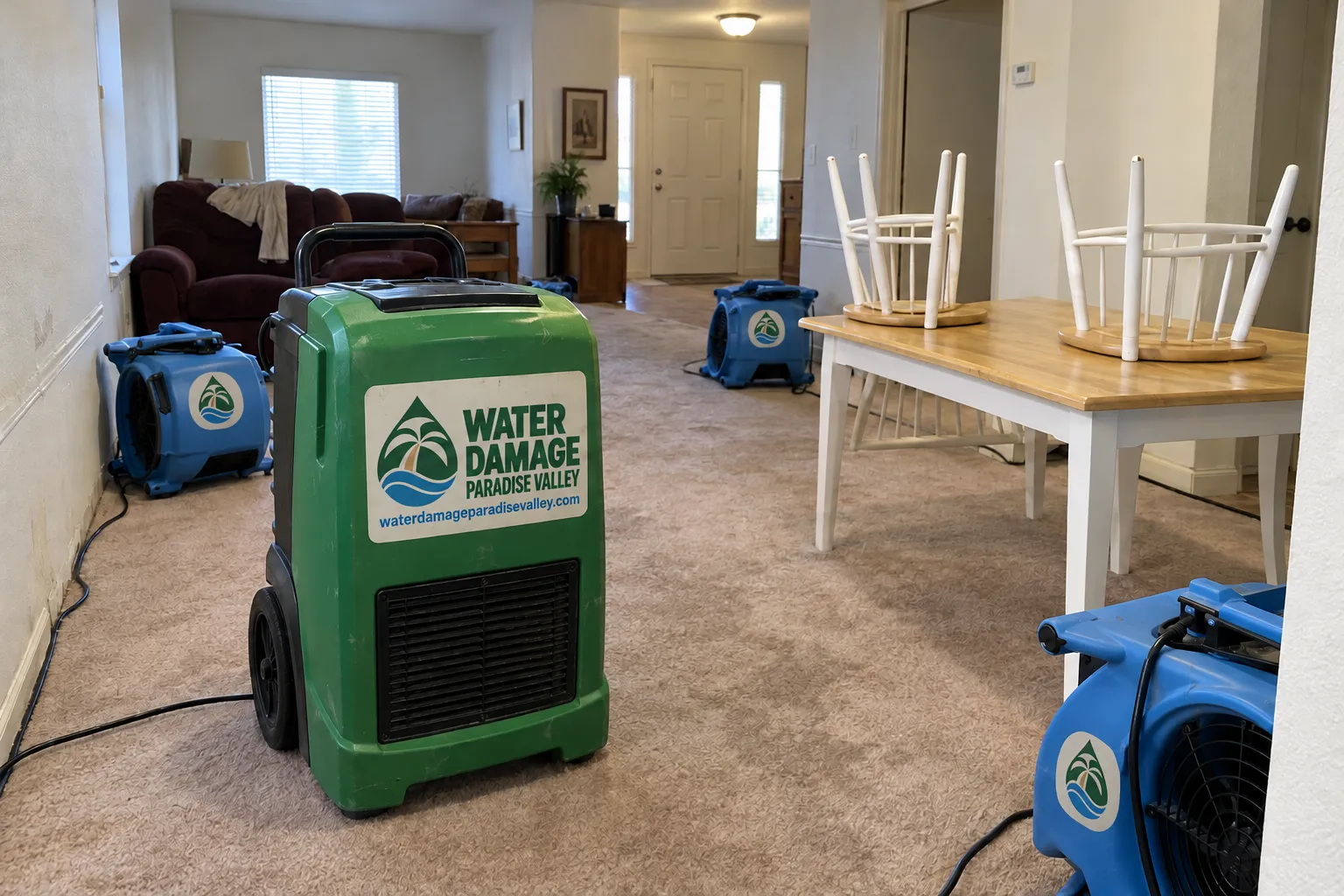
Repair means drying the material in place and bringing it back: extraction, equipment across the surface, then a finish step, a sand and recoat on wood, a deep clean on carpet, a regrout on tile. It works when the water was clean, caught early, and the material did not delaminate. Solid hardwood has a real chance here. Wood moves when it wets, cups and crowns, and if the boards are solid and the damage is surface movement, sanding after full drying can bring it flat again. Carpet is a maybe: the face fiber can be cleaned and saved, but the pad beneath is a sponge and it goes, always. Tile and stone can often be saved as material, but the question underneath is the slab, and that question is not answered by looking at the surface. The drying equipment has to reach under the material, not just across it. Carpet gets lifted, hardwood gets tented with injection ports in the worst cases, and tile gets air moved along the grout lines, because surface drying never reaches the layer that actually matters.
03Good to know
Replacing wet flooring: what it actually is
Replace means pulling the material out, drying the slab or subfloor underneath, and putting down new. The hidden part is the drying of what sits under the floor, because new material over a wet slab fails the same way the old material failed, and faster. Engineered wood and laminate fail their own way: the layers delaminate when water gets between them, and no amount of drying puts the layers back together. The order of work decides the outcome: dry the slab, read the slab, then lay the floor. Any other order puts the new material on top of the old problem and bills the homeowner for the privilege. Replacement also carries the finish problem on a Paradise Valley lot: wide-plank wood and custom stone do not match from stock, and the new section has to be picked, milled, and finished to the room. Baseboards and thresholds come with it, and the job is a rebuild, not a floor drop.
04Good to know
Where repair fails here
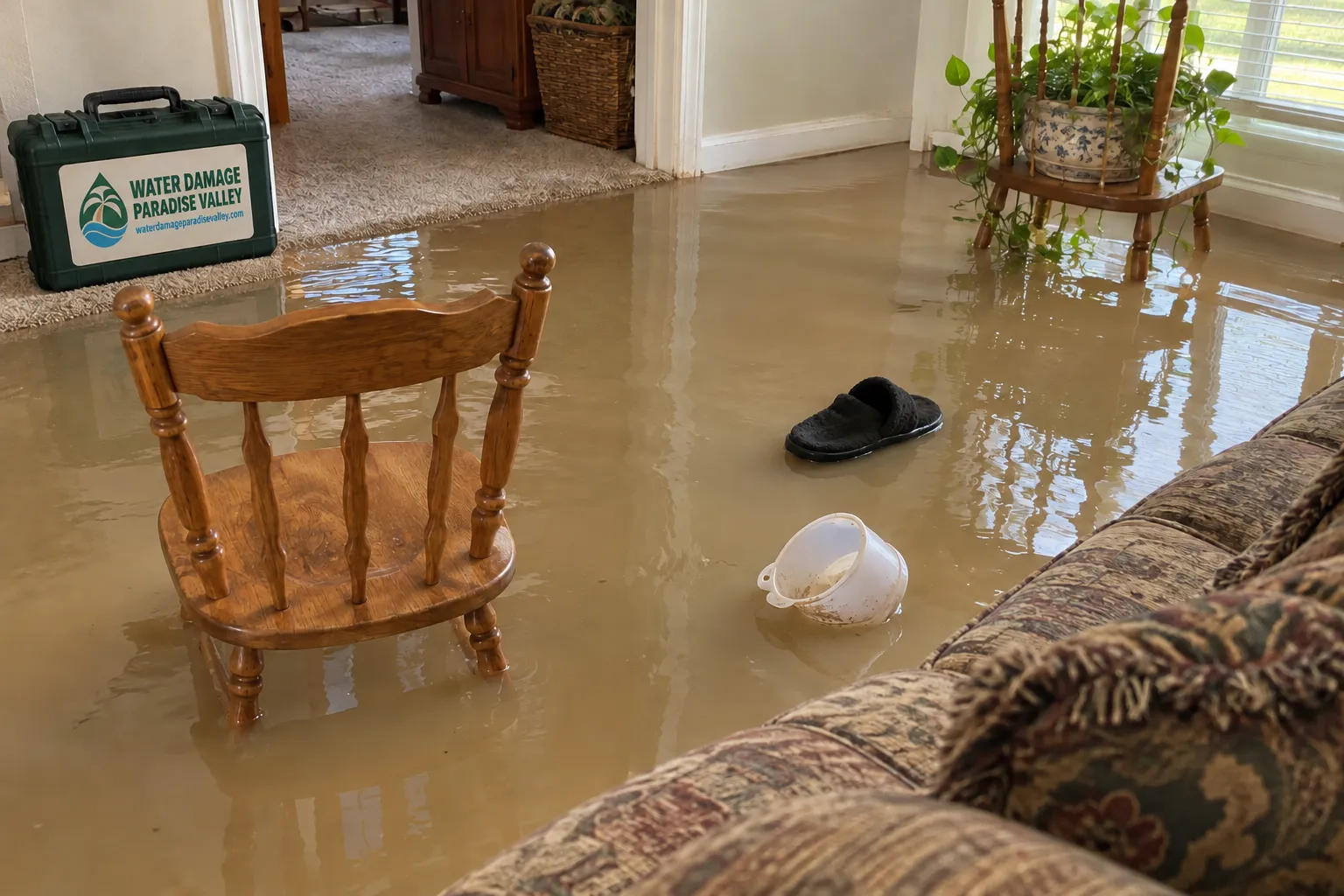
Slab homes are the Paradise Valley rule, and the slab is the problem repair cannot see. Water runs under tile and sits on the concrete, and the tile looks fine for weeks while the slab stays wet under it. A refinish job on top does nothing about that, and the trapped moisture moves sideways into walls and baseboards. Monsoon humidity stretches the wood question too: solid wood that cupped in July has to be fully dry before it gets sanded, and in monsoon air that takes longer than the schedule says. The long driveway factor sits upstream of all of it: water that runs down a Paradise Valley driveway and comes under a garage door lands on the floor the same night the storm hits, and the amount that arrives decides whether the material can be saved at all. See flood and storm damage for how the water gets to the floor. A wood floor that got wet from below, from a slab or a cavity, is a different case than a surface spill, and the refinish decision has to wait for the readings either way.
05Good to know
Where replace fails here
Replacing over a slab that never got dried is the classic. New flooring goes down over concrete that still holds moisture, the adhesive fails or the wood moves, and the second floor dies the same way as the first. Then the match. A Paradise Valley home with wide-plank wood or stone runs a finish line through the whole house, and a replacement that does not match the original reads as a patch across the great room. The scope has to name the material, the millwork match, and the dry standard for the slab before the first plank is ordered, or the replacement becomes the expensive version of the problem. The threshold and baseboard work is part of the same scope, and skimping there leaves a finished floor meeting unfinished edges, which shows in a large room the moment the light hits it. See the drywall repair vs replace page for the same decision in the walls.
06Costs
What it costs and what drives the number
Flooring numbers vary wildly because the materials vary wildly. Carpet with new pad is one number, refinished solid wood is another, and matched wide-plank or stone is another again, all before the slab drying is counted. The square footage, the material, and the finish match drive the number, and on a large Paradise Valley home the square footage is the multiplier. See what a fair price looks like for how the pieces add up.
07Good to know
What good work looks like in Paradise Valley
- The material gets called honestly: carpet pad out, engineered out, solid wood a maybe, tile a slab question.
- The slab or the subfloor gets dried before new material goes down, and the readings get logged.
- The finish match gets lined up early, so the replacement does not read as a patch across the room.
- Everything gets documented before anything is pulled, because the flooring scope is part of what the claim is built on.
086 questions
Repair vs Replace Wet Flooring: your questions
Still have a question?
Call and describe what you see. Calls are answered day and night.
Call (602) 671-356101Can wet carpet be saved?
The pad almost never survives, and it comes out. The carpet face can sometimes be cleaned and relaid over new pad if the water was clean and caught fast. Dirty water and time end that chance.
02Will my hardwood floor go back down?
Solid hardwood that cupped can sometimes be sanded flat after full drying. If the boards delaminated, darkened, or buckled, it is a replace job. Engineered wood with water between the layers is replace.
03What about tile on a slab?
The tile may be fine while the concrete under it stays wet. The slab gets checked and dried before any decision is final, because trapped moisture moves sideways into walls and new floors.
04How long does a slab take to dry?
Days to weeks, depending on how much water went under the floor and how hot and dry the season is. Monsoon air slows it down. The readings decide, not a schedule.
05Do baseboards come off when flooring is replaced?
Usually, because the water wicked behind them and the new floor has to meet a clean edge. The baseboard question is part of the scope, and it is cheaper to name it than to discover it.
06Who pays for the flooring?
If the loss is covered, the policy pays per the approved scope and you pay the deductible. The scope is where the argument happens, so the material and the match get named in writing. The claim vs out of pocket page walks through the decision.