Guide 08 · 6 min read
Water Mitigation vs Restoration in Paradise Valley, AZ
Mitigation stops the water and stabilizes the house. Restoration puts the house back. Mitigation is extraction, removal of wet material, and drying to a measured standard. Restoration is the rebuild that follows: drywall, flooring, paint, cabinets, and every finish that makes the house whole again.
01Good to know
The short answer
You need mitigation first, every time. Standing water and wet cavities do not wait for an adjuster, and the longer they sit the wider the damage spreads. Restoration is the second phase, the one that makes the house look and live like it did before the water, and it cannot start on wet framing. If a company offers to hang drywall while the walls are still wet, walk away. The right choice depends on the slab, the soil, the wall, or the building, and in Paradise Valley it usually depends on all four at once.
02Good to know
Water mitigation: what it actually is
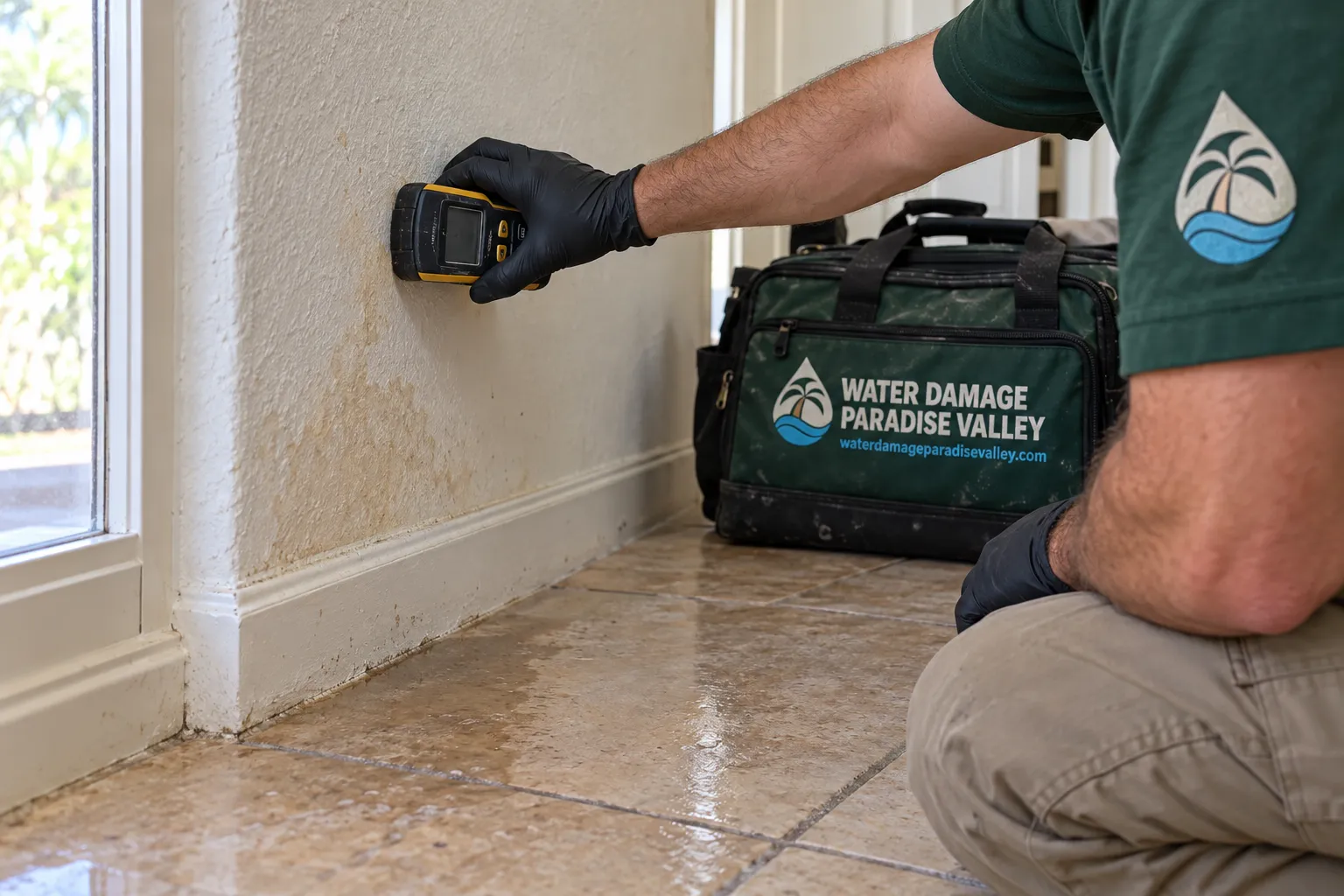
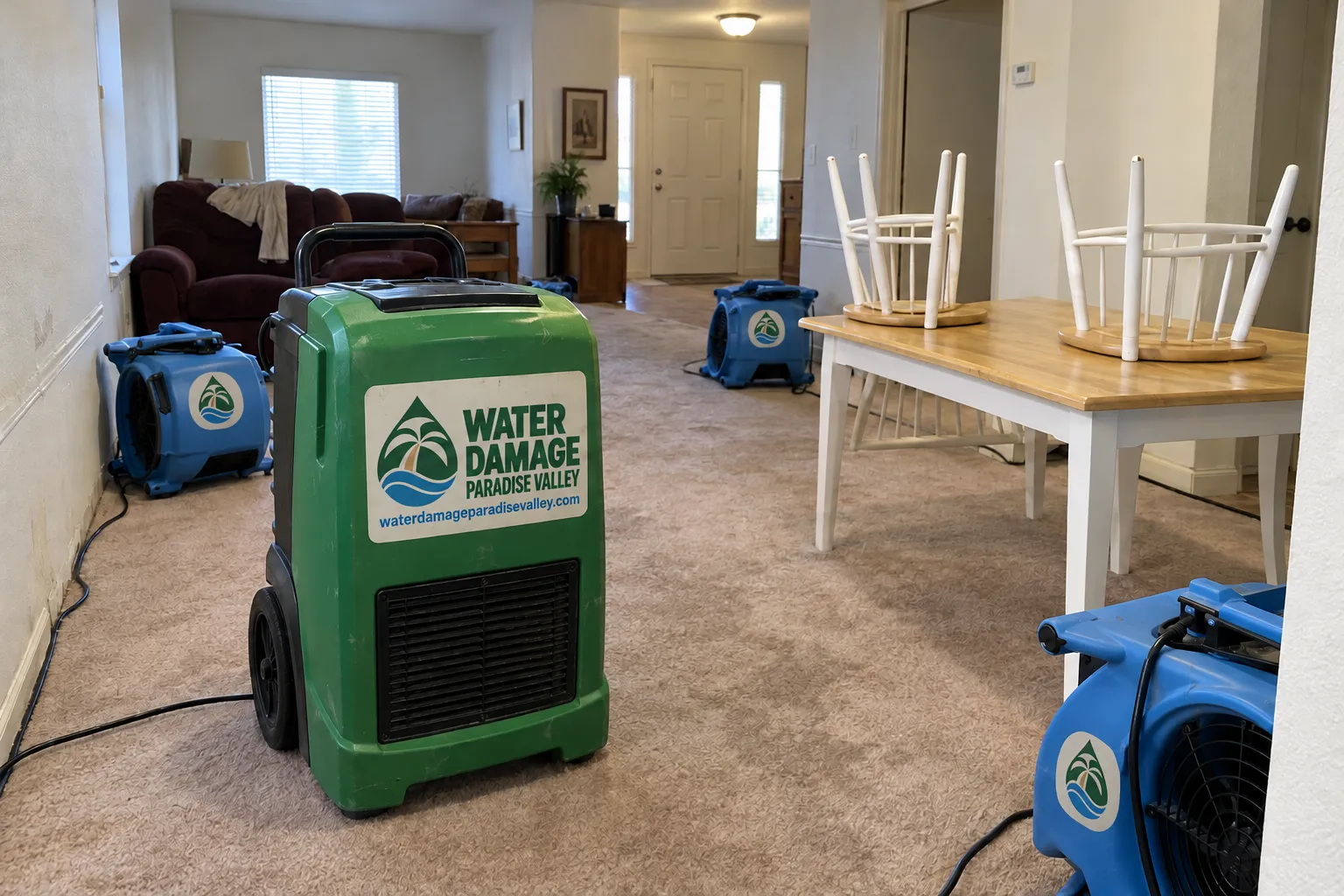
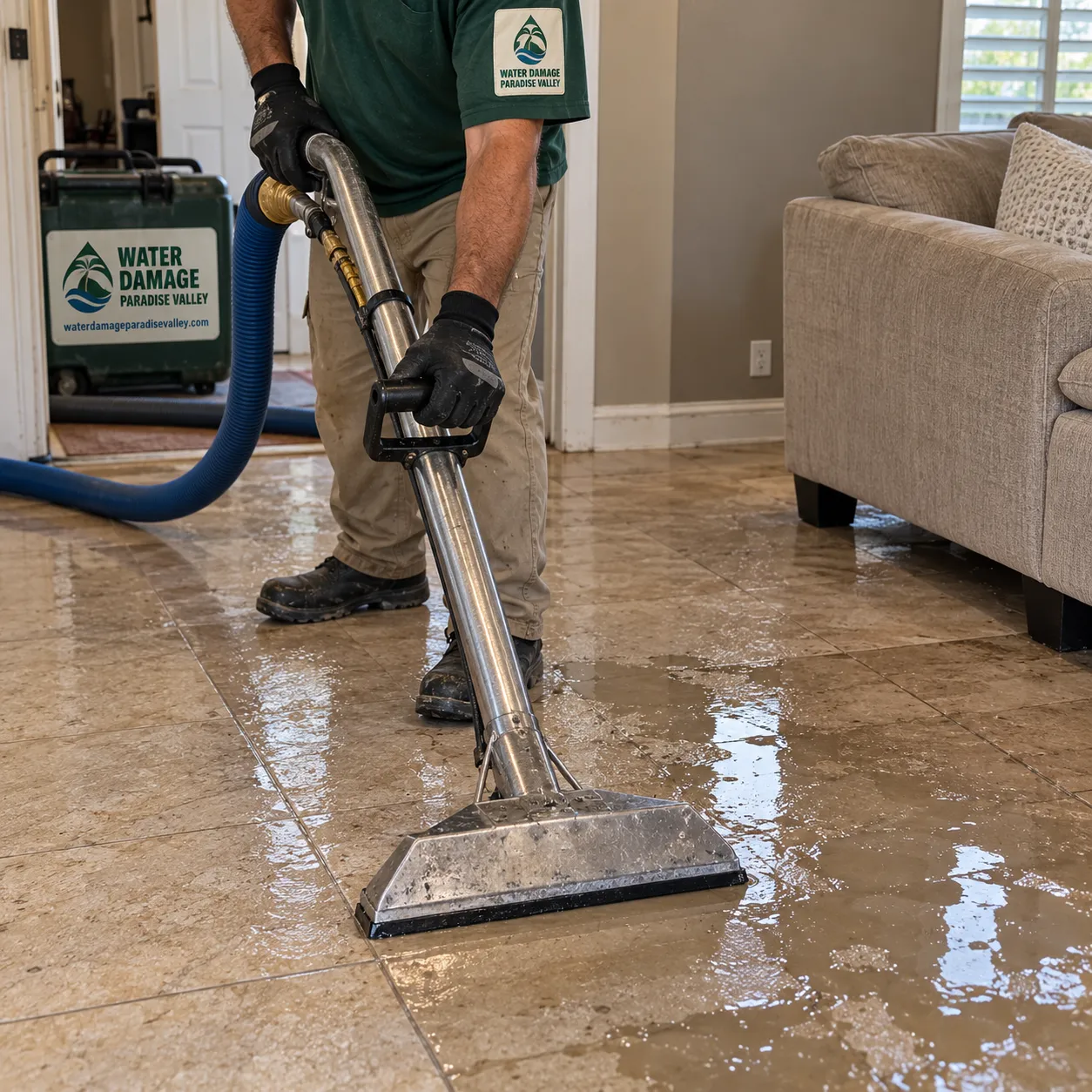
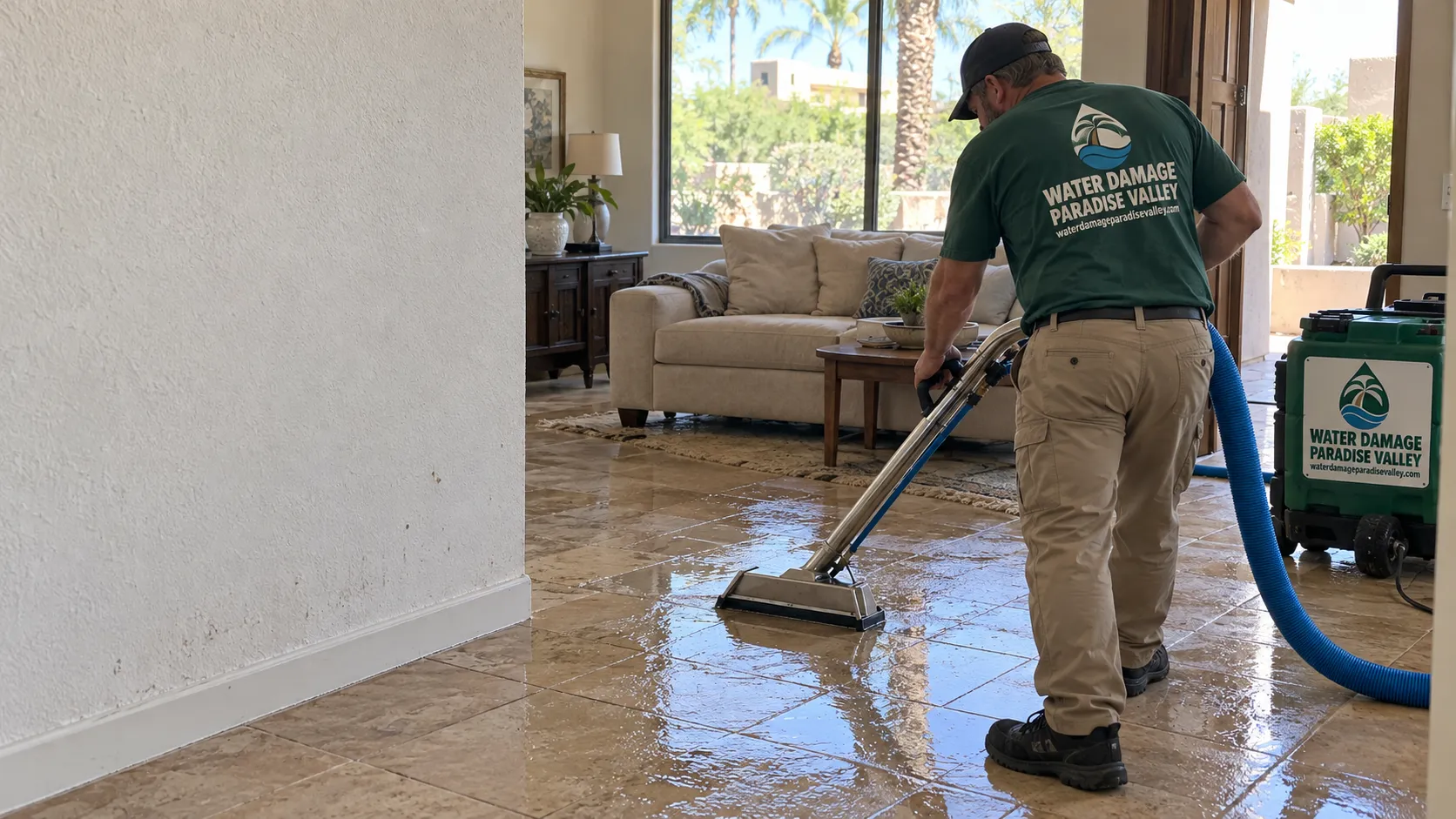
Mitigation is the emergency response, and the sequence is fixed. First the source gets stopped. That means a supply line shut off, a roof tarped, or a pump running against incoming monsoon water. Then extraction. Truck-mounted or portable extractors pull standing water out of carpet, pad, and hard surfaces. Then the wet material that cannot dry gets cut out and carried away: pad always, baseboards usually, drywall up to the water line plus the wicking allowance above it. Then equipment goes in, air movers across every wet surface and dehumidifiers sized to the room and the water class. Then somebody reads moisture meters every day and logs the numbers. Mitigation is finished when the numbers hit the dry standard for the materials in the room, not when the calendar says day three. That last part is what decides whether mold shows up three weeks later, and it is the part most homeowners never see. The full water damage services sequence is built around this order.
03Good to know
Water restoration: what it actually is
Restoration is construction. It starts when the drying log says the structure is dry and ends when the last piece of baseboard is caulked and painted. On a typical loss that means rehanging drywall and matching texture, laying new flooring, priming and painting, resetting cabinets and fixtures, and walking the house room by room against the original scope. Restoration also includes contents: what got packed out, what got cleaned, what got written off, and where it all goes when it comes back. A good restoration scope is a line item list. A bad one says "return to pre-loss condition" and lets the pricing argue with itself later. This is where a homeowner who never saw the mitigation log gets hurt, because the rebuild scope assumes the house is actually dry, and nobody can promise that without the readings.
04Good to know
Where water mitigation fails here
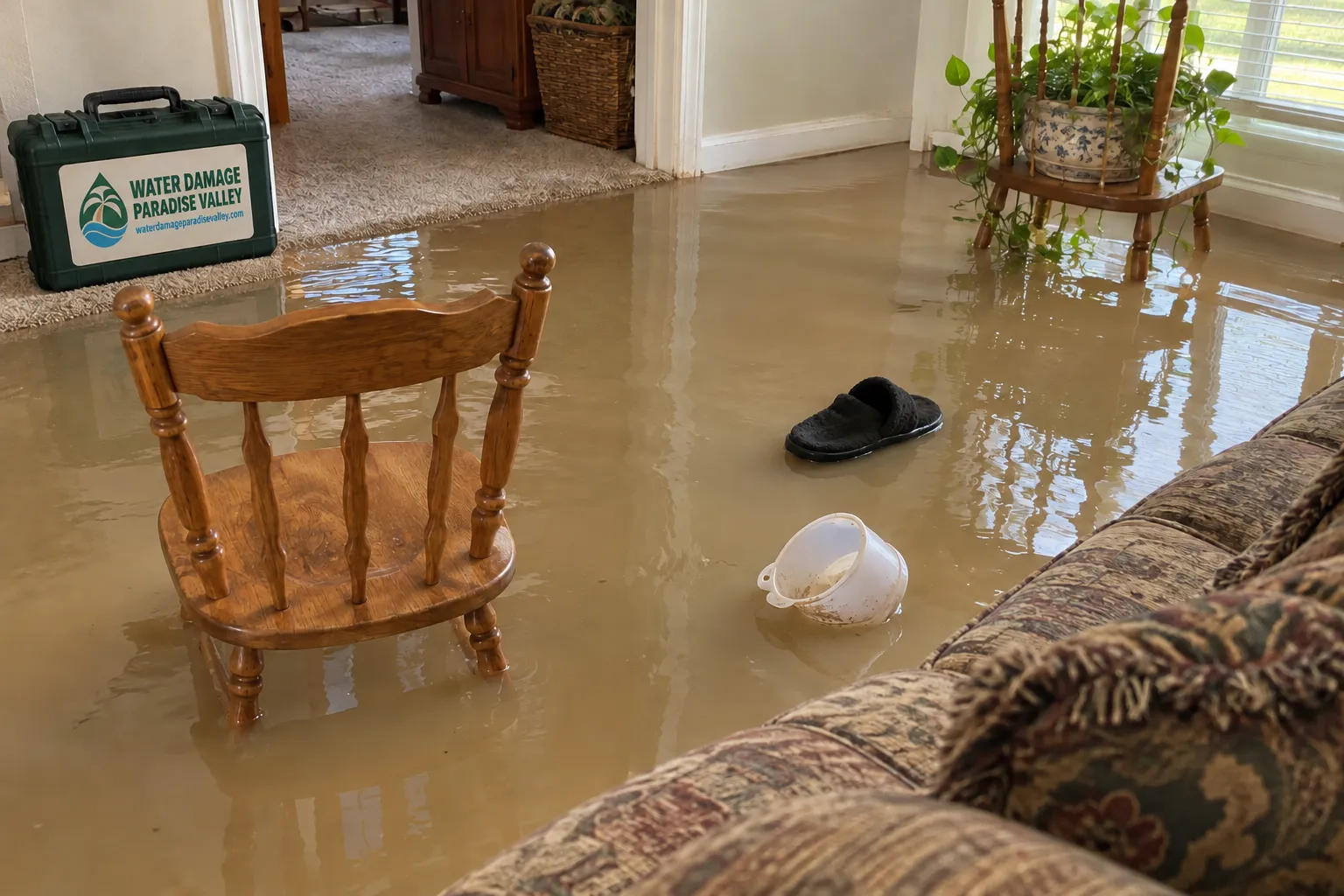
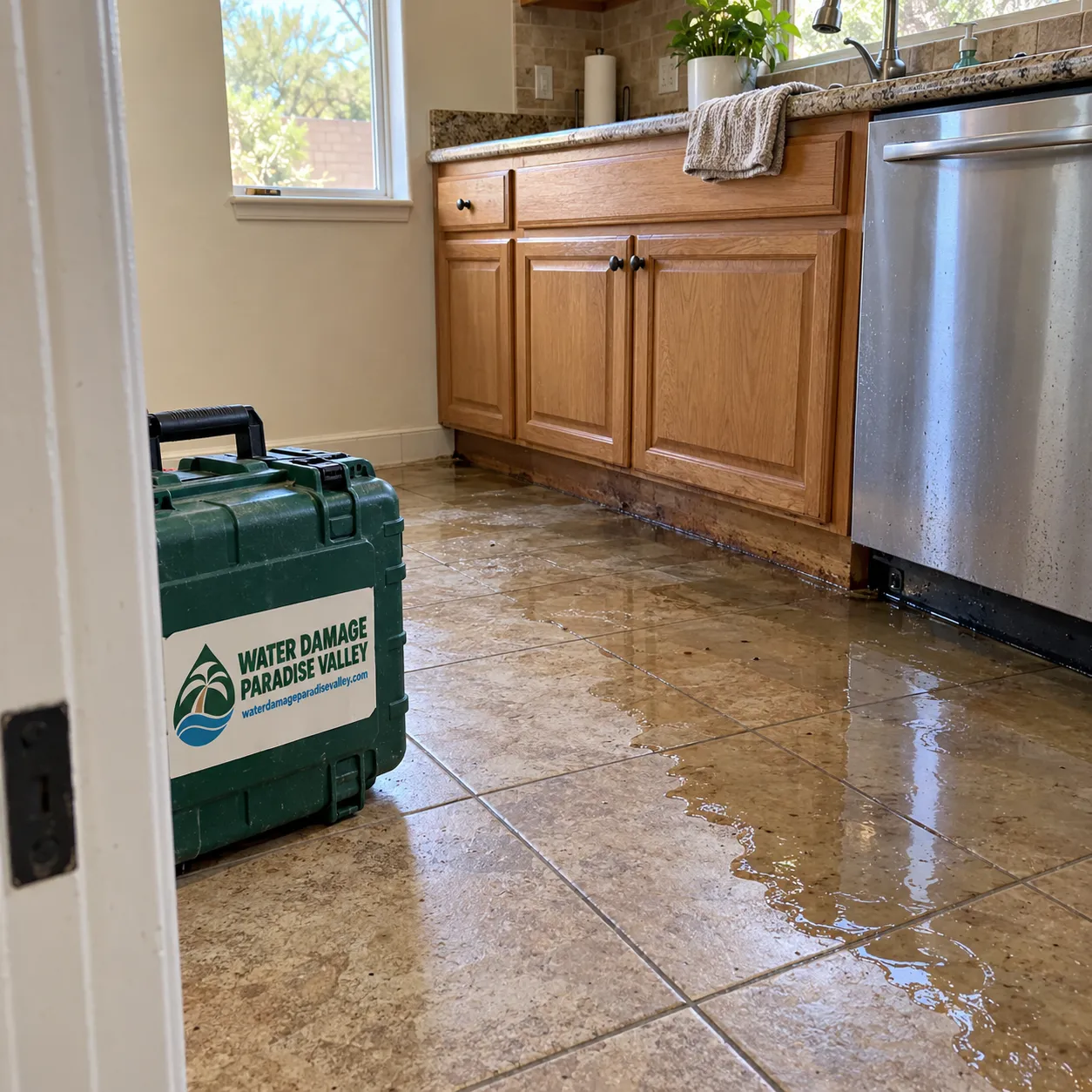
Paradise Valley lots are large and the driveways are long, and too many of them pitch water toward the house. In a July monsoon burst, water coming off the roof and the driveway together arrives faster than the ground can take it. Caliche sits under much of the Valley and stops infiltration cold, so the water runs along the surface, pools against the foundation wall, and finds the low point, which is often a door threshold or a window well. A crew that treats that as a normal interior spill misses the outside half of the problem. The water is still arriving while they are extracting. On flat roofs, the classic Paradise Valley build, a monsoon leak can run inside a parapet wall or across a ceiling cavity and surface twenty feet from where it entered. The crew has to chase the wet cavity, not just the stain. And the homes are big. Equipment sized for a normal house dries a third of a large Paradise Valley room and leaves the rest to wick into drywall that never gets cut open. That is how a small leak becomes a big loss.
05Good to know
Where water restoration fails here
The finishes are what make Paradise Valley homes expensive to put back right. Wide-plank wood, stone, custom millwork, and built-ins do not come off a big box shelf, and a rebuild that treats the house like a rental turn leaves it looking repaired forever. Then there is the plate problem. If drying stopped too early, the bottom plate is still wet when new drywall goes on. The paper backing of the new board feeds on it, and mold appears inside a wall that was just rebuilt. On flat-roofed homes the rebuild has to wait for the roof itself to be right, because hanging a new ceiling under a roof that still leaks is paying twice. And on big lots, grading decides the future. If the driveway and the yard still shed water toward the house, the next monsoon simply delivers the same loss again. The same dry-first rule applies underfoot, which is the repair vs replace flooring question.
06Costs
What it costs and what drives the number
Mitigation is priced around the size of the loss, not the value of the house: square feet of wet building material, days of equipment, and the category of water. Restoration is priced like construction: trades, materials, finish level, and how much of the house got wet. The two are usually billed separately, which is why homeowners end up holding two numbers. Both vary. A large Paradise Valley house with high-end finishes runs more on the restoration side than a smaller one with builder grade, and a category 2 or 3 loss runs more on the mitigation side because more material comes out and more equipment runs longer. See what a fair price looks like for how the numbers break down, and get both scopes in writing, line by line, before the first wall comes open. For homes on the Phoenix side of the line, the Phoenix page walks the same sequence.
07Good to know
What good work looks like in Paradise Valley
- Category and class get walked through before anyone cuts, so you know what is contaminated, what is wet, and what is worth saving.
- Documentation lines up first: photos of the wet area, the source, and the readings, because demolition without documentation weakens the claim later.
- Who bills whom, the carrier or you, gets explained before the first truck arrives.
- The mitigation dry log gets reviewed against the rebuild scope so nobody hangs drywall over a wet plate in your house.
086 questions
Water Mitigation vs Restoration: your questions
Still have a question?
Call and describe what you see. Calls are answered day and night.
Call (602) 671-356101Does mitigation always come before restoration?
Yes. You cannot rebuild on wet framing. Mitigation gets the structure dry and the unsalvageable material out, and restoration starts from there. The two overlap only at the edges, like when one wall is already dry while another is still being cut out.
02Will my insurance cover both phases?
Most homeowner policies treat mitigation and restoration as parts of one covered loss, but the wording varies by carrier and by cause. A burst pipe reads differently than monsoon water that came in because the driveway pitches toward the house. The water damage vs flood damage distinction decides a lot of this, and the policy should be read while the extraction is running, not after the rebuild is quoted.
03How long does drying take during monsoon season?
Longer than a dry June. July and August humidity slows evaporation, and every day of equipment is a line item. Most houses need days to weeks depending on how much material stayed wet and how fast the water was pulled. The dry log decides, not a schedule.
04Do I have to use the company my plumber recommends?
No. You decide who works in your house. Recommendations can be useful, but when one firm always gets the call from the same plumber, ask why, and ask who is paying the bill before you sign anything.
05What should I photograph before walls come open?
The source, the standing water, the wet materials, and every room the water touched. Photograph before anything is moved, because the photos are the record the claim is built on.
06Does a flat roof monsoon leak count as mitigation or restoration?
Both. Stopping the water and drying the cavity is mitigation. Replacing the ceiling and the roof section is restoration, and the roof fix belongs before the ceiling fix. See flood and storm damage for how storm water gets in.