Guide 04 · 4 min read
The First 24 Hours After a Water Leak: What to Do
A water leak is a race against the clock, and the first day decides how much of the house is involved. Work down this list in order; keep your provider's and insurer's numbers within reach.
01Good to know
How do I shut off the water?
Find the main shutoff and close it before anything else. In most Paradise Valley homes it sits outside near the hose bib or where the service line enters the house; if you cannot find it, call your water provider, which keeps a 24-hour line for exactly this. All four providers that serve town do. If one fixture is clearly the source, a valve under the sink or behind the toilet works and the rest of the house stays live. Once the supply is off, open the lowest faucet in the house to drain the lines; that drops the pressure behind the leak and quiets it to a stop. Leave the faucet open until the repair is made, and put towels along the low side of the puddle while the lines drain.

02Good to know
When should I shut off the power?
Shut off power to the wet rooms only if you can reach the breaker panel without standing in water. Water and electricity are a dangerous pair. If the panel is in the wet area, or you would have to cross a wet floor to get to it, leave it alone and call an electrician or the utility. Do not touch outlets, switches, cords or fixtures that have been wet, and do not plug or unplug anything in an affected room. If you see sparks, smell burning or hear buzzing from a wet wall, get everyone out of the house and call 911. Use a flashlight, not a lamp, near the water. When in doubt, keep people away from the water and let a professional make the call.
03Good to know
What should I photograph, and what should I move?
Photograph everything before anything moves: the failed pipe or fitting, standing water with a shoe in frame for scale, the water line on walls and furniture legs, and each damaged item where it sits. Then walk the rooms recording a slow video, narrating what you see; a clear walkthrough is often easier for an adjuster to work from than a pile of single shots. Photograph the plates on appliances that got wet. After that, get valuables up and out: electronics, documents, artwork, anything paper or fabric that water wicks into. Rugs and furniture come next, with foil or wood blocks under the legs so they are not sitting in wet carpet. Floors, baseboards and drywall stay put until a professional or your adjuster says otherwise.
04Local contacts
Who do I call, and in what order?
Two calls, both worth making the same day. First, your insurer's claims line: report the loss, get a claim number, and ask what they will need from you. Second, (602) 671-3561 to start water extraction and drying now, because the clock on the building matters more than the clock on the paperwork; wait a day and the job grows, along with the bill. While calls are being returned, keep the AC or heat at a normal setting, keep air moving, and block off the wet area from kids and pets. If the water is contaminated, sewage or storm water, stop here: nothing gets touched, and cleanup belongs to a professional crew from the first minute. Reach us at (602) 671-3561.

05Drying window
Why do the first 24 to 48 hours matter so much?
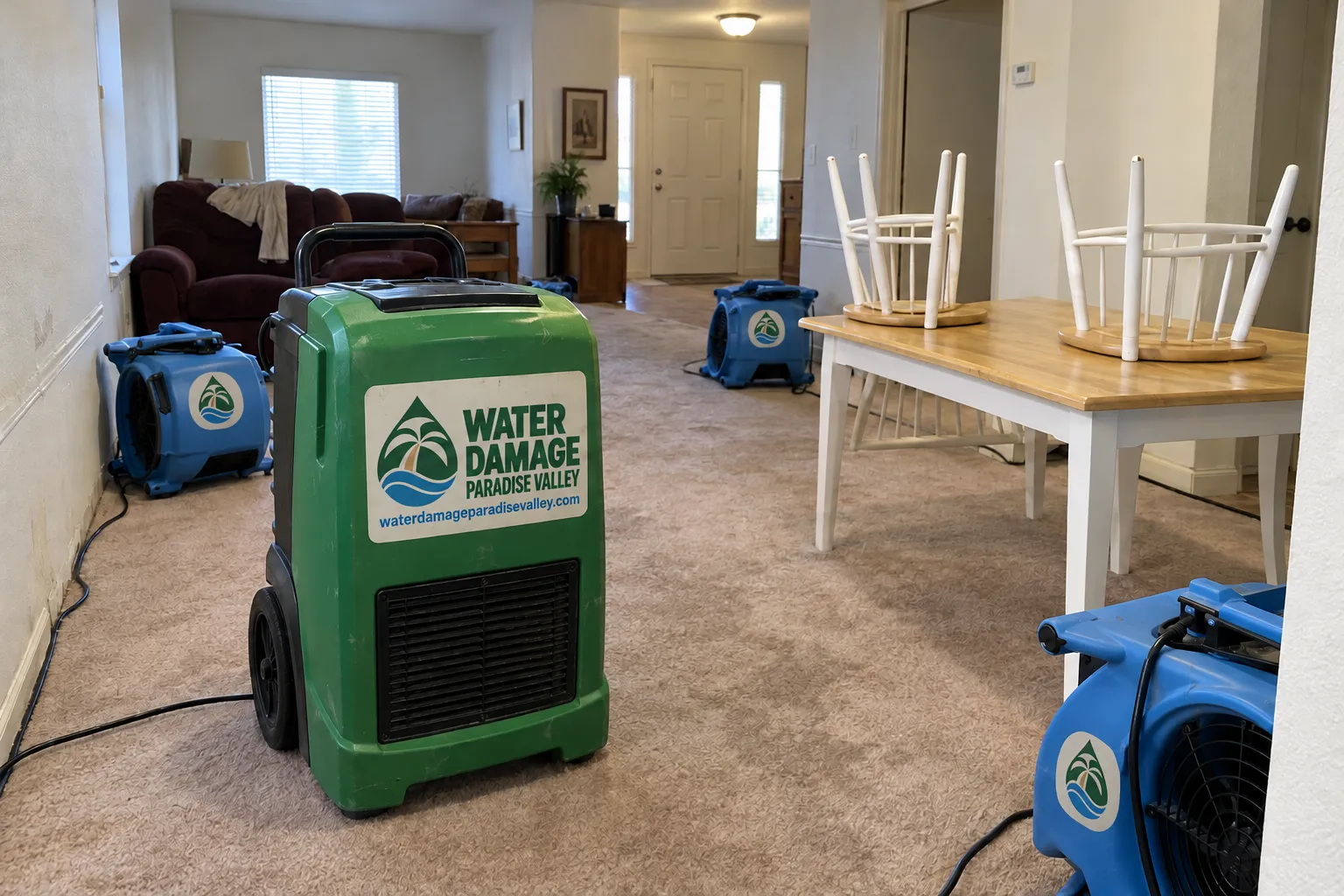
Because wet materials do not stay stable; they either get dried or they start to grow things. Every day the structure stays wet, the repair list tends to grow. The EPA's guidance is direct: dry water-damaged areas and items within 24 to 48 hours (opens in a new tab) to prevent mold growth, and controlling moisture is how mold stays out of the picture. Once that window closes, absorbent materials like carpet, pad, drywall and insulation that stayed wet may have to be thrown away instead of dried. That is why professional drying is measured rather than guessed: crews extract the standing water first, then run air movers and dehumidifiers, taking readings in each layer until they match a dry standard. The work follows the industry's written reference, IICRC S500 (opens in a new tab).
064 questions
Questions people ask
Still have a question?
Call and describe what you see. Calls are answered day and night.
Call (602) 671-356101Is it too late if the water sat overnight?
No, but treat it as urgent. The 24 to 48 hour window is already moving when you find it, and wet materials may not be salvageable. Call the same day and keep the area closed off until extraction starts.
02Can I just use a shop vac and a box fan?
For a small spill of clean water on a hard floor, a shop vac and a fan can make a start. For water soaked into carpet, pad or drywall, a shop vac leaves the structure wet. The EPA's cleanup guidance (opens in a new tab) points to professional help for larger areas.
03What if the water was dirty?
Treat dirty water as contaminated water. Do not walk through it, do not clean it yourself, and keep children and pets out. Sewage and storm water carry things you do not want on your skin or in the air; cleaning it takes different protection from the first minute.
04Will my floors and baseboards have to come out?
Sometimes. Carpet, pad and baseboards are assessed first after a leak; anything that soaked up contaminated water or stayed wet for days usually cannot be saved. Materials hit by clean water and dried fast often can. The call is made on site, layer by layer, with your insurer in the conversation.
07Keep reading
- Emergency Water Extraction: what fast extraction looks like.
- Structural Drying: how air movers, dehumidifiers and moisture readings work.
- Does Homeowners Insurance Cover Water Damage in Arizona?: what the policy covers and how to document a claim.
- Drywall Repair vs Replace After Water in Paradise Valley:
- Category 1 vs Category 2 Water in Paradise Valley: