Guide 01 · 5 min read
Category 1 vs Category 2 Water in Paradise Valley, AZ
Category 1 is clean water, a supply line or a tub overflow. Category 2 is water with significant contamination, a washing machine overflow, a sump failure, or monsoon water that crossed the roof and the yard. The category decides what gets dried, what gets thrown out, and how the space is cleaned.
01Good to know
The short answer
Category 1 water starts clean and stays clean as long as it is pulled fast. Category 2 carries enough contamination to sicken a person, so the response changes: more material comes out and the drying plan assumes the water was dirty. Treating category 2 like category 1 spreads contamination through the house, and that is the mistake that turns a small loss into a big one. The right choice depends on the slab, the soil, the wall, or the building, and on where the water traveled before it pooled.
02Safety
Category 1 water: what it actually is
Category 1 is water from a clean source: a broken supply line, a tub or sink overflow of clean water, a water heater failure before the water sits. The water itself is potable when it arrives. The catch is time. A clean spill that sits for a day in an Arizona summer becomes something else, because standing water grows bacteria and pulls contamination out of whatever it touches, carpet, drywall, the dust in a wall cavity. So category is not just where the water came from, it is where the water has been and how long it sat. A supply leak caught in the first hours is category 1. The same leak discovered a week later behind the baseboard is often category 2 by the time it is found. The drying response respects the event either way. Clean water gets a chance at in-place drying: carpet lifted, pad out, air moved under and over the material, and equipment sized to the class of water. That chance disappears once the water has sat long enough to change category, which is why the clock matters from the first hour.
03Safety
Category 2 water: what it actually is
Category 2 is water with significant contamination that can cause illness on contact. The textbook examples are washing machine and dishwasher overflows, toilet overflows without solid waste, sump pump failures, and rain or runoff that has crossed exterior surfaces. It is not sewage, that is category 3, but it is dirty enough that the drying rules change: carpet pad comes out, affected drywall comes out, and the drying plan assumes contamination. The important line for a homeowner is simple: if the water crossed a roof, a yard, a drain pan, or an appliance tub before it reached the floor, treat it as category 2 until someone proves otherwise. The water damage vs flood damage question often decides which category a monsoon loss is.
04Safety
Where category 1 water fails here
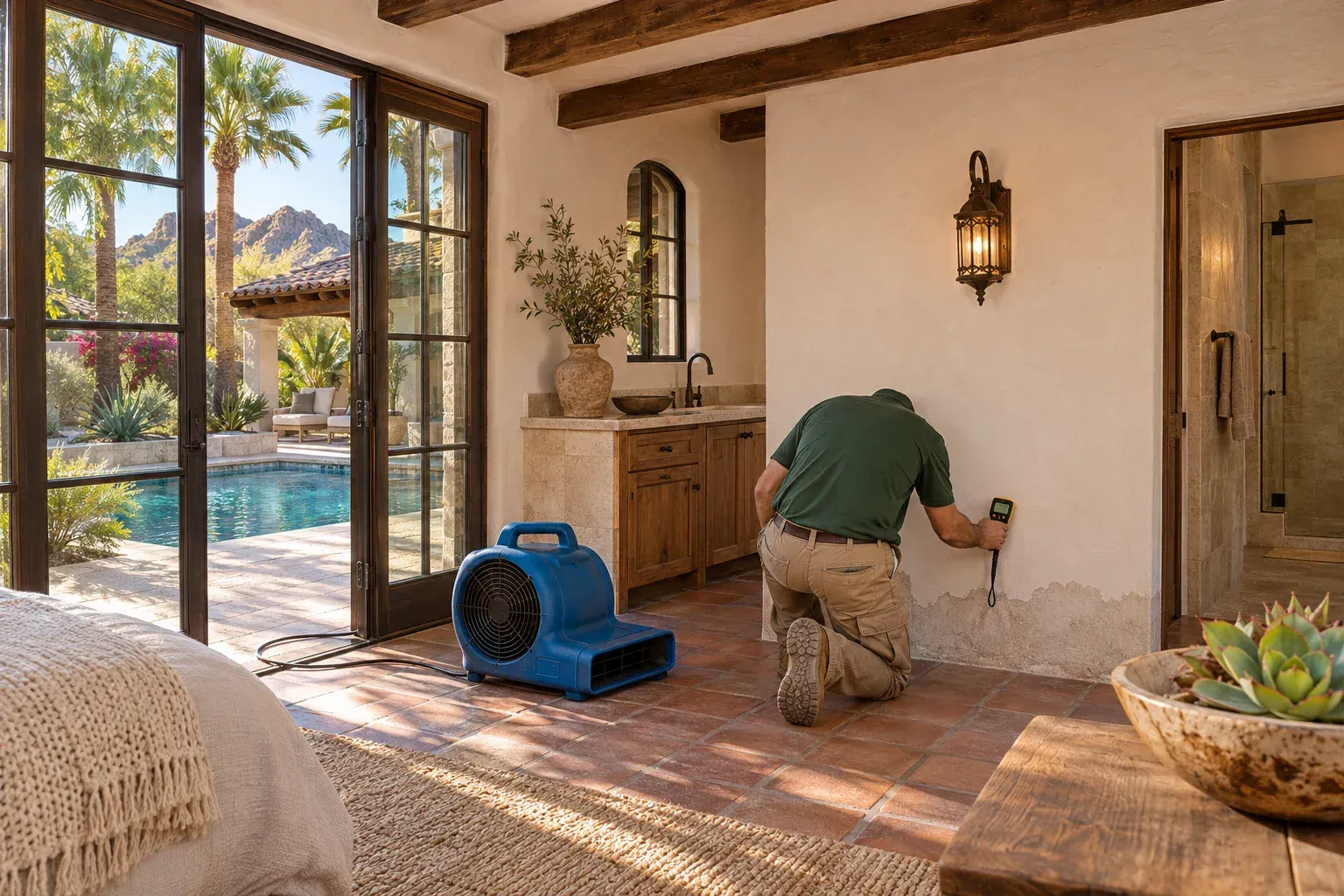
Paradise Valley houses hide category 1 leaks better than most. Supply lines run long through attics above flat roofs, and a pinhole leak above a high ceiling can run for months before the stain shows. Hard water scale works on fittings slowly, and heat and UV age plastic and rubber connectors faster than the national average assumes, so slow leaks are more common here than the national numbers suggest. By the time the ceiling shows it, the water has been sitting warm for weeks, and a category 1 leak has quietly become a category 2 event inside the cavity. On slab homes, a supply leak inside a wall can run down inside the cavity and sit on the concrete without ever showing on the floor, so the first sign is often a dark line along the baseboard or a smell, not a puddle. The lesson is the same one that shows up in every mold remediation vs mold removal conversation: time in the cavity is what makes a clean leak dirty.
05Safety
Where category 2 water fails here
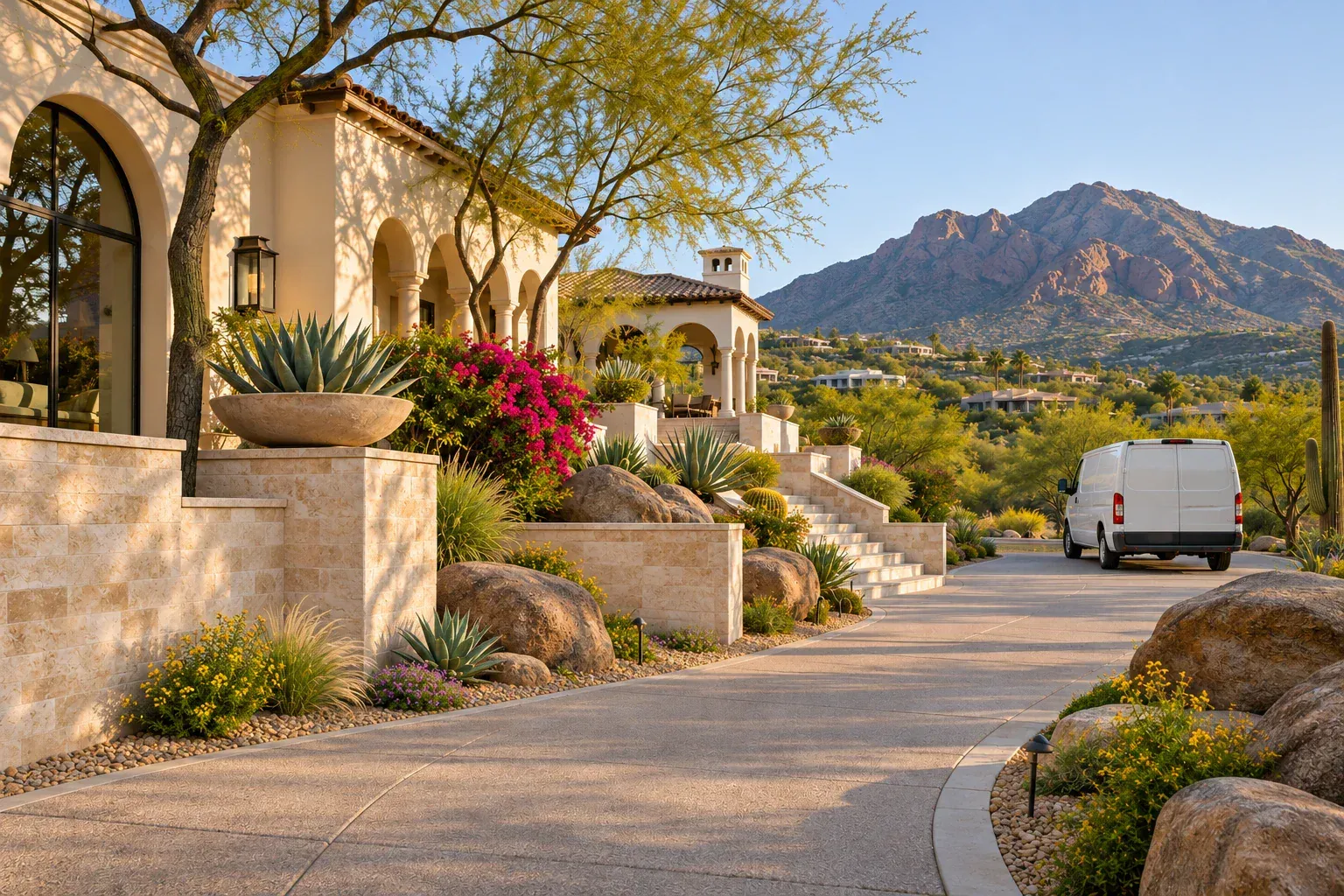
Monsoon water is the Paradise Valley category 2 story. Rain crosses a flat roof that birds use, picks up what sits on the membrane, runs through downspouts, and arrives as storm runoff. Long driveways add to it: water that runs the length of a driveway toward the house picks up oil, fertilizer, and whatever the monsoons washed down the street, then pools against the garage or comes under the front door. The crew that treats that as clean supply water spreads it through the house on mops and boots and saves the wrong materials. And on lots with septic systems in places, a septic issue is a category 3 event, raw sewage, and it must be handled as the worst case, not lumped into category 2 and scrubbed. The right crew treats the entry path as part of the water's story. Where it entered decides what it picked up, and what it picked up decides what gets saved, so the first walk-through matters as much as the first extractor.
06Costs
What it costs and what drives the number
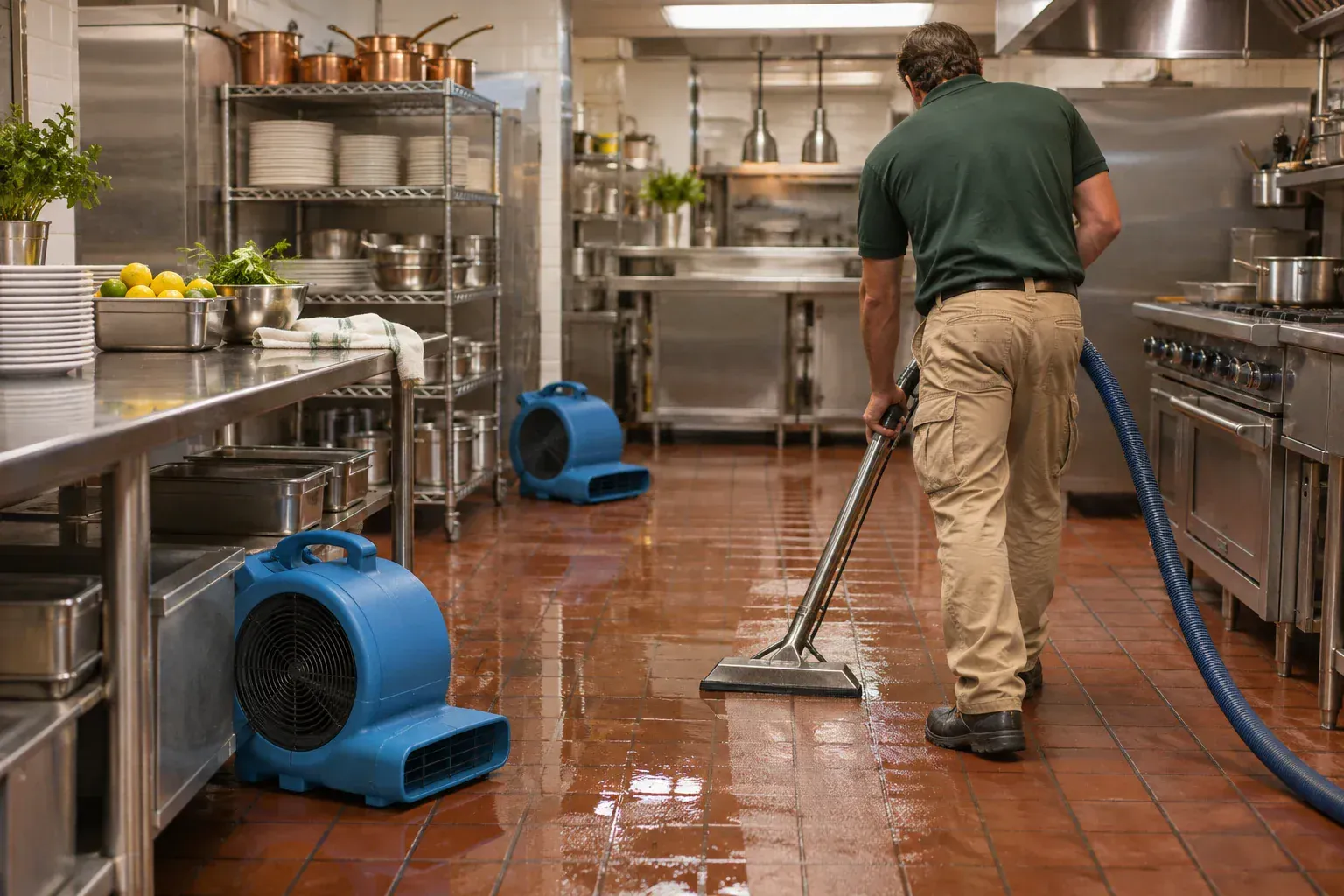
Category drives the number directly. A category 2 loss removes more material, because pad and drywall that might be dried after clean water come out after dirty water, and the drying plan runs longer with more equipment. Cleaning adds another line. Both vary with the size of the wet area and the finish level, and a large Paradise Valley room with high-value finishes moves the number more than the water alone would suggest. See what a fair price looks like for how the pieces add up.
07Good to know
What good work looks like in Paradise Valley
- The category gets named honestly before anyone cuts, and what the water crossed on its way in gets explained.
- Time counts as part of the category: a clean leak that sat for a week is not clean anymore, and the plan accounts for that.
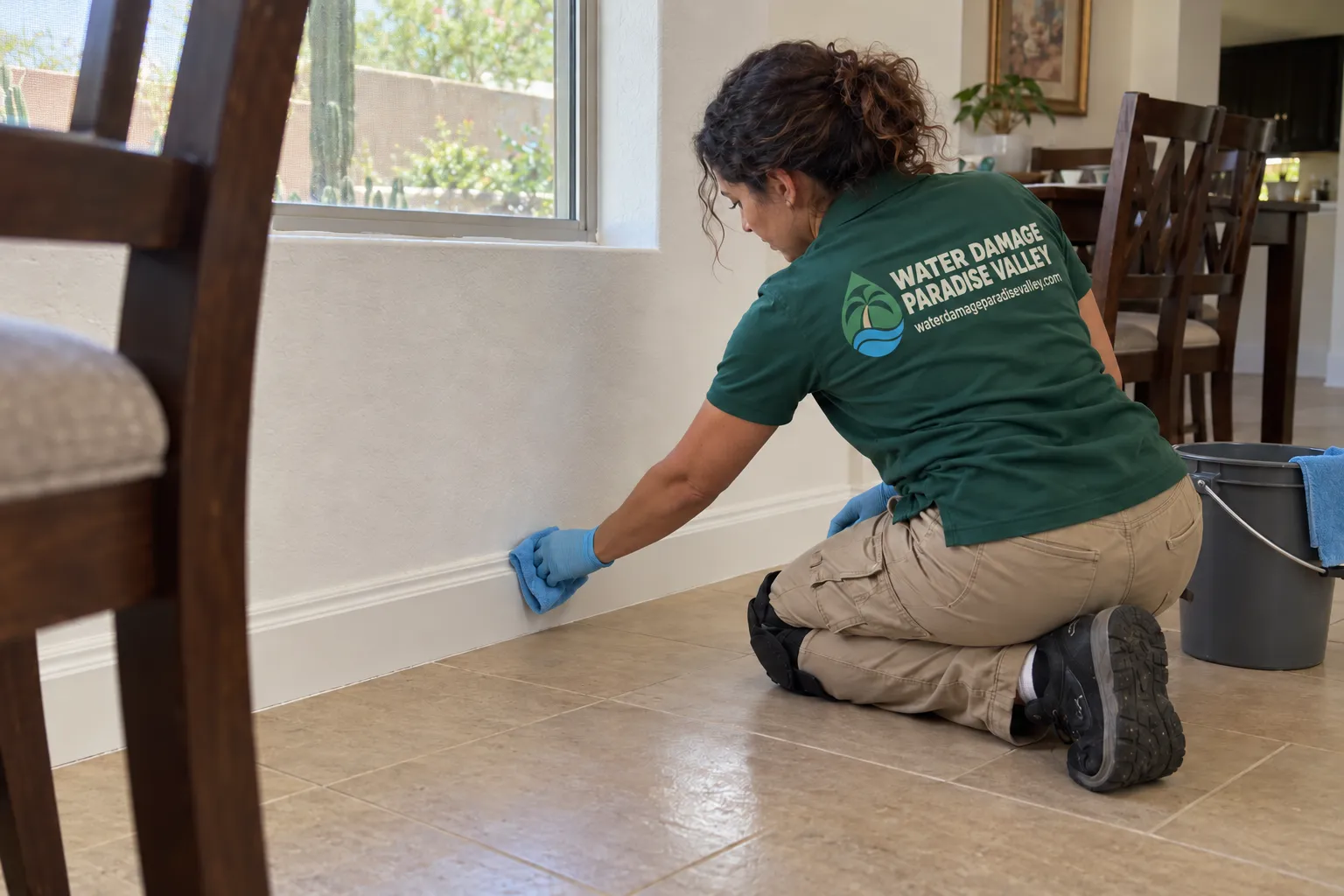
- Contamination gets contained, so category 2 water does not get walked through the rest of the house.
- The source and the path get documented before demolition, because the category is part of what the claim is built on.
086 questions
Category 1 vs Category 2 Water: your questions
Still have a question?
Call and describe what you see. Calls are answered day and night.
Call (602) 671-356101Can category 1 water turn into category 2?
Yes. Time and temperature do it. A clean spill that sits in a warm house grows bacteria and absorbs contamination from the materials it touches, and a leak found after a week is usually category 2 by discovery.
02Is monsoon water category 2?
Usually. Rain that crossed a roof, a gutter, or a yard is contaminated by the time it arrives. Monsoon water entering through a clean roof opening is the exception, and even then the cavity it crossed matters.
03Is washing machine water category 2?
Yes. The tub has carried detergent, dirt, and whatever was on the clothes, and the overflow water is contaminated. It is not sewage, but it is not clean.
04What is category 3?
Sewage and grossly contaminated water: a septic backup, a sewer line failure, a toilet overflow with solid waste. Category 3 needs a different response, full personal protection, and more aggressive material removal.
05Does the category change the price?
It changes what comes out and how it is cleaned, so yes. A category 2 loss removes more material and runs more equipment than a clean loss of the same size.
06What should I do if a septic system is involved?
Treat it as category 3 until someone proves otherwise. Keep people and pets out of the area, do not run the water, and get the worst case handled first. The water damage services page covers the sequence.