Guide 06 · 5 min read
Why Did Mold Appear Three Weeks After the Drying Equipment Was Pulled in Paradise Valley, AZ?
The equipment ran for three days, the company said the house was dry, and now there is mold behind the baseboard and along the wall where the water was. Three weeks. That timing is not a coincidence, and it is not bad luck. It is the signature of drying that stopped early, and the wall was never dry.
01Warning signs
The three week signature
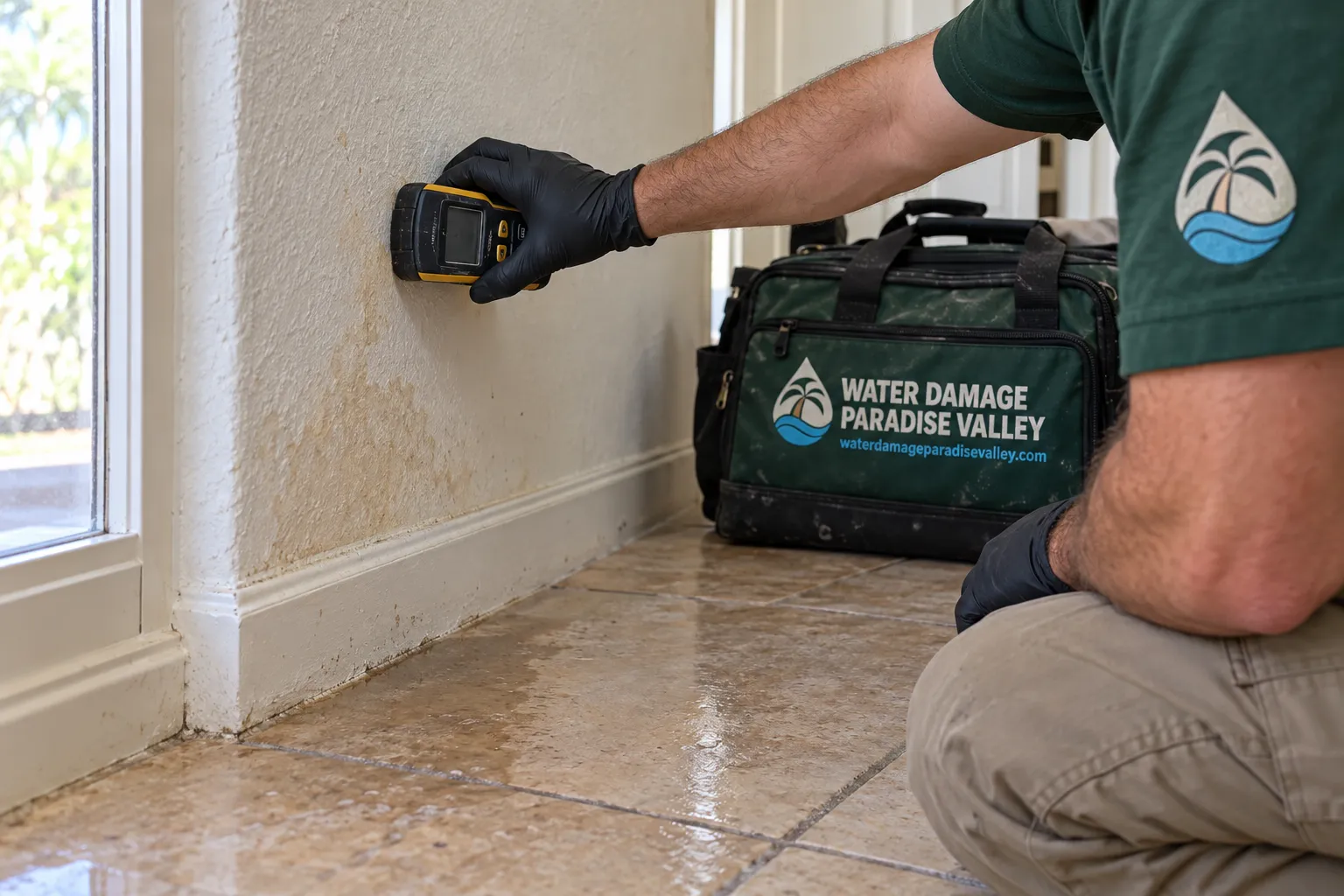
Mold has a rhythm. Spores that were always in the dust and the drywall paper find moisture, and in a warm house the colony gets established and visible in a matter of weeks. When the growth shows up three weeks after the equipment left, the moisture never left with it. The cavity behind the drywall, the space between the studs, the bottom plate the drywall sits on, one of them stayed wet while the surface looked dry. The equipment pulled the easy water out of the air and the faces of the materials, and the rest kept sitting inside the wall, feeding a colony nobody was looking for.
02Good to know
What drying is supposed to be
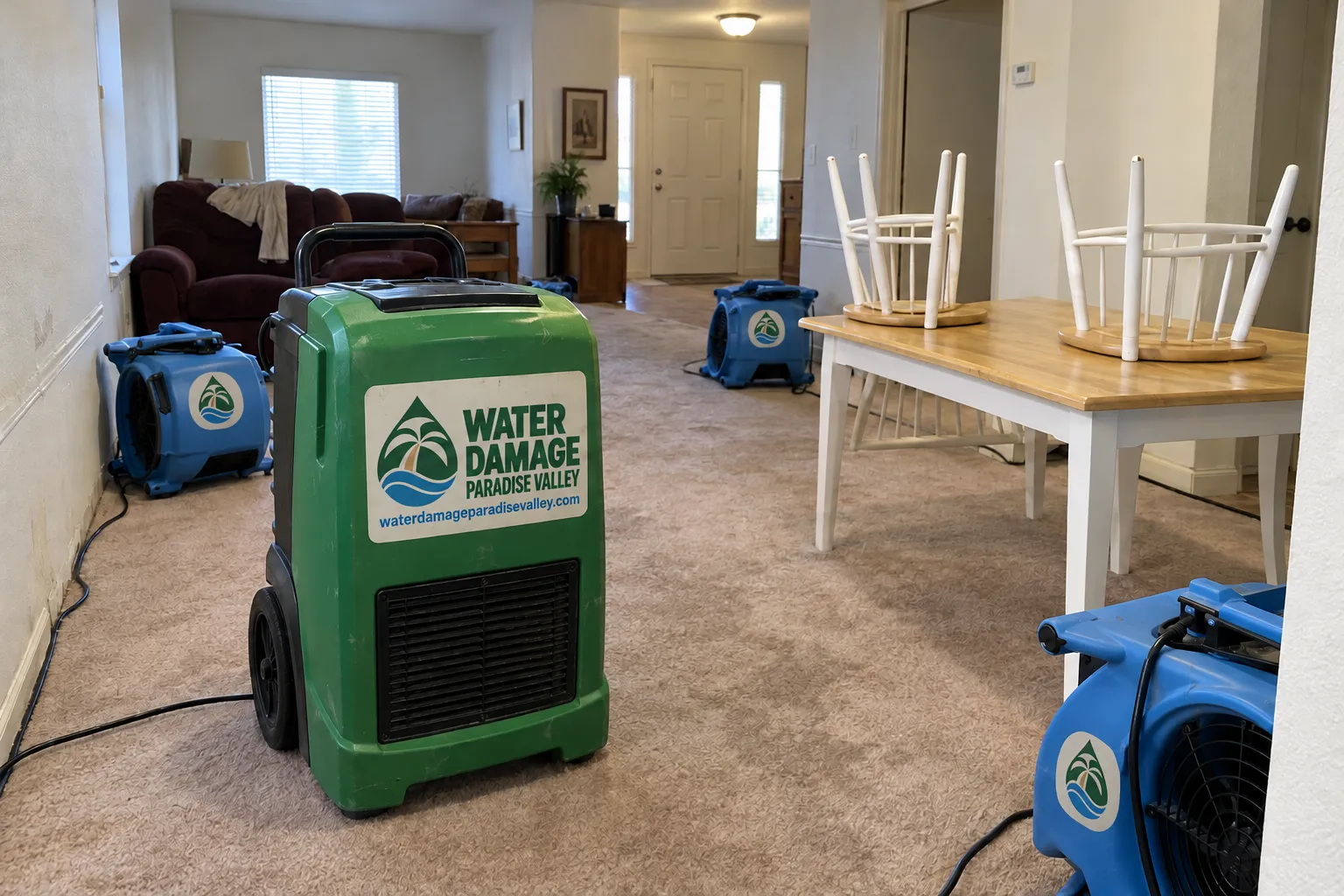
Proper drying is a measured process, not a schedule. Equipment goes in, air movers across the wet surfaces and dehumidifiers sized to the room, and somebody reads moisture meters every day and writes the numbers down. The job ends when the readings hit the dry standard for each material, drywall, wood, and slab each have their own number, not when the calendar says day three. The standard is not one number for the house either. Each material has its own target, and the job is done only when every material in every affected room hits its own line. The dry log is the record of that process, and it is the document that tells you whether the company dried the house or just ran the clock. See the dehumidifier vs air mover page for what the machines are actually doing while that log fills up.
03Local risk
Why equipment gets pulled early
Money is the first reason. Equipment days cost the company or the carrier, depending on the arrangement, and every day the machines run is a line item someone wants closed. Schedule pressure is the second: the company has another job waiting and the crew needs the gear. Big houses make the third: a Paradise Valley home with large rooms and a flat roof cavity needs more equipment and more days than a normal house, and a company that sized the job like a normal house ends up pulling gear before the far rooms are dry. And the fourth is the homeowner's own pressure: the noise and the bill push everyone to call it done, and the company that calls it done early is usually rewarded, until the mold shows up. None of it is malicious most of the time. It is a company running a schedule and a homeowner running a household, and the cavity is the only party that needed more time. The dry log is what would have caught it.
04Good to know
Where the moisture hides in a Paradise Valley house
The wall cavity is the hiding place. Drywall wicks water up past the visible line, and the cut has to reach above the wicking, and the drying has to reach inside. A flat roof cavity is worse: monsoon water runs inside a parapet or across a ceiling cavity and settles far from the stain, so the room reads dry while the space above the ceiling stays wet. The bottom plate is the classic spot. It sits on the slab, it stays damp when the rest of the wall reads dry, and new drywall goes over it. The paper backing of that new board is food, the plate is the water source, and the wall grows mold from the inside out. On a slab home, the slab itself holds water under flooring for weeks after the surface looks fine, which is the repair vs replace flooring question waiting to happen. Wallpaper and vinyl make it worse: they trap moisture behind a surface that never shows a stain, so the wall looks fine while the paper stays glued over a wet cavity.
05Good to know
What to check when the mold shows up
Pull the dry log first, if one exists. The readings from the last day of drying should show every material at its dry standard, and a missing or thin log is itself an answer. Pull the photos too. Day one photos of the wet area and the equipment placement, plus the last day's readings, tell the whole story: if the equipment never moved into the far rooms, the far rooms never dried. Check whether the cavity was opened: flat roof cavities and wall cavities dry only if air gets forced through them, and a job that never opened the cavity never dried it. Check the cut lines: drywall that was not cut above the wicking line hides wet board behind new work. And check the moisture source: mold three weeks after a job usually means the water source was never actually fixed, and the colony is drinking the same leak that started the loss. Then read the mold remediation vs mold removal page, because what comes next is remediation, not a spray bottle.
06Good to know
What good work looks like in Paradise Valley
- The dry log gets reviewed before anyone calls the job done, and the readings decide the end date, not the schedule.
- Cavities get opened and dried, because a flat roof cavity is where Paradise Valley jobs quietly fail.
- Plate and slab readings get verified before new material goes back, so nobody rebuilds over a wet plate.
- Documentation starts on day one, so if mold does show up later, the record shows where the drying stopped.
076 questions
Why Did Mold Appear Three Weeks After the Drying Equipment Was Pulled: your questions
Still have a question?
Call and describe what you see. Calls are answered day and night.
Call (602) 671-356101Does mold really take three weeks to show up?
It can. Spores germinate and a colony grows to visibility in weeks, faster in a warm house. Three weeks after equipment leaves is the signature of moisture that never left, not a new leak.
02Why did the walls feel dry when the equipment left?
Because the surface dried while the cavity stayed wet. The faces of the drywall read dry while the space behind them, and the bottom plate, stayed damp. The meters have to read the cavity, not just the surface.
03What should the dry log show?
Daily moisture readings for every affected material, drywall, wood, and slab, trending down to the dry standard. A job with no log, or a log that stops early, is a job that guessed.
04Can the company be made to fix it?
The paperwork decides it. The authorization, the scope, the dry log, and the photos are the evidence of what was supposed to happen. Get them together before you talk to anyone. The restoration company billing you post covers the billing side of the same argument.
05What if the mold is inside the wall?
Then the board comes off, the cavity gets dried and remediated, and the rebuild waits for a clearance check. It costs more the second time, which is why the first drying should never have stopped early.
06How do I keep it from happening in the first place?
Demand the dry log, check that cavities were opened, and let the readings, not the calendar, decide the end date. The water damage services page shows the full sequence a proper job follows.