Guide 05 · 5 min read
Mold Remediation vs Mold Removal in Paradise Valley, AZ
Removal kills what you can see. Remediation finds the moisture feeding it, contains the affected area, removes the contaminated material, dries the structure, and verifies the cleanup. One is surface work. The other is the fix.
01Good to know
The short answer
If you can see mold, you need remediation, not a wipe-down. Surface products kill visible growth while the moisture source and the colony inside the wall stay put, and the mold returns. Removal is a sponge and a bottle. Remediation is containment, removal of affected material, drying, and a clearance check at the end. The right choice depends on the slab, the soil, the wall, or the building, and on where the water that feeds the mold came from.
02Good to know
Mold removal: what it actually is
Removal means scrubbing and spraying the visible growth until the surface looks clean. It works on non-porous surfaces, glass, tile, metal, where the colony sits on top and wipes away. It does not work on porous material. Drywall paper, carpet pad, and wood soak up the hyphae, and a cleaner that kills the surface leaves the roots inside. The bleach mythology fits here: bleach on porous material does not reach the root, and it adds water while it sits there. So the wall looks better for a few weeks, the moisture that fed the colony is still present, and the growth comes back through the paint. The same wall wiped twice, once in spring and once after monsoon, is the pattern: the surface keeps getting cleaned and the cavity keeps feeding it. Removal is also what a handyman with a spray bottle sells when nobody has looked behind the drywall.
03Good to know
Mold remediation: what it actually is
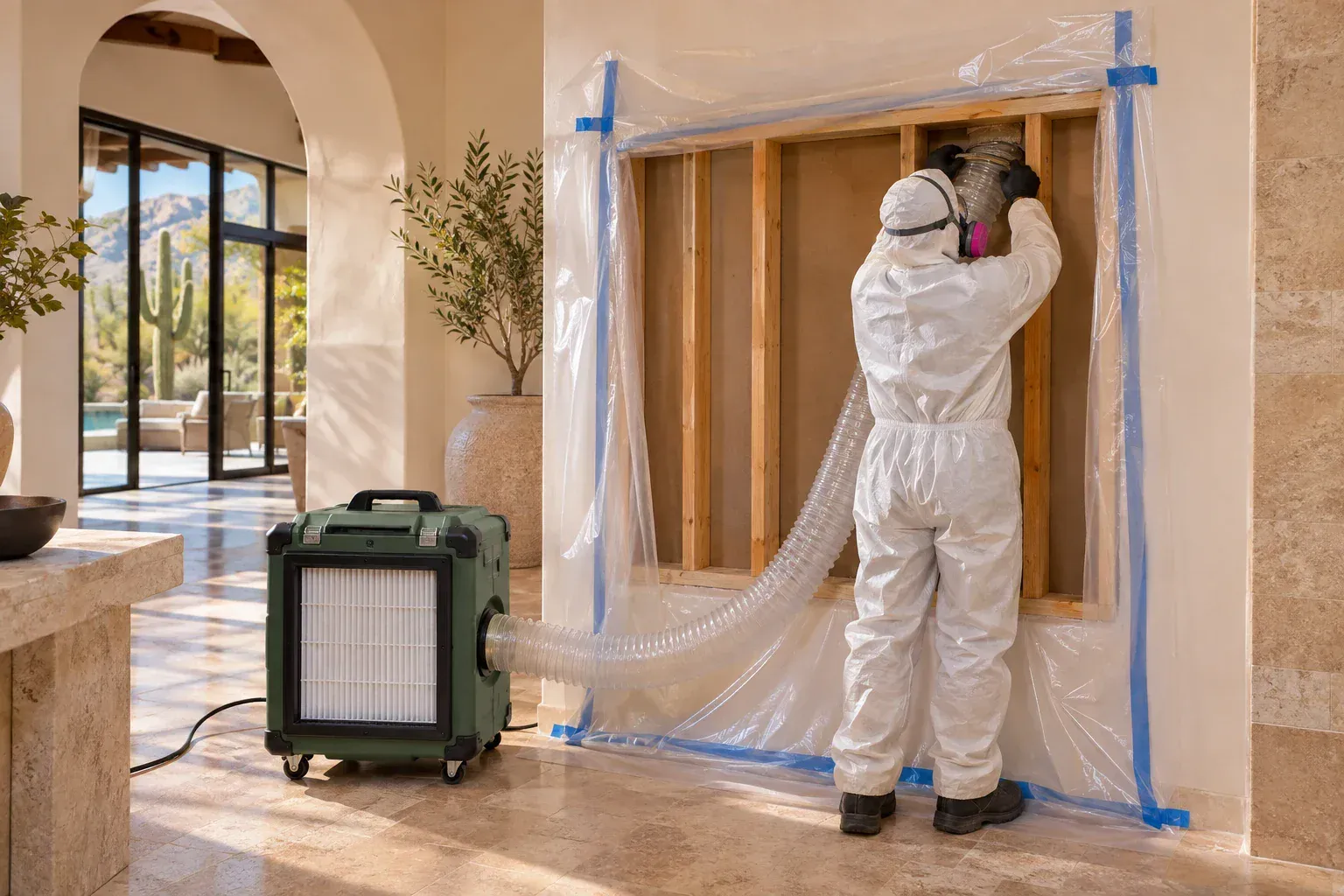
Remediation starts with the moisture source, because killing mold without fixing the source means it returns. The biology does not allow another outcome. A slow supply-line leak inside a wall feeds a colony for months, and no amount of scrubbing matters until that line is fixed and the cavity dried. Then the actual work: containment, plastic barriers and negative air pressure so spores do not drift into the rest of the house. Then removal of the affected material, drywall, insulation, pad, cut out and bagged. Then cleaning of what remains and drying to the dry standard. Then a clearance check, an independent verification that the space is clean and dry before anyone rebuilds. A test result alone is not a fix, and testing sold as the solution is one of the ways homeowners get billed twice. See the full water damage services list for where this fits in a water loss.
04Good to know
Where mold removal fails here
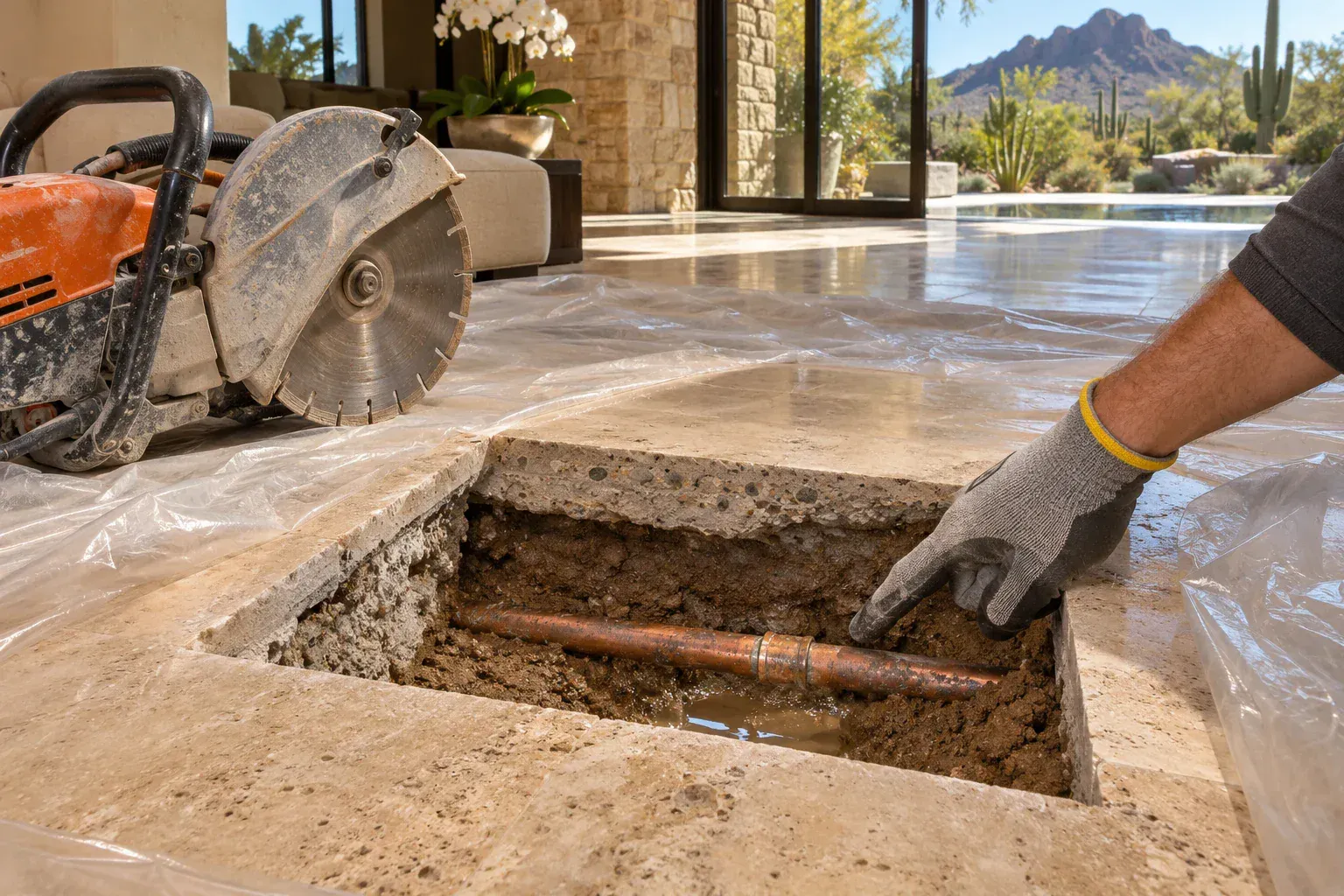
Paradise Valley homes are large, and the leaks that feed mold here are quiet ones. A pinhole supply leak inside a wall cavity runs for months before it shows, feeding the paper on the back side of the drywall. A monsoon leak into a flat roof cavity does the same, and the stain surfaces far from the entry point. You wipe the visible spot, the cavity stays wet, and the colony regrows through the new paint in weeks. Big open floor plans make it worse: with no door between the wet room and the rest of the house, spores move on every ceiling fan cycle. And the heat does not help. Warm months keep a wet cavity at a temperature mold likes, so a leak discovered in October has often been growing since the July storms. The drywall repair vs replace page covers what has to come out once mold is involved. And indoors the drywall is the food source: wiping one face of a board does nothing for the back face of the same board.

05Good to know
Where mold remediation fails here
Containment skipped is the classic failure. Sanding moldy drywall in an open room spreads spores through the house and turns one affected wall into a whole-home problem, and in a large Paradise Valley house with high ceilings, the plume travels. Then there is the rebuild mistake. New drywall goes up over a plate that is still wet, the paper backing is food, and mold appears inside a wall that was just rebuilt. High-value finishes make the mistake expensive: custom millwork and stone do not survive a second remediation, and matching them after a botched job costs more than the first job did. See what a fair price looks like before anyone quotes you a number, because remediation quotes swing wildly for the same room. A skipped clearance check is the last failure: the work finishes, nobody verifies, and the rebuild starts on an unverified space.
06Costs
What it costs and what drives the number
Remediation pricing swings more than any other water trade, and homeowners report quotes that vary wildly for the same room. The number is driven by square feet of affected material, how much containment is needed, the finish level being protected, and whether the moisture source has been fixed. Removal, the surface-only version, is cheap because it does not fix anything. Both vary. A small contained closet is one number; a cavity that runs the length of a flat roof home is another. The number that matters is not the first quote but the scope behind it, because two quotes for the same room can be far apart while describing different work. Ask for a line item scope and read it before you pay for anything.

07Good to know
What good work looks like in Paradise Valley
- The moisture source gets found first, because a quote that does not name the source is a quote to watch the mold come back.
- Remediation scopes get reviewed line by line so you can tell what is being priced: containment, removal, drying, or a test that does not fix anything.
- Containment is in the scope before any sanding happens in your house.
- The clearance check lines up after the work, so the rebuild starts on a space that is actually dry.

086 questions
Mold Remediation vs Mold Removal: your questions
Still have a question?
Call and describe what you see. Calls are answered day and night.
Call (602) 671-356101Is bleach enough to kill mold?
On hard non-porous surfaces, sometimes. On drywall, wood, and pad, no. Bleach does not reach the root in porous material and it adds moisture while it sits there. The colony comes back.
02Why did mold come back after I cleaned it?
Because the moisture source was still there. Mold needs water and food, and drywall paper is food. Clean the surface, leave the leak, and the growth returns through the paint.
03What does containment actually mean?
Plastic barriers sealing the work area plus negative air pressure, so spores and dust from the work do not drift into the rest of the house. If the crew is sanding in an open room, containment was skipped.
04Do I need a mold test first?
A test tells you what is there. It does not fix it, and a company that sells testing as the solution is selling half a job. If you can see mold, the response is remediation, and a test is a diagnostic, not a repair. The category 1 vs category 2 water page explains what the water carried in.
05How long does remediation take in a large home?
It depends on how far the colony spread and how much material has to come out. A contained closet is quick. A wall cavity that runs through a flat roof home can take weeks. The moisture source and the containment size drive the calendar.
06Can I stay in the house during remediation?
Sometimes, for a small contained job. For a large one, the containment plan and your comfort decide it. Ask before the plastic goes up, not after.