Local guide · 6 min read
Can It Be Saved? Drying Travertine, Hardwood, Plaster and Custom Cabinets After a Leak
Much of what a Paradise Valley leak soaks can often be saved, and the answer turns on the material, not on the water. Travertine tolerates clean water, hardwood can recover if it dries before anyone sands or finishes it, plaster splits by type, and custom cabinets tend to fail at their edges before their faces. What has to come out is the material that lost its structure or soaked something dirty. If you have water or a musty smell right now, call (602) 671-3561. Or tell us what got wet and someone from our team will call you back.
01Good to know
The part most answers skip
People assume the stone dies first, and it is the other way around. Travertine forms from mineral-laden water and is commonly used in showers, so clean water does not hurt the stone itself; the real question is what the stone sits on and what the water leaves behind as it evaporates. Hardwood, meanwhile, can look ruined when it is only wet: the National Wood Flooring Association notes that minor damage often dissipates or even disappears as flooring dries out over time.

02Good to know
Does water actually damage travertine?
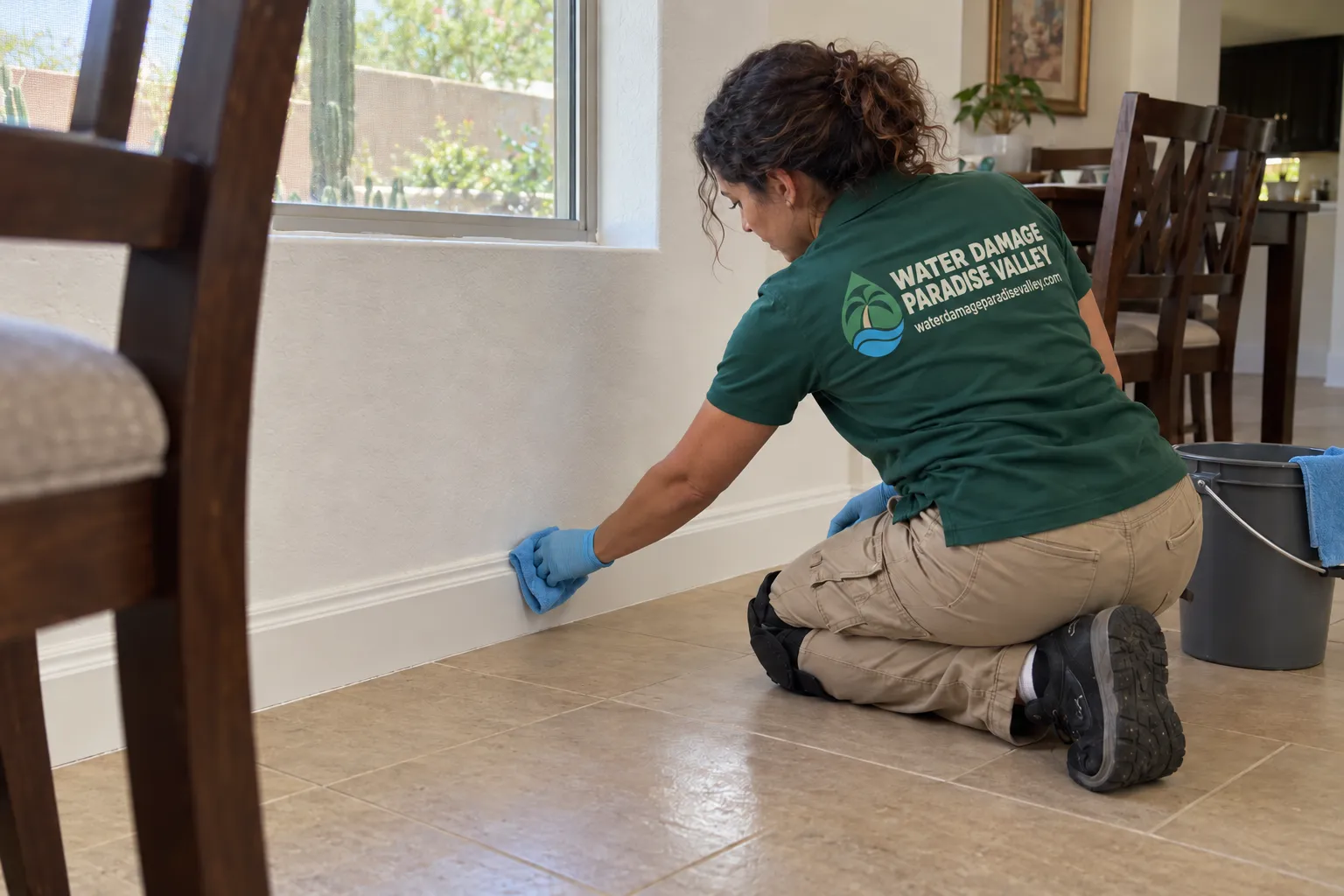
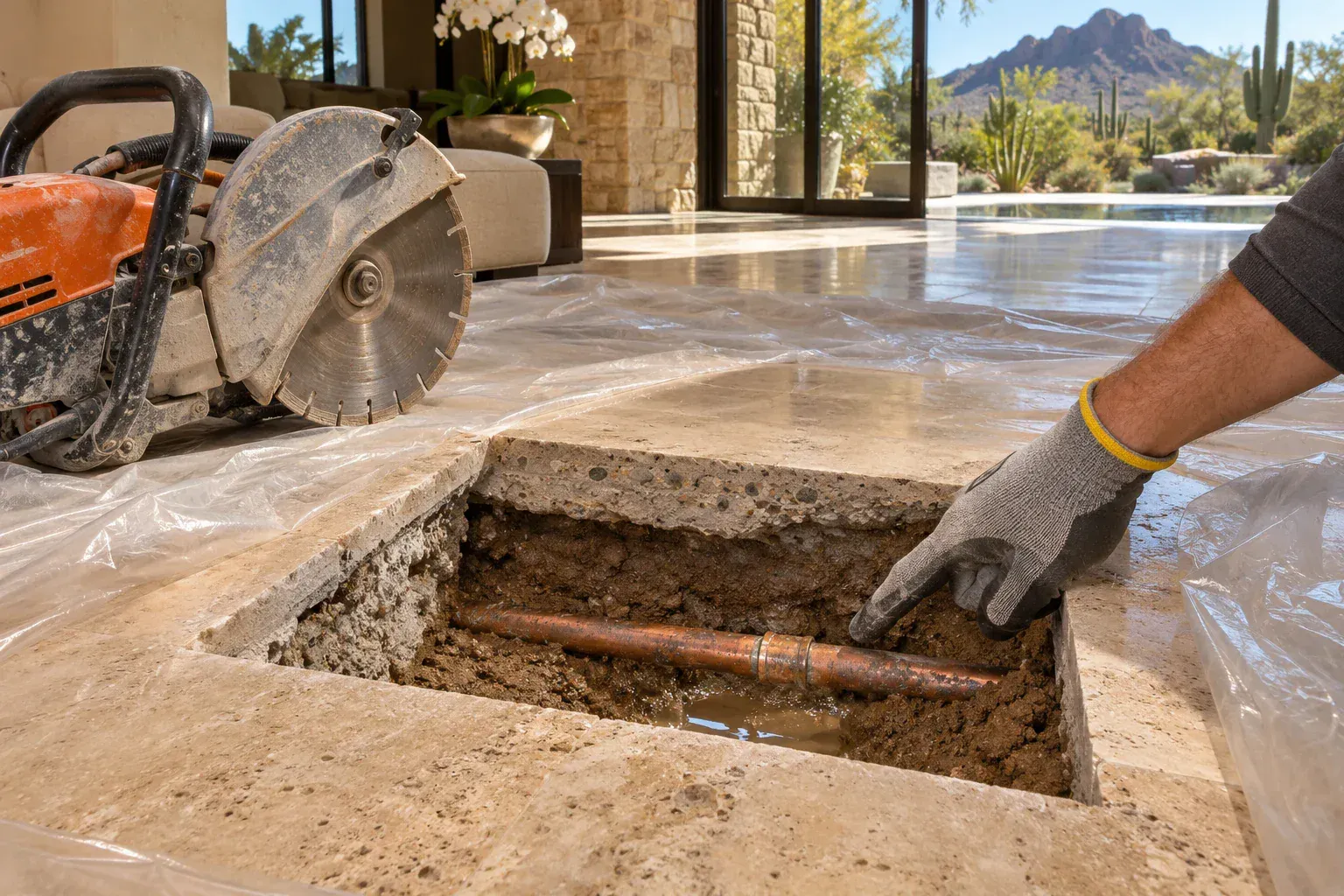
Not the stone itself. Travertine forms from mineral-laden water and is commonly used in showers, so clean water does not usually dissolve or weaken it the way it softens drywall. What water does is find the layer under the stone and leave a mark as it evaporates. If the travertine is set on a wood subfloor, the wood can warp and crack the tile and grout above. If it sits on a mortar bed or concrete, the water should not harm the assembly.
As trapped water evaporates, it can leave a white haze called efflorescence, or a yellow cast from iron oxide in the stone. Both can often be cleaned up if caught early and the water source is gone. A dark patch that does not dry may not be a stain at all, but a sign of water still moving under the stone.
03Good to know
What happens to a wood subfloor under stone?
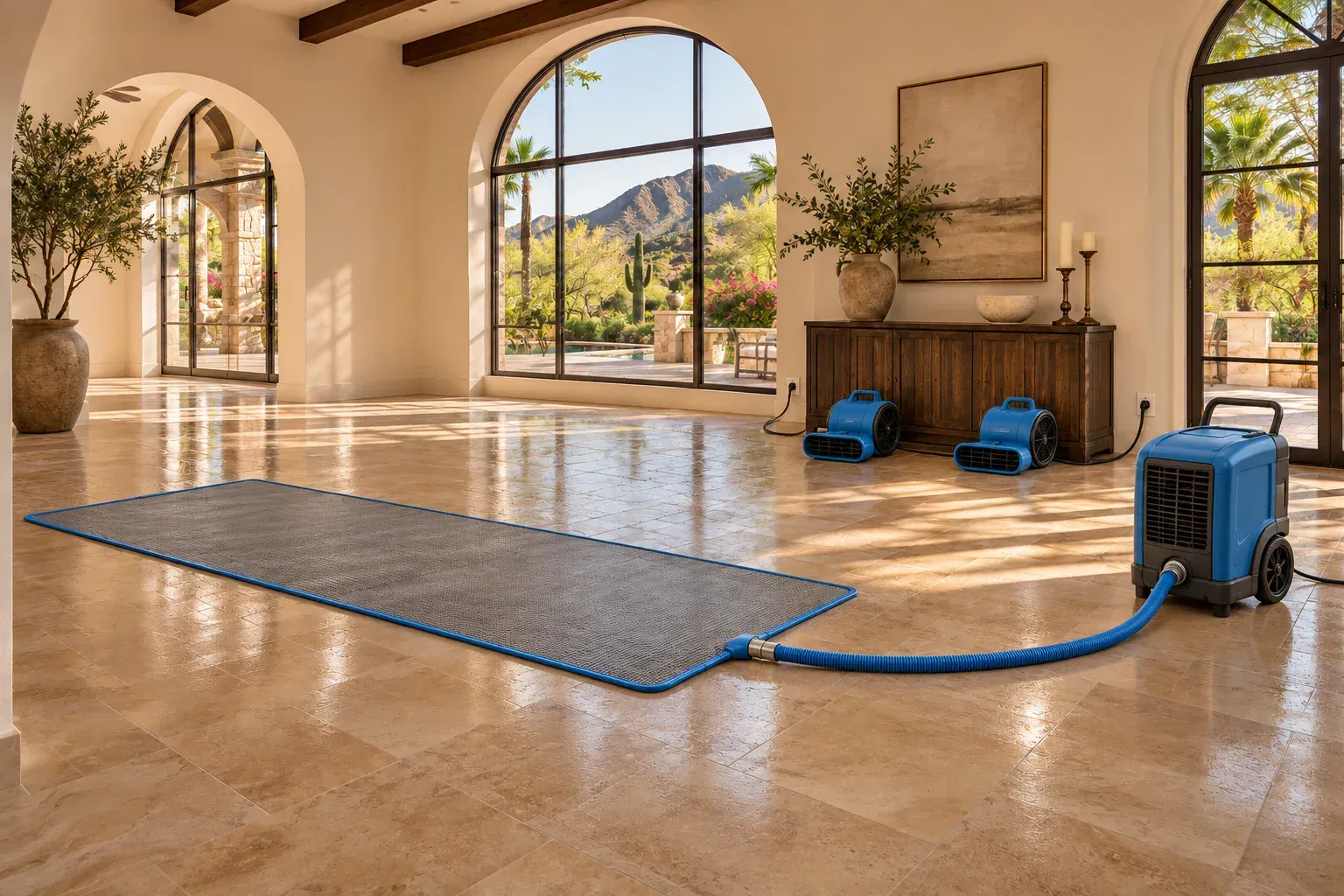
It can warp, and the warp can crack the stone above it. Water that runs under travertine or wide-plank wood can travel along the subfloor and the slab, and in many homes the slab is the layer that matters. The town is zoned mostly R-43, which means lots of at least one acre with one home per lot, according to the town's Residents Guide, and on a slab-on-grade house water under the floor can travel sideways before it shows on top. The structural drying page explains how the cavity under a floor gets dried to a number rather than to the touch.
Dry the slab or subfloor, read it with a meter, then decide on the finish material; new stone over a wet slab fails the same way, only faster.
04Good to know
Can cupped hardwood be saved?
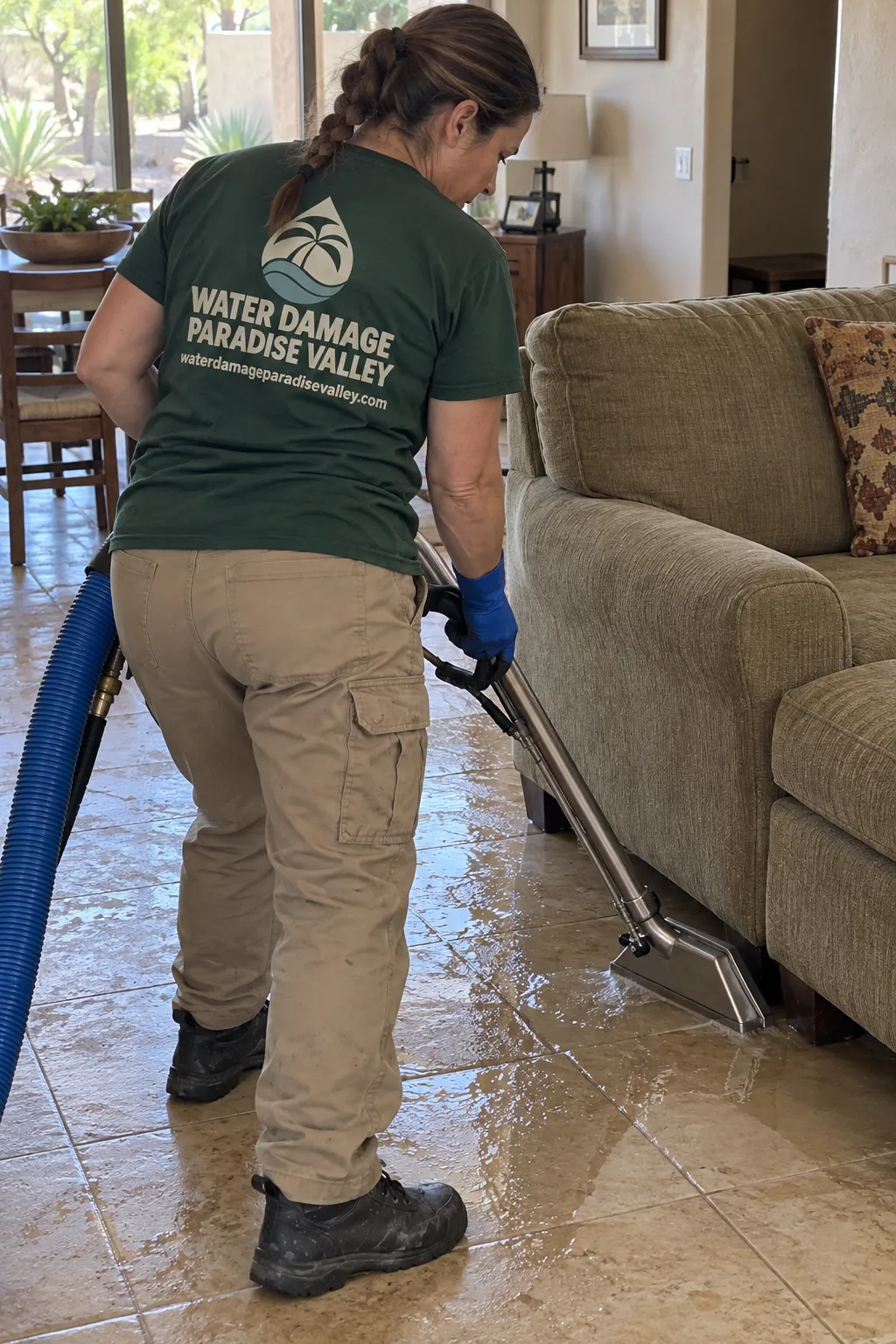
Often, if it is given time before it is touched. Cupped boards have their edges raised above the center, and the National Wood Flooring Association's installation guidelines note that minor damage often dissipates or even disappears as the flooring dries out over time. The mistake is sanding or finishing while the boards still hold water, which can cause new problems. So wait until the wet boards read the same as the dry ones, and let a flooring contractor take the readings.
The numbers matter. Hardwood Floors Magazine, the industry's trade publication, reports that studies show mold can grow on wood at moisture content above 15 percent, and that rot needs the wood at or above its fiber saturation point, 28 to 30 percent moisture content, for a period of time. The repair versus replace flooring page runs the same decision for every floor type.
05Good to know
What does plaster do when it gets wet?
It depends which plaster. Gypsum plaster is more vulnerable to water damage than lime, according to the National Park Service's Preservation Brief on repairing historic plaster: gypsum plaster needed protection from water, while lime plaster could survive occasional wind-driven moisture or water wicking up from the ground. The brief covers historic plaster, so it is a guide to the two materials, not a verdict on a particular wall. A plaster contractor should judge whether a wet wall can be kept, and the first steps are to stop the source and let the wall dry.
A ceiling stain in a room with no plumbing can point to a roof leak, and in Arizona the monsoon, which runs June 15 through September 30 according to the National Weather Service, is when roofs get tested.
06Good to know
Which part of a custom cabinet fails first?
Often the toe kick and the veneer edges, because that is where water stands and where it wicks. A cabinet is a box of thin parts: solid wood faces over plywood or particleboard boxes, a veneer face glued to a core. Water that pools at the base can swell the toe kick and the lower doors first, and water that drips from a supply line can run down the back and lift the veneer at the glue line. A solid wood face tends to hold up longer.
That is why the call is not "wood, so it dries" but "how much is veneer and particleboard." A particleboard box is more likely to swell than solid wood, and swelling in particleboard generally does not reverse. A cabinet or restoration contractor should judge which parts can be kept.
07Drying window
How long does each material take to dry?
Each on its own clock, and the reading decides, not the calendar.
| Material | What water does to it | What fails first | Save or remove |
|---|---|---|---|
| Travertine | Little to the stone itself | The subfloor or slab under it | Save the stone, dry what is under it |
| Solid hardwood | Cups, then can relax as it dries | The subfloor, then new problems if finished too early | Often saved if dried before finishing |
| Gypsum plaster | Needs protection from water | The wall itself | A plaster contractor decides |
| Lime plaster | Can survive occasional water | The surface finish | Often can be saved and patched |
| Custom cabinets | Can swell at the base and edges | Toe kick and veneer glue lines | A contractor judges; swollen particleboard rarely recovers |
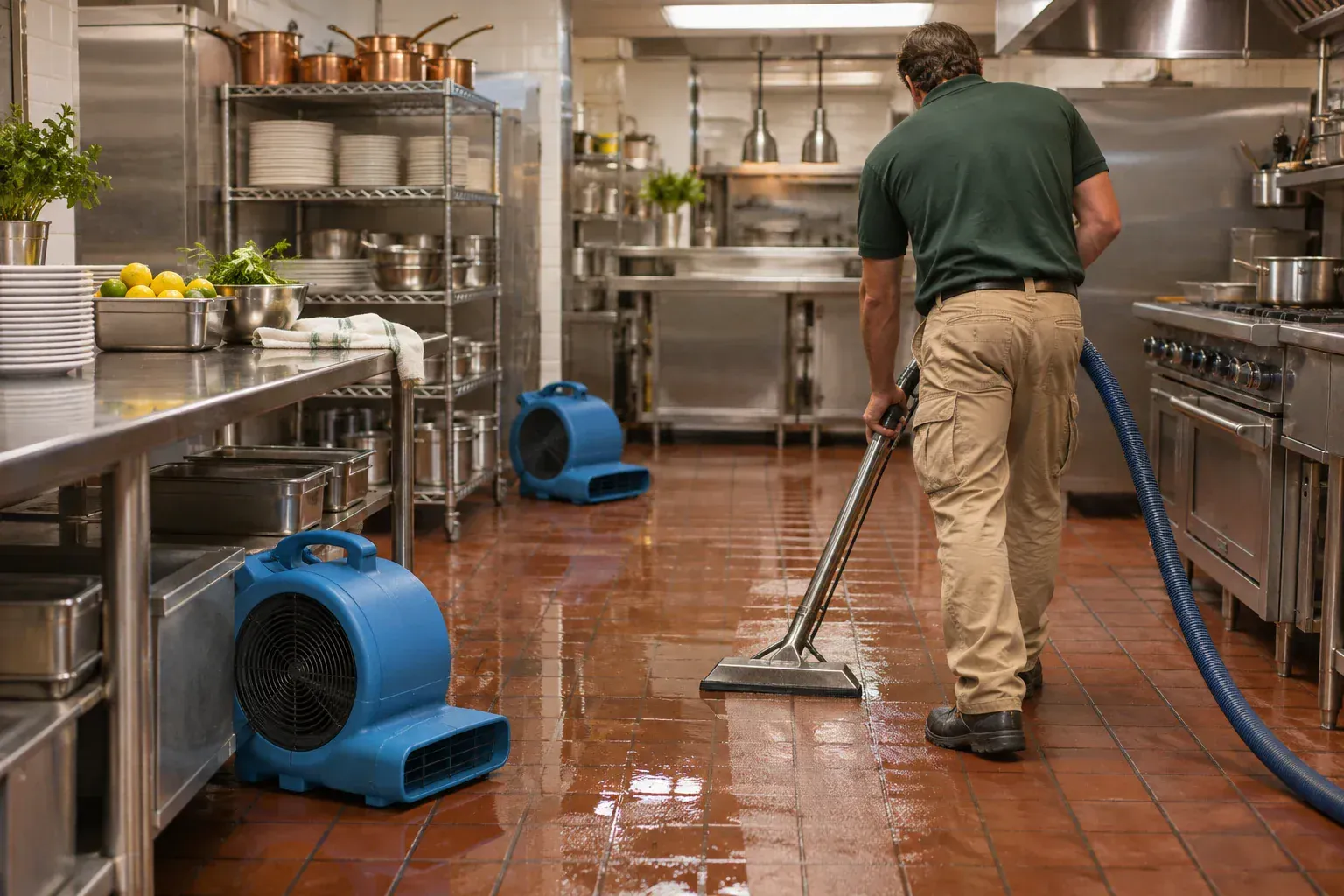
The Environmental Protection Agency's rule sets the outer limit: dry water-damaged areas and items within 24 to 48 hours to prevent mold growth. Stone does not feed mold the way wood and drywall can, but the materials around it still need to dry inside that window.
08How it works
Next step: read it before you pull it
What decides the answer for this house is the water source, the material, and how long it has been wet. A clean supply-line leak over travertine on a concrete slab is more likely a dry-and-clean job. The same leak over engineered wood on a wet subfloor is more likely a replacement job. Water that came in through a drain or from outside can be contaminated and needs a contractor, and the protect plan covers the prevention side.
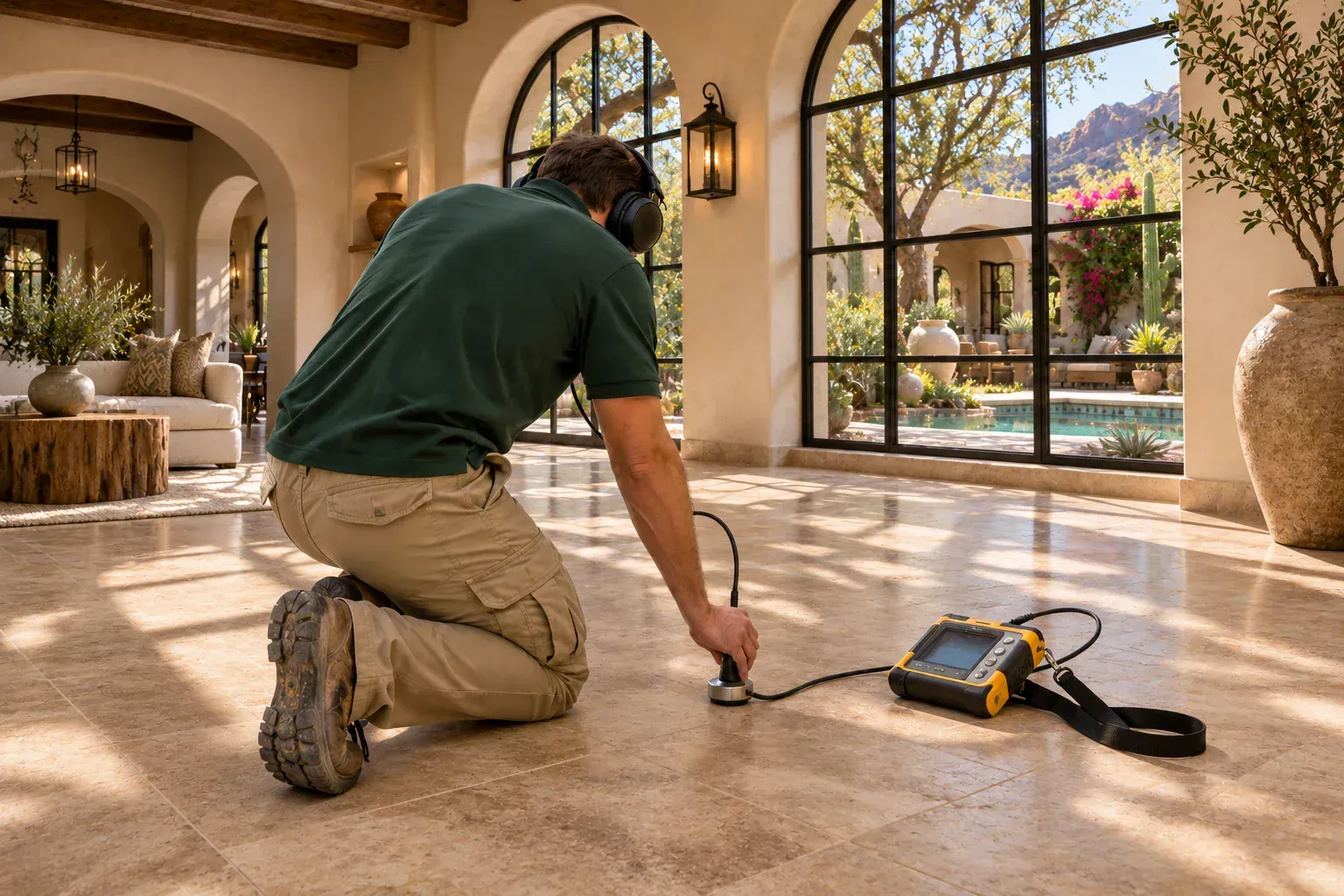
A local contractor confirms it on site with a moisture meter, because "looks dry" and "is dry" are two different readings. Tell us what got wet and how long ago, someone from our team will call you back, and a local contractor helps you sort the save list from the remove list.
093 questions
Questions people ask
Still have a question?
Call and describe what you see. Calls are answered day and night.
Call (602) 671-356101Can travertine be cleaned and resealed after a leak?
Usually, once the stone is dry and the water source is gone. Efflorescence and the yellow iron-oxide cast can often be cleaned if caught early; ask a stone contractor whether the stone should be resealed afterward.
02Should I sand the hardwood now or wait?
Wait. Sanding or finishing boards that still hold moisture can cause new problems. The floor is ready when the wet boards read the same as the unaffected boards, and a flooring contractor should confirm it.
03Do cabinets always have to be replaced?
Not always. A contractor checks each cabinet: solid wood that got wet briefly is more likely to dry out, while a particleboard box that swelled usually has to go because that swelling generally does not reverse.
10Sources
Sources
- 01National Park Service, Preservation Brief 21: Repairing Historic Flat Plaster
- 02National Wood Flooring Association, Wood Flooring Installation Guidelines
- 03Hardwood Floors Magazine, Assessing and Addressing Water Damage
- 04US EPA, A Brief Guide to Mold, Moisture and Your Home
- 05National Weather Service Phoenix, Monsoon Awareness Week
- 06Town of Paradise Valley, Residents Guide
Last checked: November 2026