Neighborhood · Phoenix, AZ
Water Damage Restoration in Desert Ridge, Phoenix, AZ
Desert Ridge is one of the valley's newer communities, built out through the 2000s in north Phoenix, and newer is not the same as immune. The water stories here just come from different places than in the older districts. Know where leaks start in Desert Ridge homes and what to do first.
Paradise Valley · Scottsdale · Phoenix · Tempe · Fountain Hills · Cave Creek
01Good to know
About Desert Ridge
Desert Ridge occupies the north Phoenix corridor around the Loop 101, built out through the 2000s as one of the city's master-planned anchors, with its own village center, resort and shopping districts. The housing is a modern mix: attached homes, condominiums, and single-family streets in planned clusters, most of it managed by HOAs with rules that touch everything from paint colors to work hours. The community is younger than most of the valley, and its housing stock is younger too, which means the water calls here are not about failing 1970s pipes. They are about systems: the AC that runs 8 months a year, the supply lines behind modern appliances, and the monsoon storms that treat a 2005 roof and a 1975 roof with the same enthusiasm.

02Local risk
Why do newer homes in Desert Ridge get water damage?
Because construction era does not write the water rules; maintenance does. Newer homes run more systems, not fewer: multiple air handlers with condensate lines, tankless or dual water heaters, irrigation controllers running on schedule, pool equipment on many lots. Each one is a place water can start, and none of them announce a failure in advance. The calendar matters too. Monsoon season, June 15 to September 30, tests roof edges, window seals and stucco joints on every home, regardless of age, and a 2000s home with a clogged condensate line in July has exactly the same problem as a 1970s home with the same clogs. The difference is only in what the water finds: newer homes tend to have more finishes, more electronics, and more places for a leak to cost real money.
03Good to know
Where does water damage hide in Desert Ridge homes?
The air handler closet and its drain pan come first, because AC condensate is the most common water source in newer Arizona homes. Then the upstairs laundry and halls: a washer supply line or drain on an upper floor sends water down through the ceiling of whatever is below. The water heater closet, the fridge and dishwasher lines, and the cabinet bases under every sink complete the indoor list. Outside the walls, the suspects are the irrigation system and the pool equipment pad, and after storms, the windows and doors on the storm side. In an attached home, add the shared wall, where a neighbor's slow leak can become your ceiling stain. The smell test finds most of these before anything shows.
04First steps
What should you do in the first 10 minutes?
Stop the water if the source allows it, and if it does not, the main valve ends the debate. Keep people away from anything electrical in the wet zone. Photograph the source and the spread before anything moves. Get rugs, papers and electronics off the wet floor, and in an upstairs leak, put buckets where the ceiling drips and move furniture out from under. If you are in an attached home, knock on the neighbor's door the same day if the water could be traveling from their side or into it. Then call (602) 671-3561 with the details: the room, the source, the timeline, and whether the home is attached. If the water is moving toward a neighboring unit, tell the neighbor now, not after the visit.

05Good to know
Emergency water damage restoration in Desert Ridge, Phoenix
In Desert Ridge, where so many homes are newer and tightly built, emergency water damage restoration still starts the same way: stop the source, then pull the water out before it saturates drywall and flooring. A failed water heater, a burst upstairs supply line, or monsoon water at the garage door can all put water where the HOA and your insurer will want a record. Shut the main valve, move rugs and furniture, and call so extraction starts before the water reaches more rooms. Call us at (602) 671-3561 or read how emergency water extraction works and what it runs on the pricing page.
06Good to know
Water damage cleanup in Desert Ridge, Phoenix
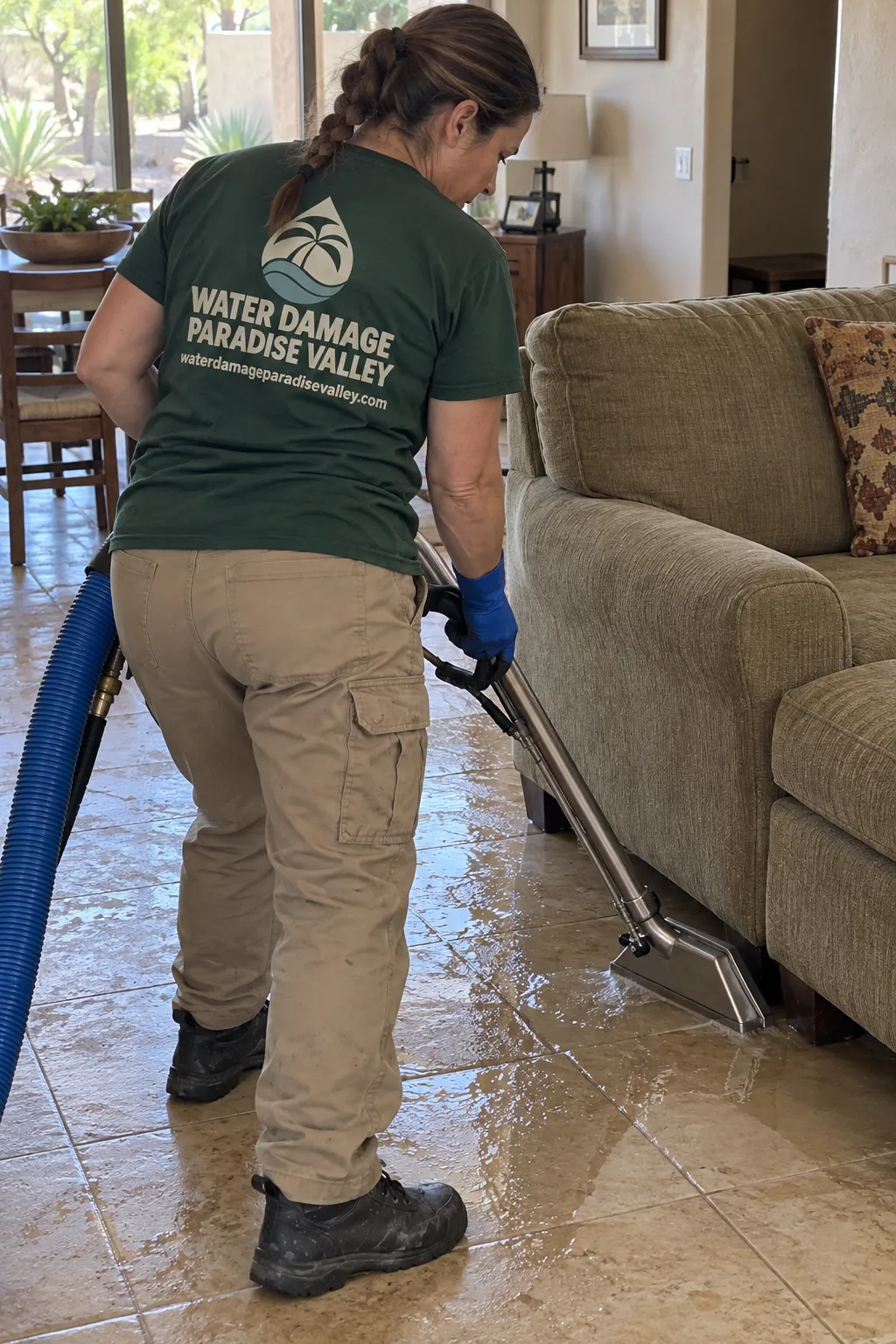
Water damage cleanup in Desert Ridge, Phoenix means drying a house that was built tight, which can be slower than an older, leakier home because moisture has fewer places to escape on its own. On City of Phoenix water with hardness up to 20 grains per gallon, slow drips behind a wall or under a slab can hide for weeks, so cleanup often starts with finding where the water actually went before anything gets rebuilt. Note what your HOA expects documented, take photos, and keep a copy of every reading. See how structural drying is verified and what the work costs on the pricing page.
07Good to know
What does the HOA need to know?
The short answer: more than you would think, and early. Most HOAs here need notice of work that touches common walls, shared rooflines or exterior elements, and many require the scope of work and proof of a qualified crew before the first truck parks. The documentation you would build anyway, photos, readings, a written scope, doubles as the packet the board or manager asks for. One useful habit: find the HOA's rules for water damage before you need them, so the first wet day goes to the crew instead of to the compliance conversation. Build the packet once, keep it where it takes 30 seconds to find, and update it when the rules change. That is the entire trick to staying ahead of it.
08Good to know
Is a 2000s home any different to dry out?
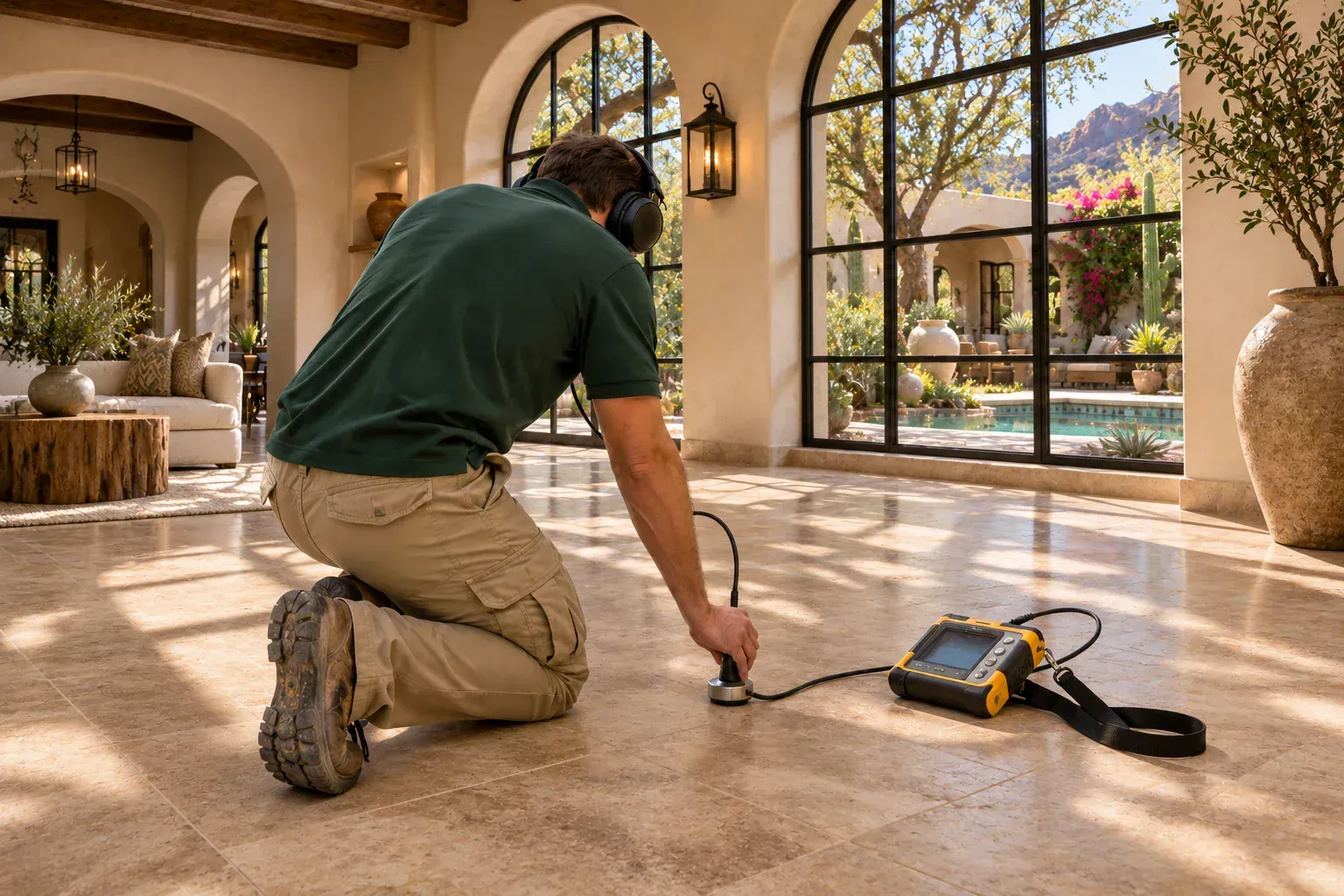
The physics are identical, and the materials are more forgiving in some ways and less in others. Modern drywall and engineered flooring dry predictably when the work starts on time, and modern construction is often tighter, which cuts both ways: less draft to spread moisture, but also less airflow to help a hidden cavity dry on its own. That is why readings matter more, not less, in newer homes: the meter finds what the tight envelope hides. The drying equipment and the process are the same ones used everywhere else, sized to the rooms and verified daily. One more note: paint and flooring from this era often look dry long before they get there; trust the meter over the surface.
09How it works
How does the work run in Desert Ridge?
With the community's rules and rhythms built in. Work hours get set around HOA requirements and household schedules, containment keeps dust and noise out of the rest of the home, and the moisture map works room by room until the readings pass. In attached homes, the containment plan is written to protect the shared wall's neighbors as much as the unit itself. Everything gets documented from the first visit: photos, readings, daily logs, ready for the insurer, the HOA and the property manager alike. The structural drying page walks the process. Ask for the same things here you would anywhere: the readings, the scope, and the names of who does what, in writing, before the equipment rolls in. Same standards, newer build, and it still gets measured the same way.
10Services
Our water damage services for Desert Ridge homes
Emergency water extraction whenever water is moving, structural drying until the readings hold, slab leak and burst pipe for the pipe failures that can still happen here, and mold remediation if the water had time to leave something behind. Desert Ridge sits in Phoenix, so it is covered on the Phoenix area page with the rest of the north corridor, day or night. Newer homes make one part easier and one part harder: the systems are younger, but the finishes are often worth more, so catching things early pays off twice. Have the build year, the room and the source ready when you call, and the visit arrives calibrated to a 2000s house. From there, the process is the same careful sequence every home gets, newer or not.
113 questions
Questions people ask
Still have a question?
Call and describe what you see. Calls are answered day and night.
Call (602) 671-356101The home is only 15 years old. Can it really leak like the old ones?
It can leak differently, not less. The sources here are condensate lines, appliance supply lines and storms, and those are age-neutral. What the newer home gives you is time: catching the same leak in a newer house often costs less, because more of the material can be saved.
02Can you start the work while we settle the insurance and HOA details?
In most cases the drying cannot afford to wait, and the documentation starts immediately either way. The insurance and HOA conversations continue in parallel; the first 24 to 48 hours of drying are what protect the outcome.
03Do you coordinate with our property manager?
Yes. They get the scope, the schedule and the readings, and the job file is organized the way managers and boards ask for it. Name the point of contact when you call.