Neighborhood · Phoenix, AZ
Water Damage Restoration in the Biltmore Area, Phoenix, AZ
The Biltmore area wraps around its namesake resort in central Phoenix, a district of older estates and newer builds side by side. For water damage, the interesting half is the older one: mid-century plumbing under homes that have kept their character, and irrigation that never quits. Know where leaks start there and what to do first.
Paradise Valley · Scottsdale · Phoenix · Tempe · Fountain Hills · Cave Creek
01Good to know
About the Biltmore area
The Biltmore area sits in central Phoenix around the Biltmore resort, the 1929 landmark that gives the district its name, with Arcadia to the east and the Camelback corridor wrapping around it. The housing is a study in layers: mid-century houses from the decades after the war, newer homes and remodels that replaced some of them, and a grid of streets where an estate, a ranch house and a new build can share a block. Mature landscaping and year-round irrigation are everywhere, and so is the shade that keeps exterior walls damp longer than most of the valley. The charm and the water risk come from the same thing: age doing its work quietly, on a clock nobody watches. That quiet is the short version of why every check here starts with time.

02Local risk
Why do Biltmore homes get water damage?
The older tier of homes is the short answer. Supply lines and drains from the mid-century decades are old enough to fail without warning, and the failures are the quiet kind: a pinhole in a slab line, a weeping joint behind a vanity, a water heater that gives out on a Tuesday. Around the oldest streets, mature trees push roots into aging drain lines, and irrigation keeps the soil against the stem wall wetter than it should be. The newer tier skips the pipe age but inherits the weather: monsoon storms test roof edges and window seals on every home, old or new. Between the two, every Biltmore block has a moisture story; the difference is only how early it gets told.
03Good to know
Where does water damage show up first here?
At the water heater, the garage, and the laundry corner, in that order, because those are where the old lines end. Then the under-slab suspects: a warm or damp patch on a floor over a supply line, which is the classic mid-century tell. Guest houses and pool cabanas are their own list, since they sit empty for long stretches and their small systems go unwatched. And after any monsoon, the ceiling below the roof's valleys and the bases of storm-side doors deserve the first look. Older homes here hide water well; the baseboard that swells and the paint that bubbles usually arrive after the leak is weeks old. Add the pool houses and cabanas to the quarterly walk, even when they sit unused; their systems age too.

04First steps
What should you do in the first 10 minutes?
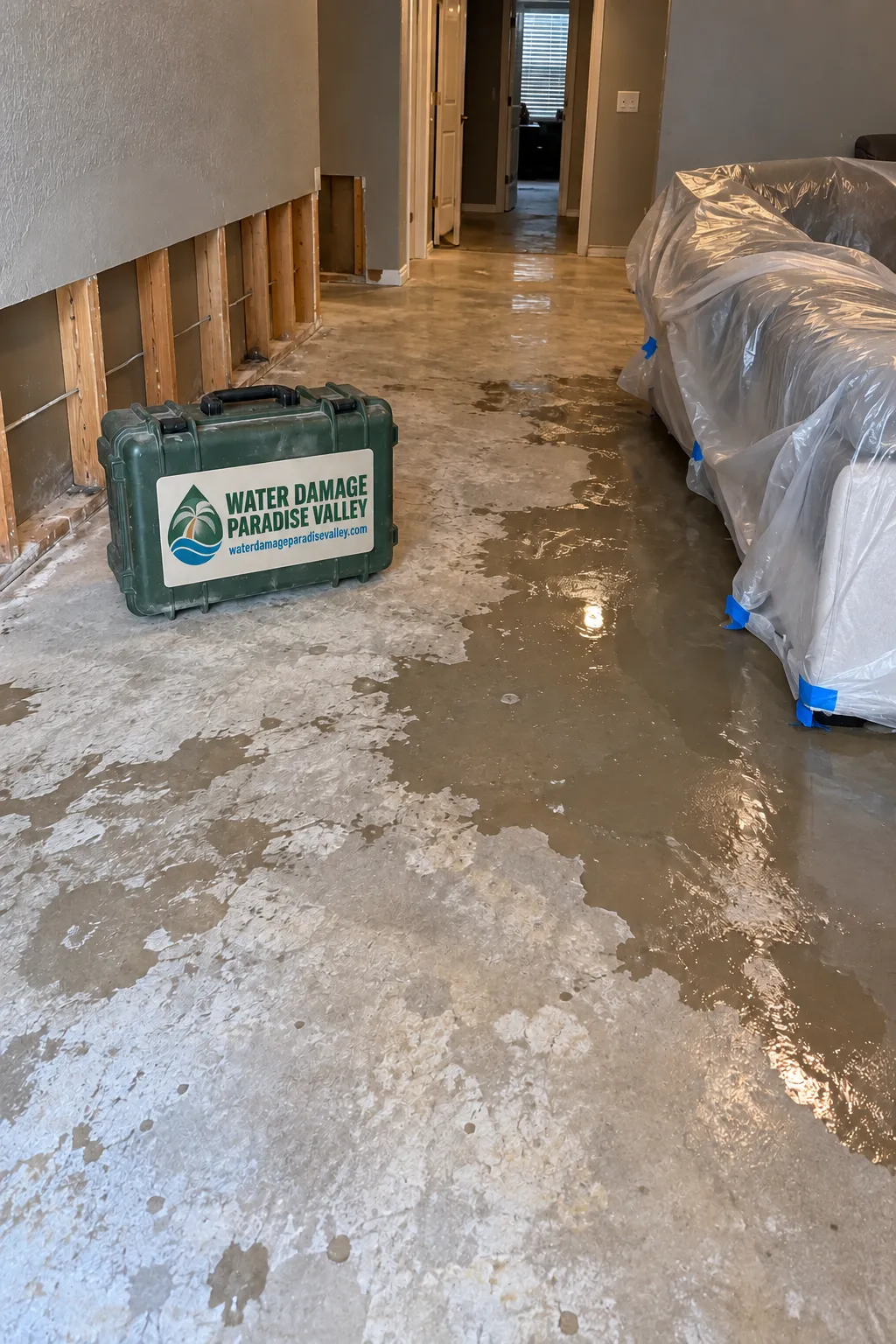
Shut the water off at the fixture if you can find it, and at the main valve if you cannot, then keep everyone out of the wet rooms and away from anything electrical in the water. Photograph the source, the water line and the damage before anything moves; older homes often carry custom finishes, and the photos are how their condition gets documented for the claim. Lift rugs and furniture legs off the floor, and move art, papers and electronics to a dry room. If the water came in during a storm from outside, treat it as contaminated and stay out until it is handled. Then call (602) 671-3561 with the house's age, the source, and how long it has been wet.
05Good to know
Emergency water damage restoration in the Biltmore area
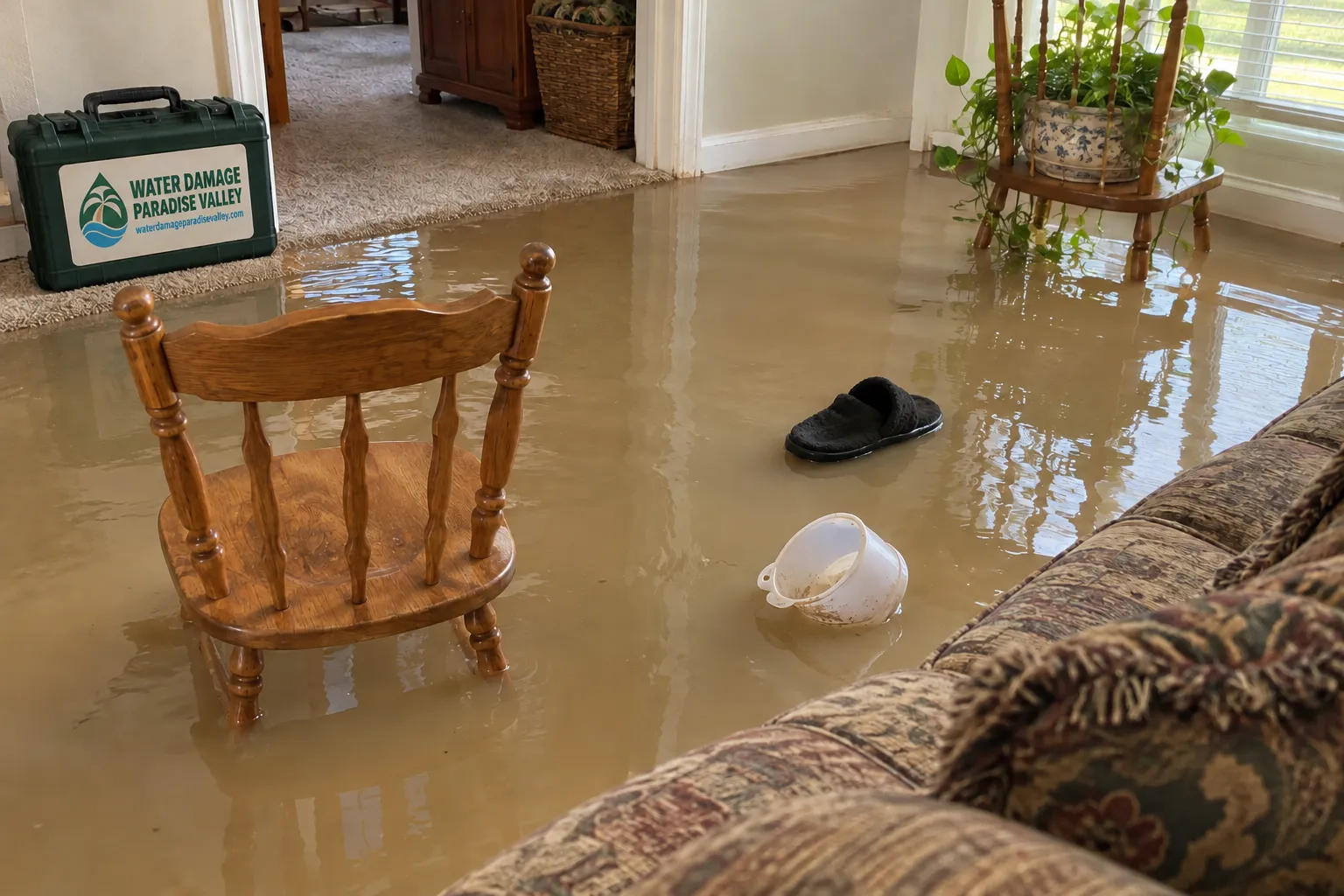
A broken supply line in the Biltmore area does not wait, and emergency water damage restoration begins with shutting the water and removing the standing water before it saturates the walls and floors below. In the older estate homes and the stacked condos along the Camelback corridor, water from an upper unit travels down inside walls and across ceilings, so what looks like a small stain can already be a multi-room event. Turn off the main valve, move electronics and rugs to dry ground, then call so extraction and drying can be planned. Call us at (602) 671-3561 or read how emergency water extraction runs and what it costs on the pricing page.
06Good to know
Water damage cleanup in the Biltmore area
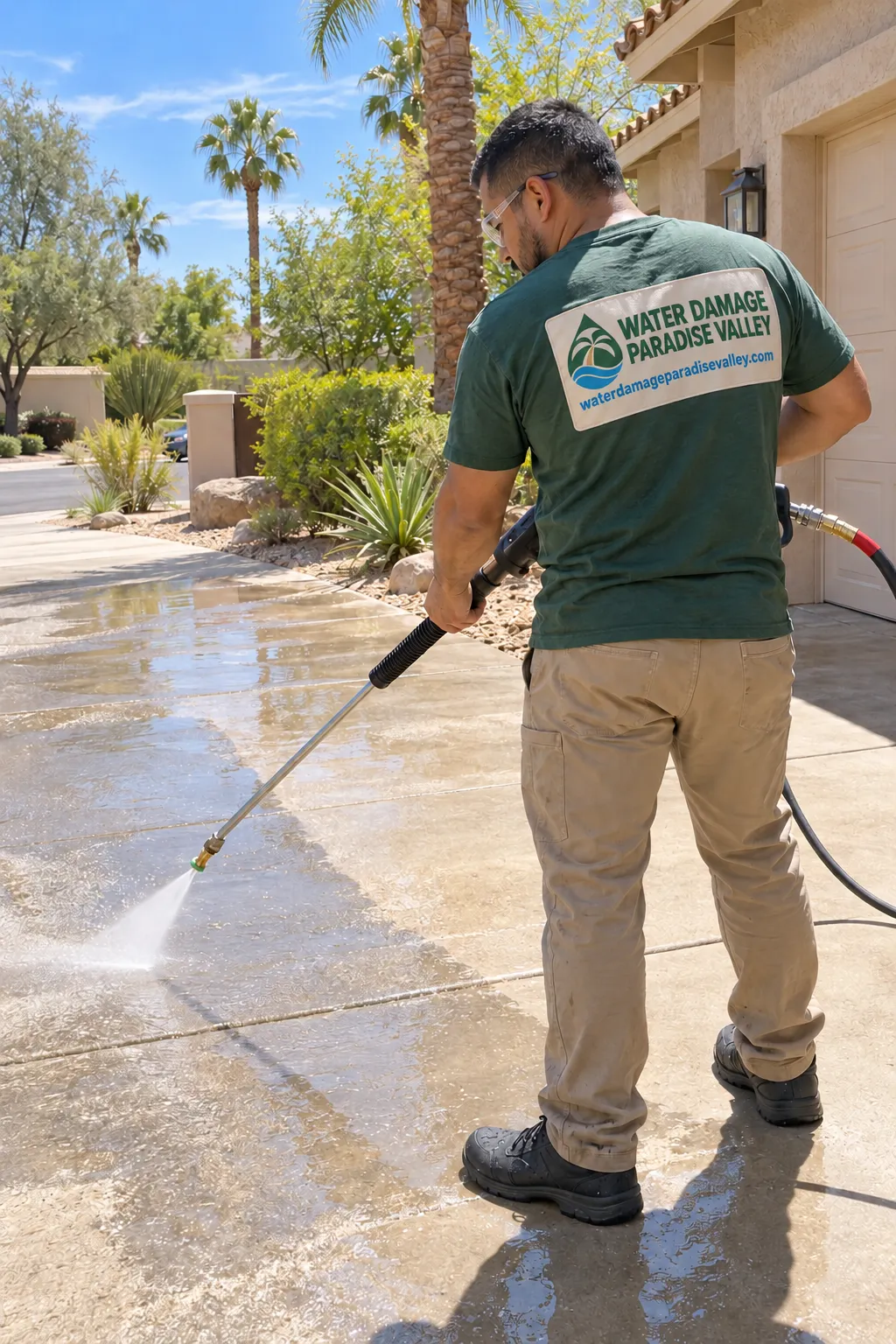
Water damage cleanup in the Biltmore area is the work after the water is out: cutting out wet drywall and insulation, drying the framing, and checking every shared wall and ceiling cavity the water may have reached. The area mixes older estates with 1960s and 1970s condominiums, so cleanup is less about masking a stain and more about opening far enough to find the true edge of the moisture. Photograph the damage and the readings before rebuild starts, because that paper trail is what an adjuster reads later. See how structural drying is measured and what a job of this size runs on the pricing page.
07Good to know
How quickly does a pinhole leak become a big one?
Fast in damage terms, slow in appearance terms, which is the trap. A pinhole in a slab line can run for weeks at a rate nobody hears, quietly saturating the soil under the floor and wicking up into flooring and baseboards. The first visible sign is often a water bill, a damp patch, or a smell, and by then the drying footprint is several rooms wide. The practical rule for older homes: treat any unexplained bill increase as a leak until the meter test says otherwise, and meter the rooms near the suspect line the same week. The cost difference between catching it at the bill and catching it at the wall is the difference between drying and rebuilding. That math is the entire argument for the meter test, and it is why the test takes 15 minutes, not 15 days.
08Monsoon
What about the monsoon on newer Biltmore builds?
Wind and rain do not check the construction year. A monsoon that drops serious rain with wind behind it tests every roof edge, window frame and stucco joint in the district, and newer homes fail at the same seams as old ones when the storm is big enough: the flashing above a door, the seal around a window on the storm side, the joint where a parapet meets a wall. After a big storm, walk the storm side of the house and look for bubbling paint, damp baseboards and new ceiling marks, and photograph anything you find. Catching it that week is how a small storm repair stays a small storm repair. The roof itself gets evaluated in parallel, so nothing waits on a guess while the ceiling stays wet.
09How it works
How does the work run in this housing stock?
With an extra look before the first cut. Older finishes get assessed before anything gets opened, and the sequence gets planned so the house is opened once: plumbing repair and drying coordinated, not run past each other. Containment keeps dust out of the living space, extraction and drying move room by room along the moisture map, and daily readings set the finish. Guest houses, cabanas and detached structures get mapped in the same visit, because water does not stop at the property's covered walkway. The structural drying page walks the process; the slab leak page covers the classic failure underneath it all. If the home has both older and newer wings, say so; the two eras leak to different rules, and the visit runs both checklists.
10Services
Our water damage services for Biltmore area homes
Emergency water extraction when water has not stopped, structural drying until the readings pass, then slab leak and burst pipe for the under-floor failures this housing stock specializes in, and mold remediation if the water had time to grow something. The Biltmore area is served through the Phoenix area page with the rest of the central corridor, day or night. Two more things worth saying on the first call: whether the home has been recently renovated, and whether the water is anywhere near the pool system, because both change who gets scheduled first and what gets checked on arrival. Photos help too; a picture of the source and the wet line tells the crew more than a paragraph. For homes on the older side of the area, the walkthrough covers the attic and the garage closet before anything else, because that is where the decades live.
113 questions
Questions people ask
Still have a question?
Call and describe what you see. Calls are answered day and night.
Call (602) 671-356101The house is old and beautiful. Will the work respect that?
The plan starts with what can be saved, and older features get treated accordingly: finishes assessed first, openings planned to be minimal, and nothing rebuilt before it has been seen and documented. Walk the space with the crew on the first visit and point out what matters most.
02How do I watch an older home between incidents?
A quarterly rhythm covers it: look at the water bill, check under the kitchen and bath sinks, look at the water heater base, and after every storm walk the storm side of the house once. Fifteen minutes, four checks, and most big discoveries become small ones.
03Do you cover guest houses and pool houses too?
Yes, if they are on the property, they are in scope. Small structures sit empty for long stretches, which is exactly why their leaks get found late, so they get checked in the same visit as the main house.